


Colorectal Cancer Genetics & Family History
Back to Your Risk & Prevention Tips
Table of Contents
Most cases of colon cancer and rectal cancer are not considered hereditary, meaning you inherited a mutated gene from a biological family member. When it comes to colorectal cancer:
- 60-70% of cases are sporadic
- 20-30% of cases are familial
- 5-10% of cases are inherited/hereditary
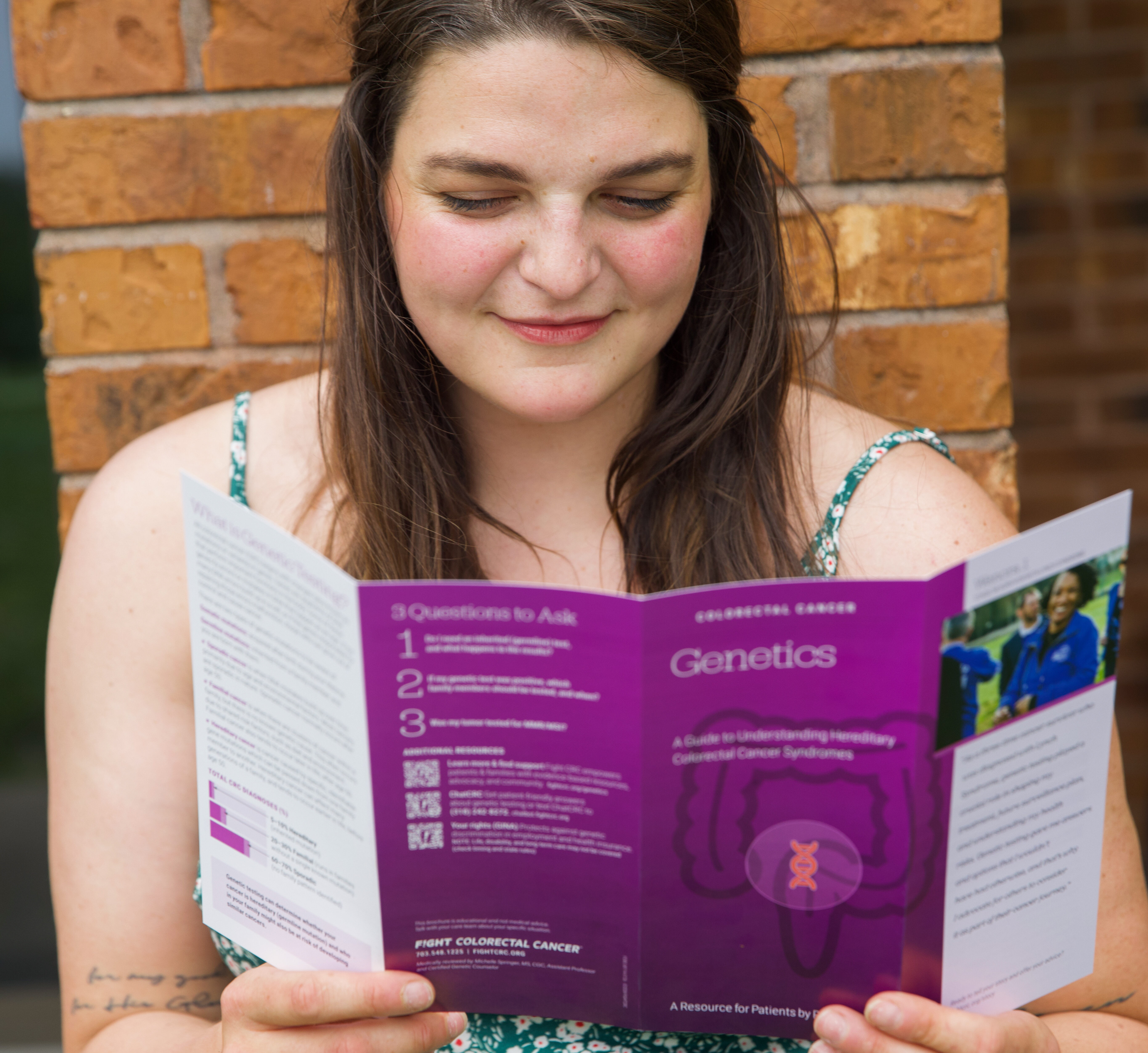
Access the downloadable, printable PDF version of this brochure below for easy offline reading or sharing.
Sporadic Colorectal Cancer
Sporadic colorectal cancer is what occurs in the majority of colorectal cancer cases. Sporadic colorectal cancers:
- Form later in life (after age 50)
- Don’t have a clear familial pattern
- Don’t have an inherited gene mutation
Most cancer is sporadic, meaning you start with healthy genes and genetic mutations accumulate over time (typically due to age and environment).
Familial Colorectal Cancer
Family members may exhibit similar behaviors in terms of what they eat, their activity level, and their environmental exposures. This can lead to similar risks for developing colorectal cancer. When a family has a “cluster of cancers,” or multiple family members with cancer, it’s considered familial.
There may be multiple minor gene mutations in family members that lead to a slight increased cancer risk, but these lower-risk gene mutations are currently unknown.
Family Members Impacted
It’s critical to know if anyone in your family has been diagnosed with cancer, what type of cancer, and at what age. Your risk for cancer is increased depending on how closely related you are and how old they were when they were diagnosed.
First-Degree Blood Relatives
- Parents (father or mother)
- Siblings
- Children
Second-Degree Blood Relatives
- Grandparents
- Aunts & Uncles
- Cousins
- Nieces & Nephews
- Grandchildren
If you have a personal history, or if any of your blood relatives have been diagnosed with cancer before age 60, your risk may be doubled. Your risk may be even higher if a first-degree relative has cancer. It’s important to learn your family’s cancer history.
Hereditary Colorectal Cancer
Hereditary colorectal cancer is caused by an inherited gene mutation. Knowing if your case of colorectal cancer is hereditary is extremely important because it can:
- Help you understand the underlying cause of your colorectal cancer.
- Tell you if you are at risk for developing other types of cancers.
- Alert blood relatives about their cancer risk.
How it Happens
Hereditary colorectal cancer occurs when a single gene mutation is passed down (inherited) through a family, leading to a potentially significant increased cancer risk among all family members. If you have a family history of colon or rectal cancer, it is important to learn if it is due to an inherited gene mutation so that each person in the family can follow recommended screening guidelines.
Types of Hereditary Colorectal Cancer:
Lynch Syndrome
LYNCH SYNDROME (AKA HEREDITARY NON POLYPOSIS COLON CANCER)
Lynch Syndrome is the most common genetic condition linked to colorectal cancer. People with Lynch syndrome are at an increased risk for developing other cancer types and need more frequent screening and surveillance.
FAP
FAMILIAL ADENOMATOUS POLYPOSIS (FAP) AND ATTENUATED FAMILIAL ADENOMATOUS POLYPOSIS (AFAP)
The second-most common form of hereditary colorectal cancer is familial adenomatous polyposis (FAP). FAP occurs in one in 10,000 people and is detected by the growth of hundreds to thousands of polyps (adenomas) in the colon, often at an early age.
The risk of developing colorectal cancer is 100% if left untreated. Attenuated familial adenomatous polyposis (AFAP) is a milder form of FAP but still carries a higher risk for colon cancer than the average population. The gene that is associated with both FAP and AFAP is APC (adenomatous polyposis coli).
Peutz-Jeghers syndrome (PJS)
PEUTZ JEGHERS SYNDROME
Although rare, Peutz-Jeghers syndrome (PJS) is a hereditary disorder that leads to polyp growth, dark spots, and an increased risk of certain cancers. Patients have a mutation in the STK11/LKB1 gene, and family members of patients with PJS will need to be tested.
MAP
MUTYH-ASSOCIATED POLYPOSIS (MAP)
Mutations in the MUTYH gene cause MAP. Parents and children of people with MAP are not generally affected by the disease because it has a recessive inheritance pattern. Tell your doctor if you have a family member known to have MAP. It could mean a somewhat higher risk for colon cancer, and earlier, more frequent colonoscopies.
What about Ulcerative Colitis?
Ulcerative colitis (UC) is a risk factor for colorectal cancer. Anyone with UC needs to ask a doctor about a colorectal cancer screening routine. Ulcerative colitis runs in families, and doctors believe there’s a genetic tie.

Taking Action: What This Means for You
Questions to discuss with your health-care team:
- Do I have a family history that suggests higher risk?
- Should I talk with a genetic counselor?
- Do I need earlier or more frequent screening than the general population?
- If genetic testing is recommended, how will results change my care or my relatives’ care?
- What lifestyle steps should I take now to reduce risk further (screening, diet, exercise, smoking, alcohol)?
Family History Screening Guidelines
People with a family history or a gene mutation need different screening than those at regular risk for colon cancer. Ask your doctor and genetic counselor about screening based on your family history and genetic testing.
If you have one first-degree relative diagnosed with colorectal cancer before age 60, or two first-degree relatives diagnosed at any age, you need to get screened at age 40 OR 10 years younger than the earliest diagnosis in your family, whichever comes first.
For example, if your mother was diagnosed with colorectal cancer at age 65, you need to get screened at age 40. If your mother was diagnosed at age 35, you need to get screened at age 25.
After your initial screening, you will likely need to have a colonoscopy every five years. If your family goes through genetic testing, your screening recommendations may change based on test results.
Let’s Talk Genetics Webinar
We get so many of our traits from our parents and grandparents. But what about colorectal cancer? What are the chances that it may run in your family? Join us for a webinar with Dr. Jennifer Weiss where we stress the importance of remaining vigilant about your body’s signs and signals, as well as reminding you to schedule your regular colorectal cancer screening: Whether you have a family history of colorectal cancer or not, you need to be screened for colorectal cancer.
Unknown: What To Do With a Limited Family History
Most people diagnosed with colorectal cancer have a sporadic, or nonhereditary cause for the disease, whereas an estimated 2-5% of all colon cancer patients have an underlying inherited, genetic predisposition. Medical professionals who see patients with strong family histories of colorectal cancer often recommend genetic testing to identify whether or not a defined inherited syndrome, like Lynch, is present. If it is, it can support a more proactive approach to prevention, like earlier age screening, for example.
Adult adoptees, adults without close familial relationships, or individuals with family estrangement, however, may have limited access to their biological family’s health history. While a person’s genes are not the only factor that determines health outcomes, risk of CRC rises sharply with the presence of some genetic factors – and knowing family history can help determine the need to speak to a genetic counselor. If this resonates with you, take time to discuss with your doctor, especially if you notice signs and symptoms of colorectal cancer.