

Impact & Financials
Fight CRC is recognized as top-ranked charity due to our sound financial reporting and accountability. When you make a donation to Fight CRC, every dollar donated goes directly to colorectal cancer programs.
Fight Colorectal Cancer (Fight CRC) receives funding from a combination of individual gifts and grants, as well as corporate and non-corporate sponsors. Our transparency and timely current filing is what sets us apart in our community. Fight CRC is recognized as a top charity by several organizations:
- 4-star charity by Charity Navigator
- Platinum Rated by GuideStar Exchange
- Top-ranked charity by Philanthropedia
- Accredited by the Better Business Bureau
Fight Colorectal Cancer is a 501(c)(3) not-for-profit organization. Our federal tax ID number is 20-2622550.
20 Years of Hope
Milestones in advocacy, research, and awareness driving progress against colorectal cancer
SCROLL TO EXPLORE HISTORY
2000-2005
Prologue
FOUNDATION ERA
PREVENTION GOES PUBLIC
A colonoscopy becomes the signature prevention tool (GI Societies).
2001
Minimally invasive colorectal surgery expands, improving recovery (Surgical Societies).
2002
Combination chemo becomes a backbone of treatment in advanced disease (NCI). Sharon Osbourne is diagnosed with colon cancer, later raising awareness for regular screenings.
2003
Imaging advances improve staging and treatment planning (NCI).
2004
The Blue Star becomes the universal symbol for colorectal cancer (NCCRT) alongside the color blue. Facebook was created, giving survivors a space to find community and share their stories.
2005
Founding
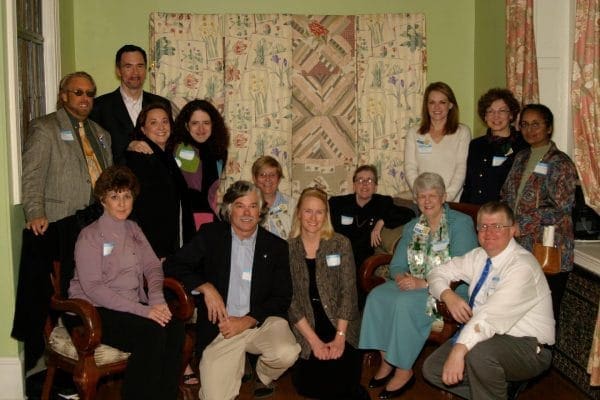
FIGHT CRC IS FOUNDED
The movement begins as C3, Colorectal Cancer Coalition, and the Research Advocacy Training and Support (RATS) program is established.
2006
Initiation
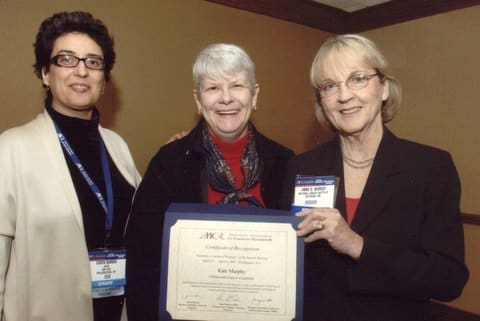
FIRST CALL-ON CONGRESS
Twenty-four advocates go to D.C. to advocate for colorectal cancer awareness and policy.
2007
Early Progress
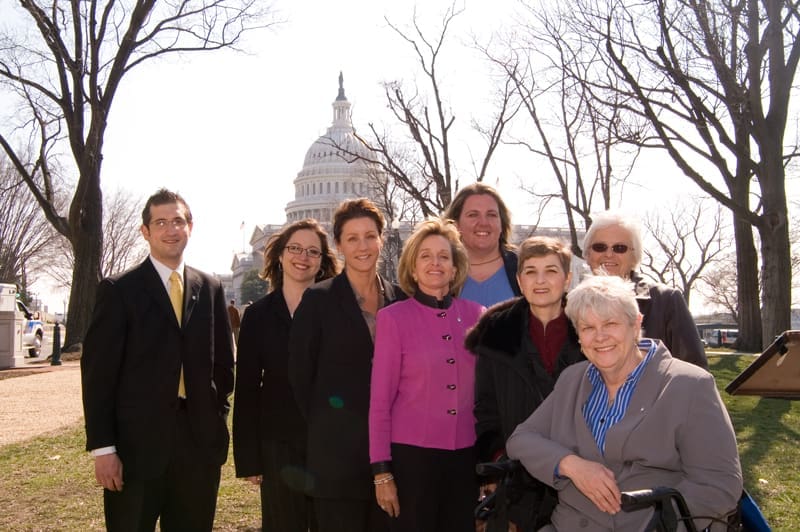
PROGRESS IN ACCESS AND PRECISION CARE
Advocacy protects coverage and treatment access (CMS, Congress).
Biomarker testing grows in CRC decision making (ASCO).
2008
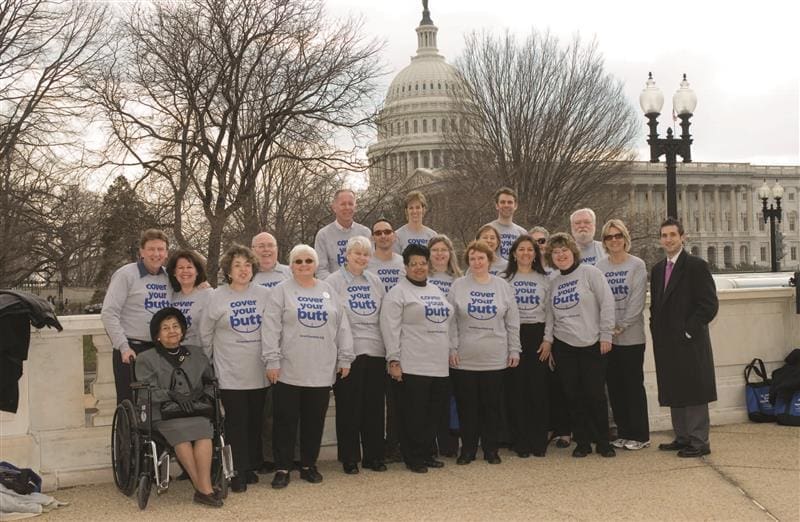
Mobilization
BOLD CALLS TO ACTION
Over 2,000+ advocates build support for colorectal cancer screening legislation.
2009
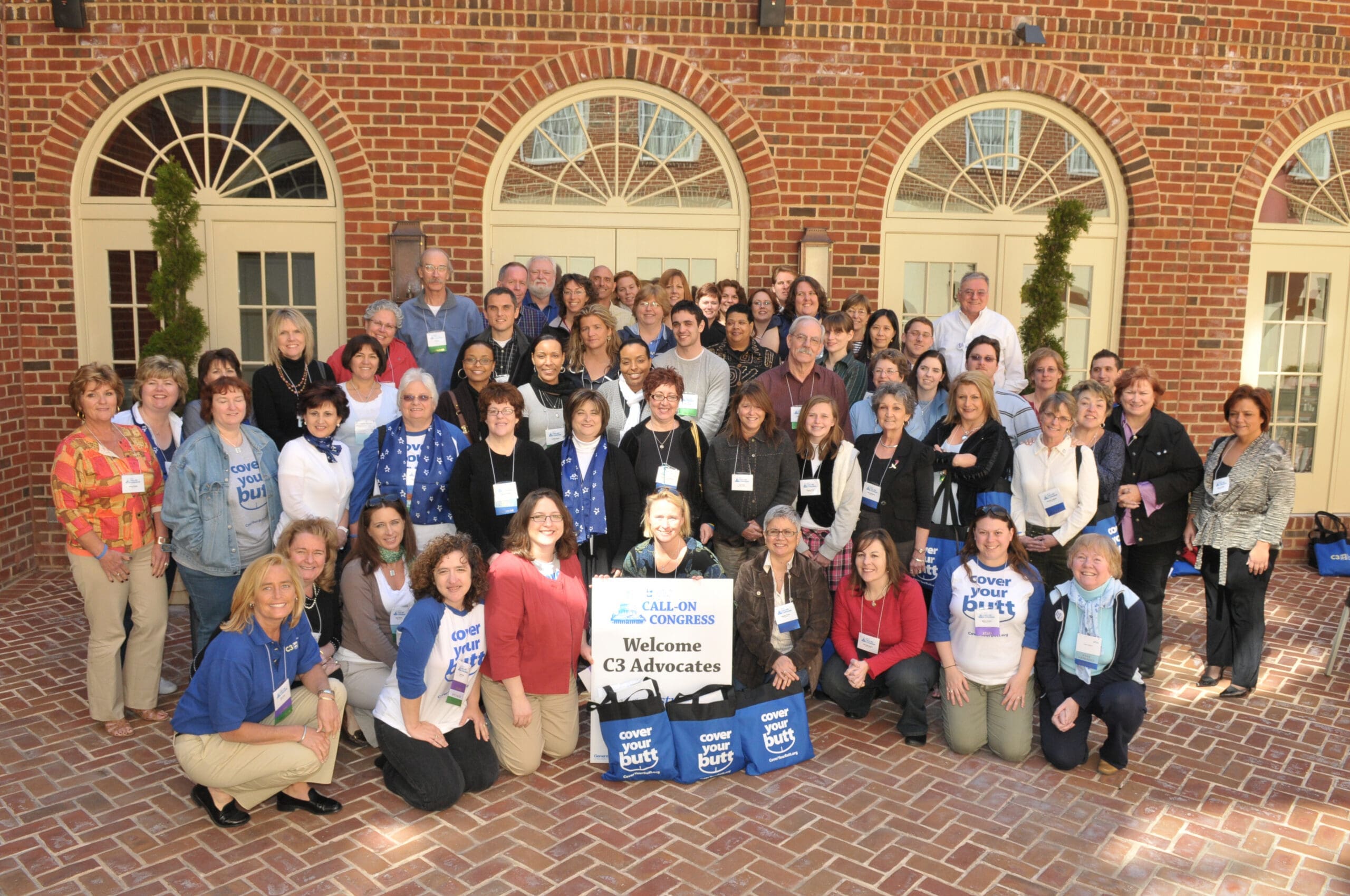
Policy Development
LAYING THE FOUNDATION FOR NATIONAL SCREENING
Worked with congressional champions to draft legislation for a National Colorectal Cancer Screening Program for low-income, uninsured people aged 50–64.
This program was modeled after successful national screening programs for breast and cervical cancer, representing a significant bipartisan effort to reduce colorectal cancer mortality

The Center for Disease Control and Prevention (CDC) launches the Colorectal Cancer Control Program (CRCCP) to increase screening nationwide (CDC).

KRAS testing becomes essential for anti-EGFR therapy selection (NCCN Guidelines).

Screening becomes a public health delivery program (CDC).
2010
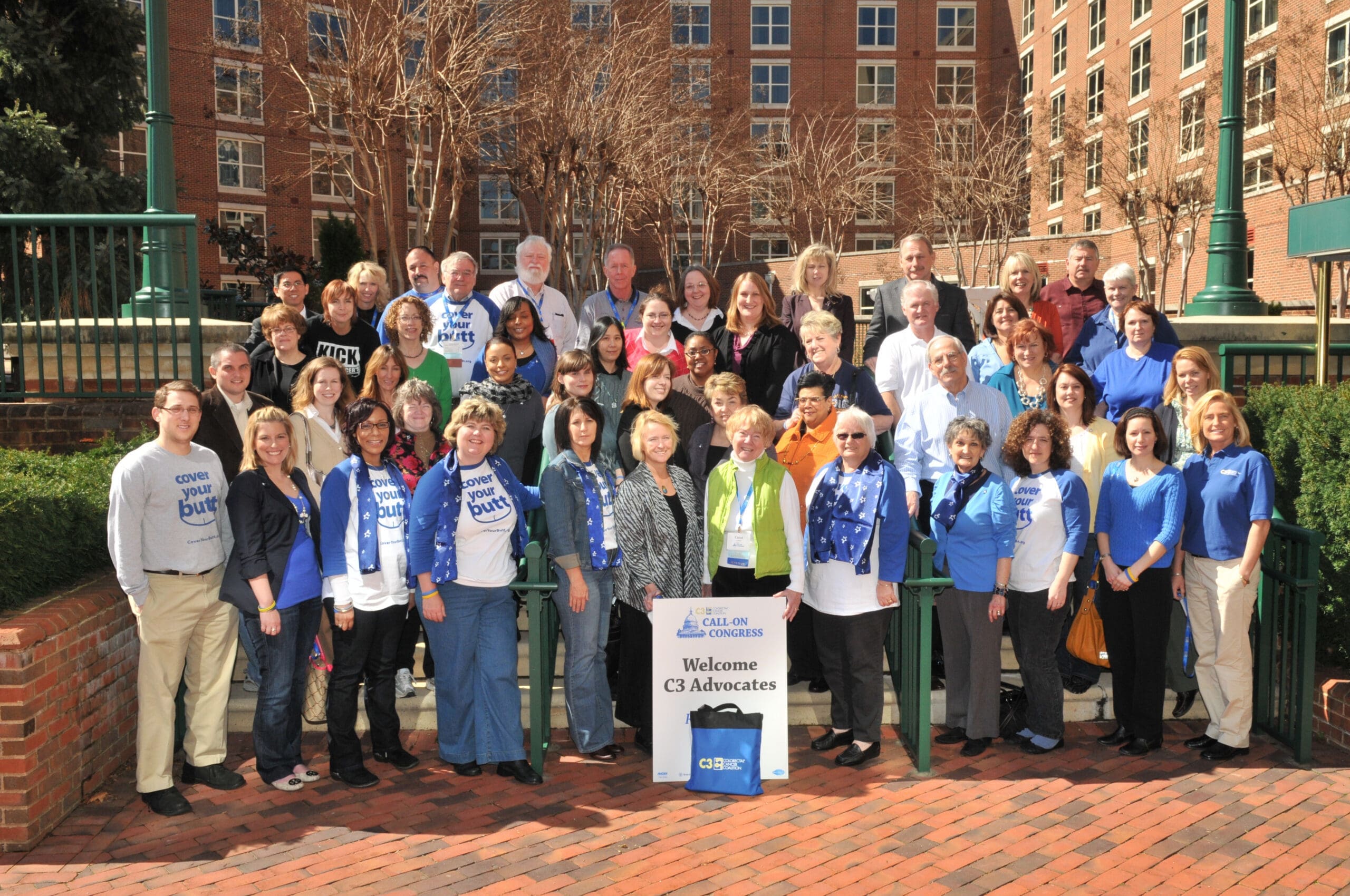
System Change
EXPANDING ACCESS THROUGH POLICY AND FUNDING
Fight CRC successfully advocated for colorectal cancer to be eligible for funding through the Department of Defense Peer Reviewed Cancer Research Program.
The Affordable Care Act officially passed, requiring most private health plans to cover preventive services including CRC screening without cost sharing.
CRC becomes eligible for Department of Defense cancer research funding (DoD).
New funding pathways expand CRC research investments (DoD, NCI).
Digital storytelling through Instagram’s release accelerates health movements.
2011
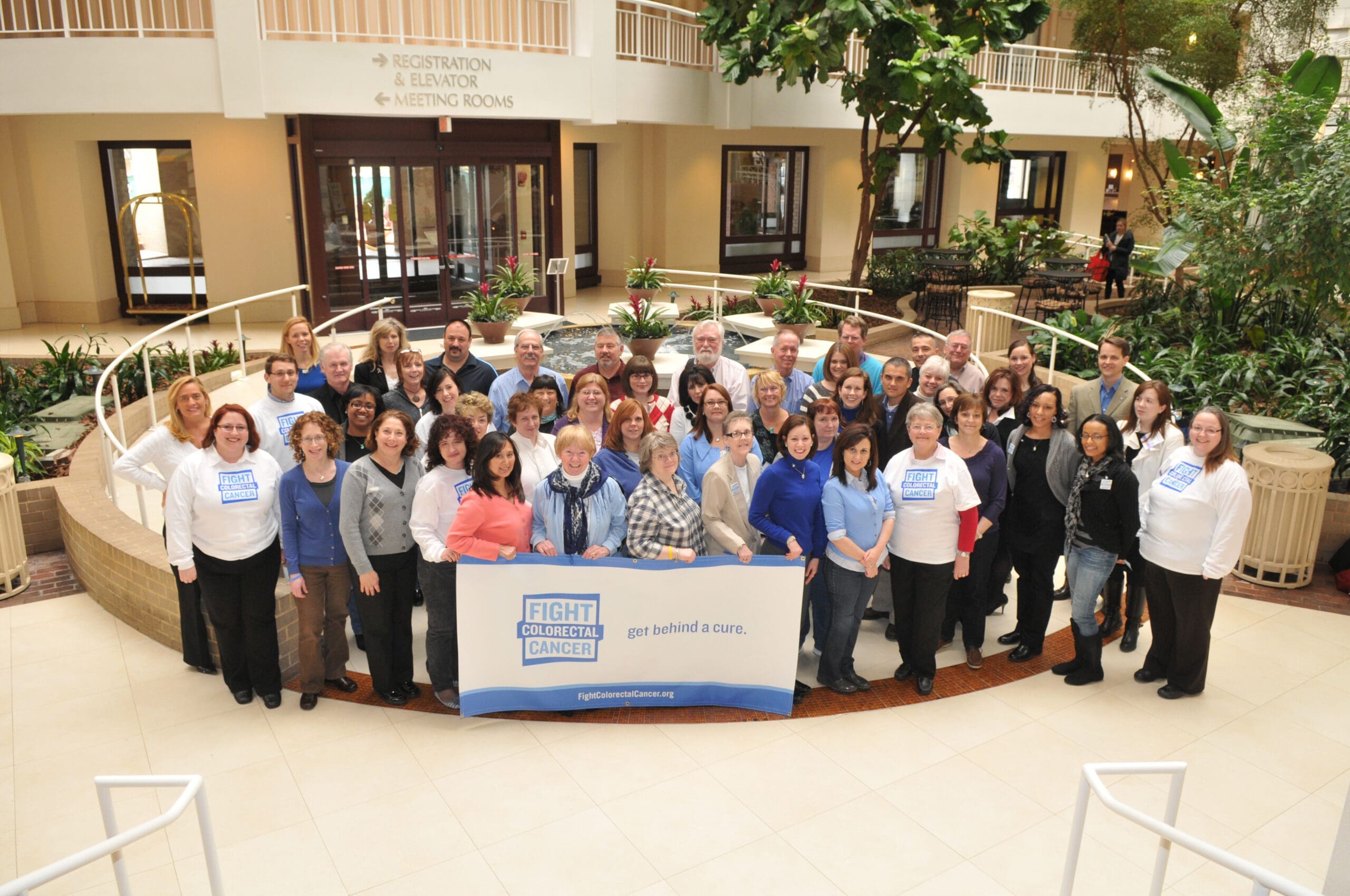
Awareness
RAISING AWARENESS, REMOVING BARRIERS
Fight CRC helped educate lawmakers about a key barrier to colorectal cancer screening.
Pushed for policy to ensure that Medicare beneficiaries would not be charged if a polyp was detected and removed during a screening colonoscopy.
Standard regimens evolve and strengthen patient outcomes (NCCN Guidelines).
#STRONGARMSELFIE launches and spreads nationally across Facebook, Instagram and Twitter. C3 rebrands to Fight Colorectal Cancer (Fight CRC) expanding its national identity.
2012
Legislation
ADVOCACY THAT CHANGED POLICY
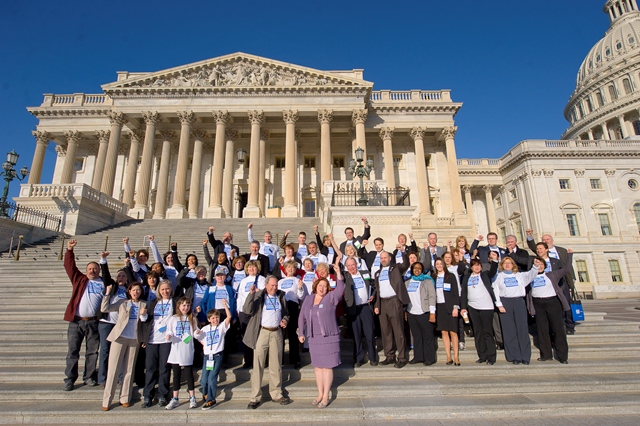
Fight CRC advocated for the introduction of a bill that was eventually known as the “Removing Barriers to Colorectal Cancer Screening Act.”
This legislation would ensure Medicare beneficiaries would not be charged if a polyp was detected and removed during a screening colonoscopy.
Fight CRC partners with Lady A for a public service announcement (PSA). Watch on YouTube
Patient advocates expand influence at major scientific meetings such as the American Society of Clinical Oncology (ASCO).
Fight CRC rings the NASDAQ closing bell to elevate national awareness of colorectal cancer (NASDAQ).
2013
One Million Strong and Growing
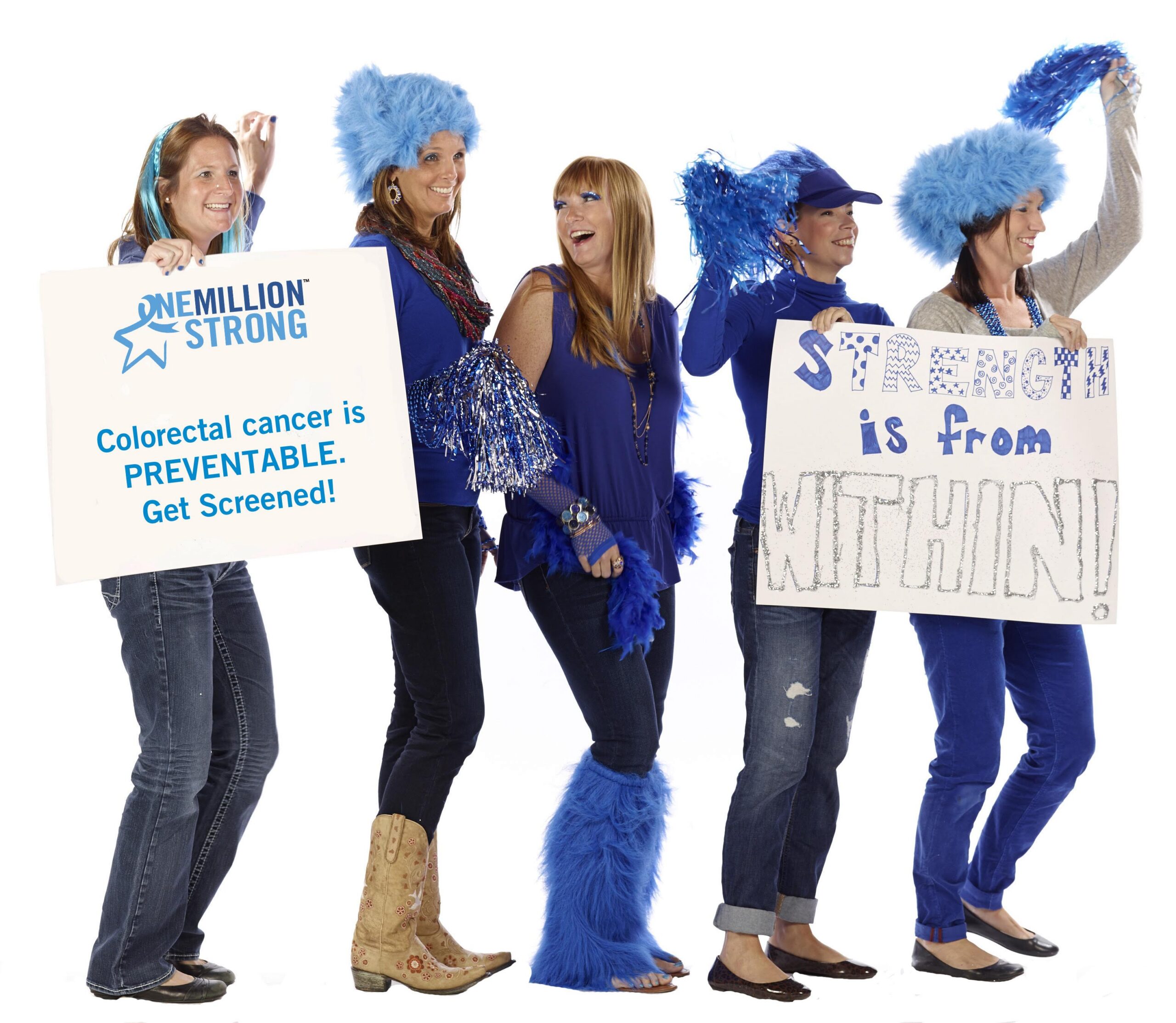
Call-on Congress grew by 20% with 80 advocates from 24 states participating in 104 congressional meetings.
H.R. 1070, Fighting Barriers to Colorectal Cancer, received 45 Co-Sponsors. Thank you to Rep. Charlie Dent (R-PA) for introducing this act in 2012 and for our lawmakers’ support.
One Million Strong launches in Times Square (National Media).
Regorafenib (Stivarga) is approved for refractory metastatic CRC (FDA).
One Million Strong campaign launches and #1MILSTRONG was exposed to nearly 100,000 on social media by March 1.
2014
The 80% Movement Takes Shape
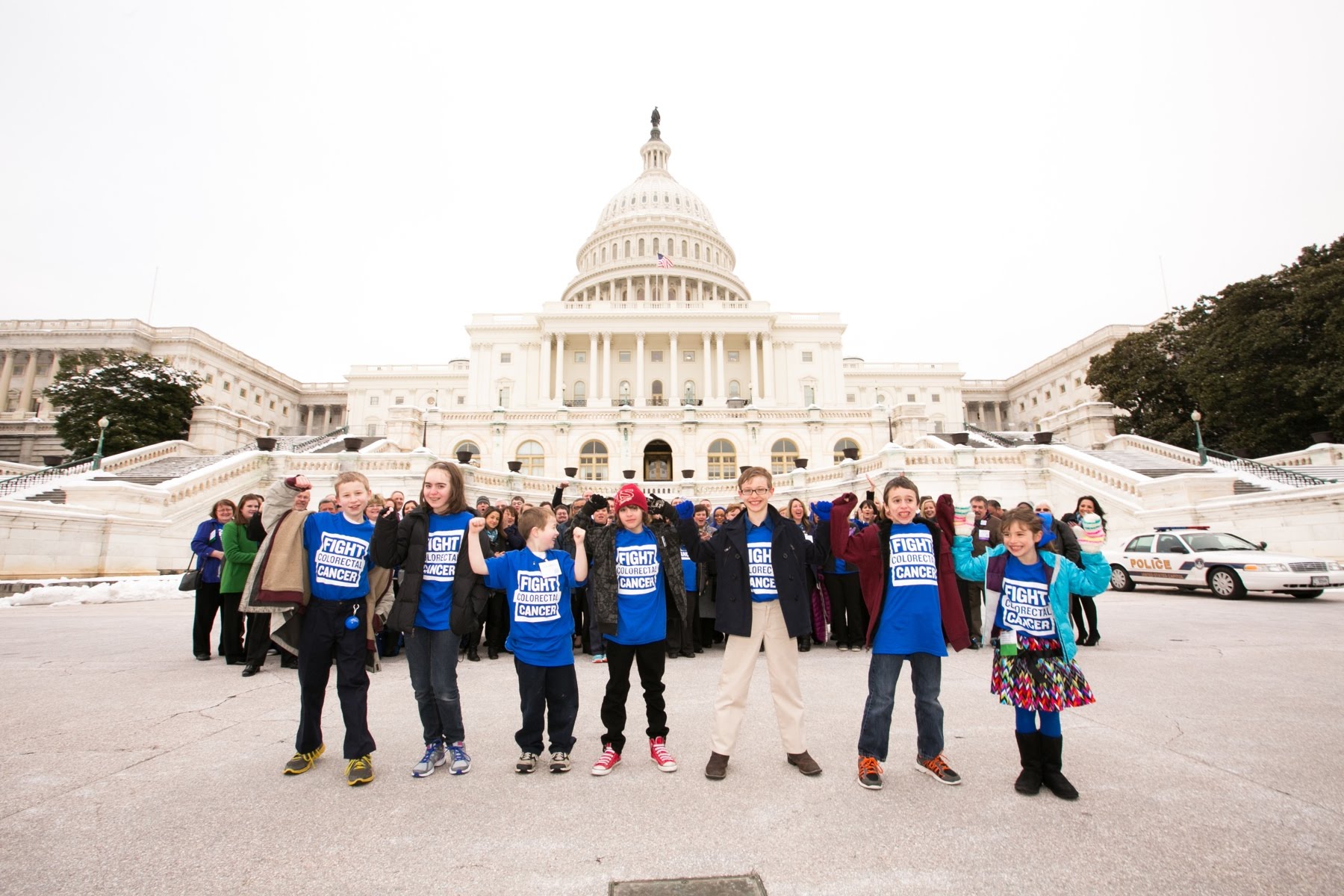
Fight CRC announced the Colorectal Cancer Congressional Advisory Council.
Partnered with NCCRT in a White House meeting and press conference to launch the 80% by 2018 campaign.
80% BY 2018: National rallying goal becomes screening 80% of eligible adults in the U.S. (NCCRT).
Cologuard is approved as the first stool DNA screening test (FDA).
PillCam COLON 2 is cleared for use after inc2015omplete colonoscopy (FDA). President Obama proclaims March as National Colorectal Cancer Awareness Month (White House).
2015
Advocates Mobilize for Legislative Change
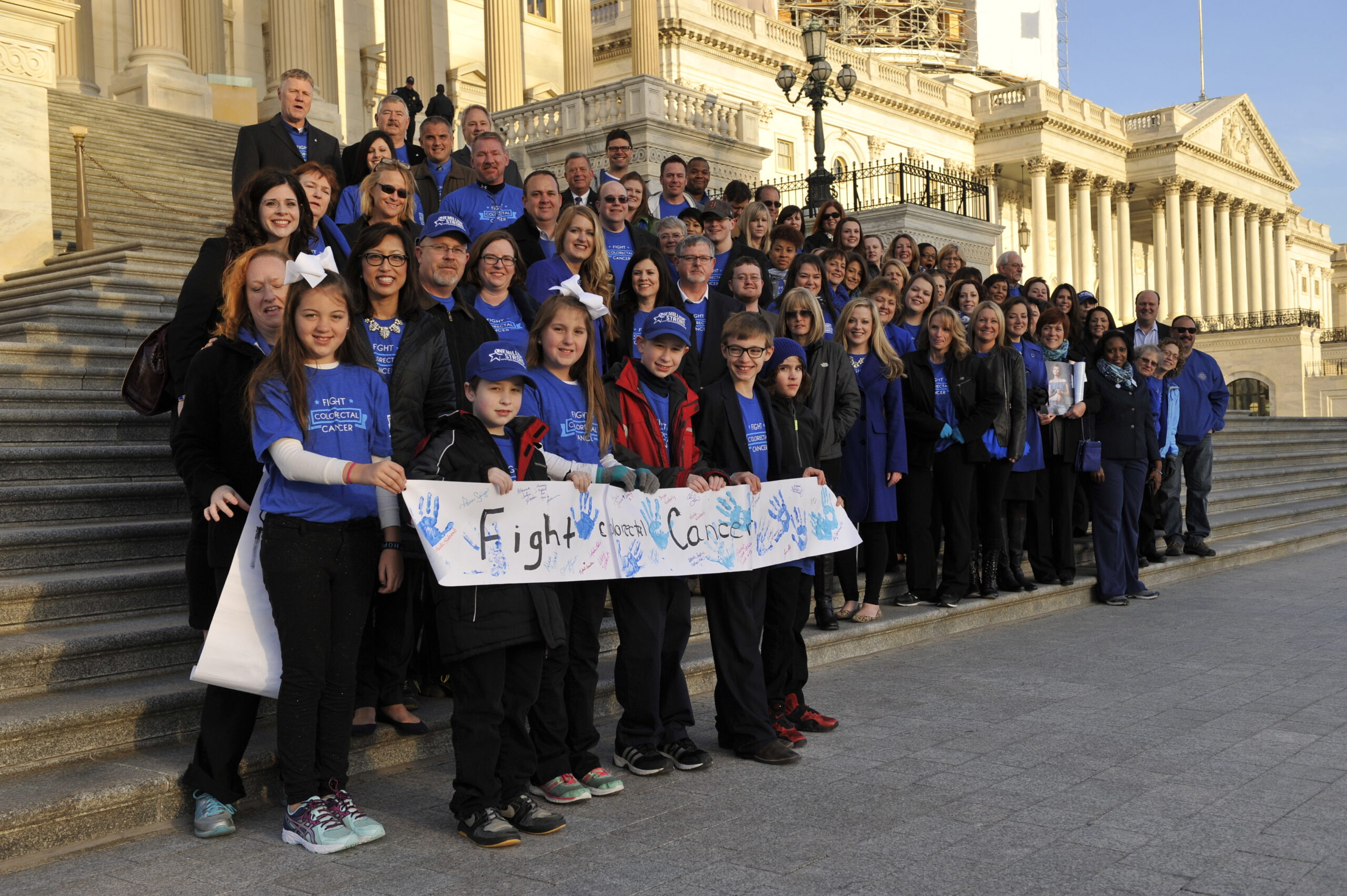
Advocates acted and sent emails to members of Congress asking them to co-sponsor H.R. 1220/S. 624, the Removing Barriers to Colorectal Cancer Screening Act.
This advocacy resulted in 128 new co-sponsors.
Luke Perry releases colorectal cancer screening PSA. Watch on YouTube
TAS-102 is approved for refractory metastatic CRC (FDA).
Fight CRC launches its Ambassador Program and reached its 50,000 #StrongArmSelfie milestone.
2016
Immunotherapy Sparks New Possibilities
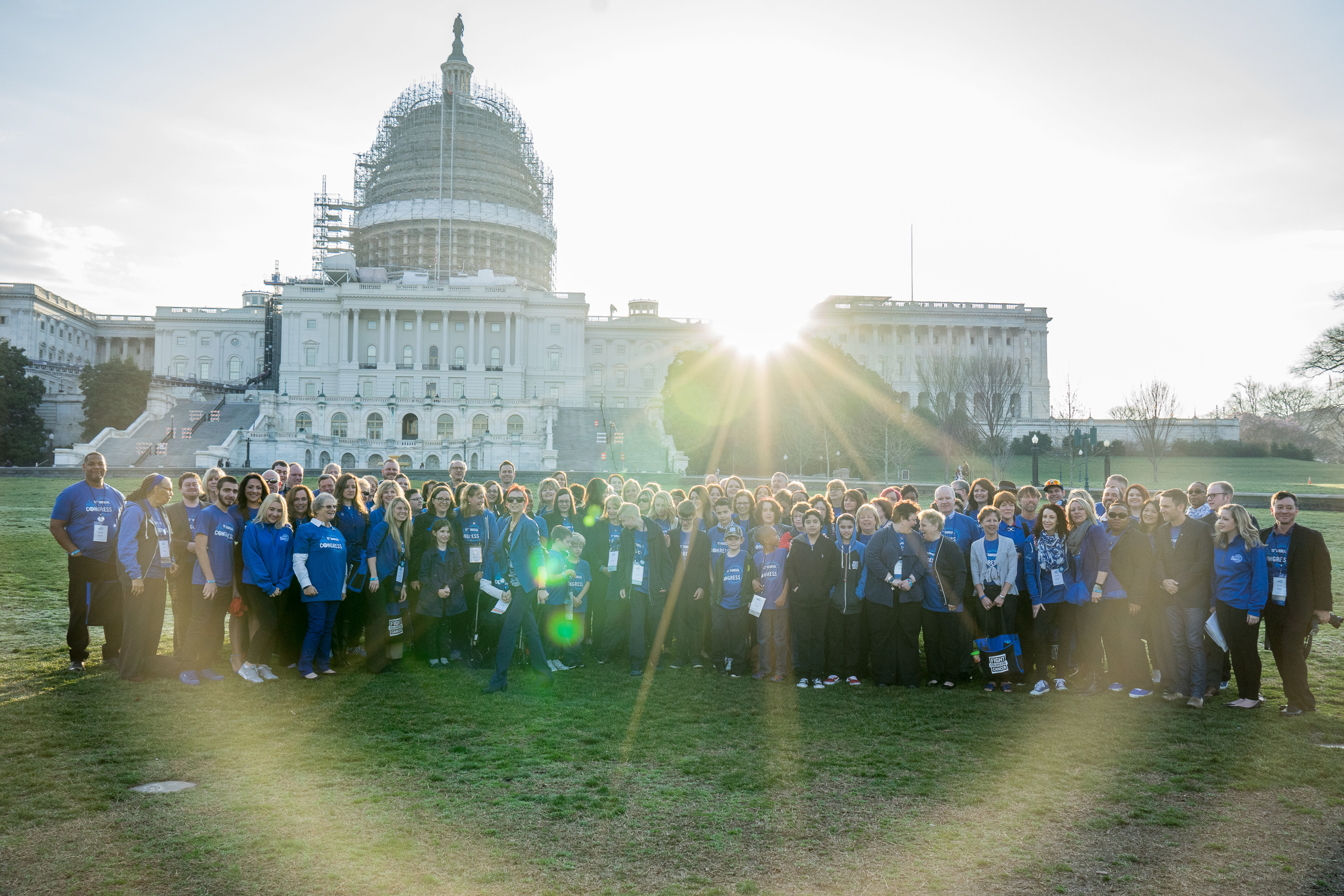
Fight CRC hosted its 10th Call-on Congress:
125 advocates participated in 131 congressional meetings.
Advocates helped grow support for the Removing Barriers Act, securing 300 co-sponsors.
CRC advocates go to the White House to advocate for 80% screening by 2018.
Immunotherapy Blueprint lays out a CRC strategy for trials and targets. Early-onset CRC (EOCRC) is “rare” under 50 but steadily rising (ACS).
Fight CRC hosts its first Climb for a Cure.
2017
Biomarkers Change the Game
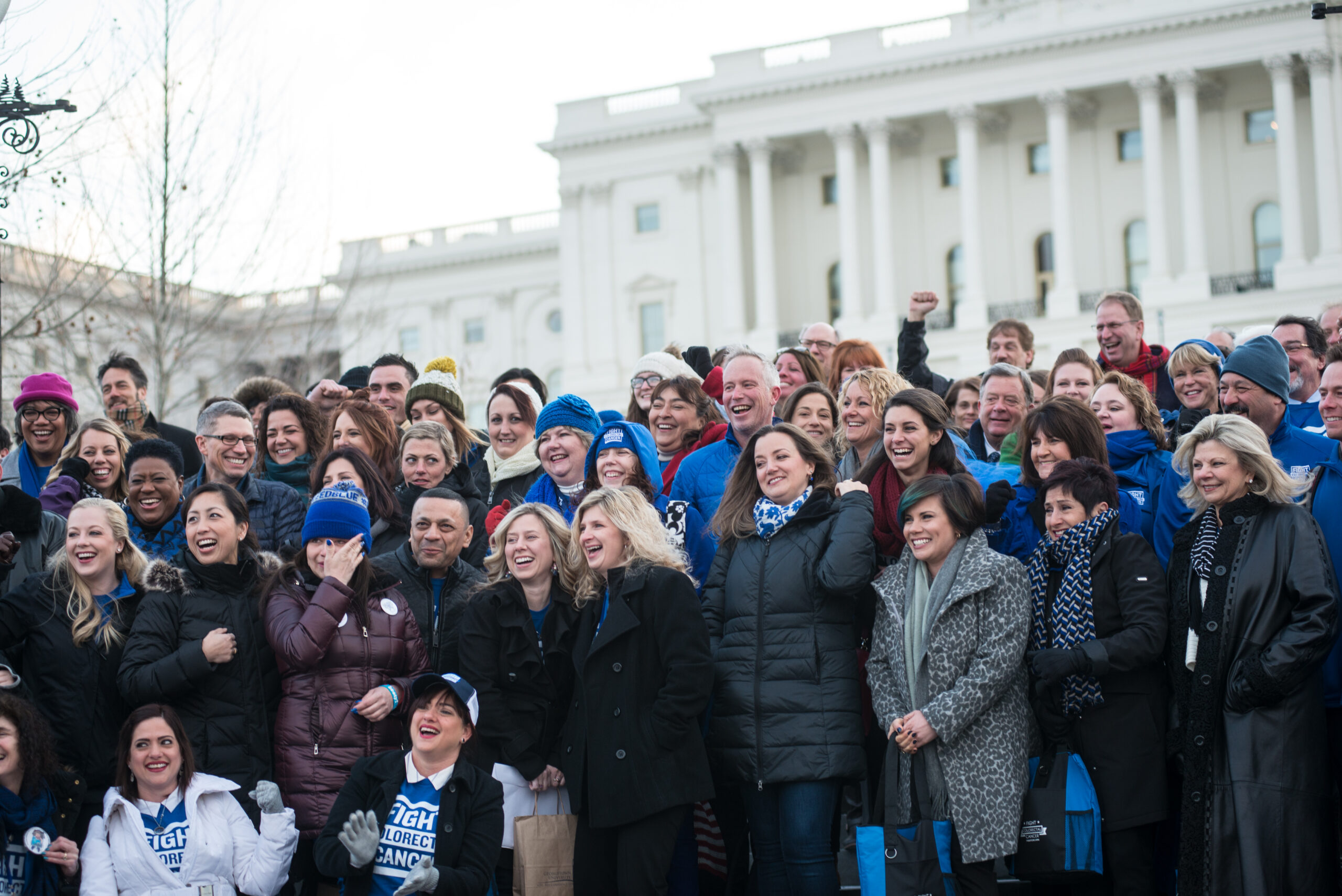
Fight CRC, along with its partners in the patient community, defeated efforts to repeal the Affordable Care Act and its patient protections for patients with preexisting conditions as well as no-cost colorectal cancer screening coverage.
Clinical Trial Finder launches to improve trial access. Learn More
Nivolumab is approved for MSI-H/dMMR metastatic CRC (FDA).
Immunotherapy becomes a breakthrough headline (National Media).
2018
45 Becomes the New 50
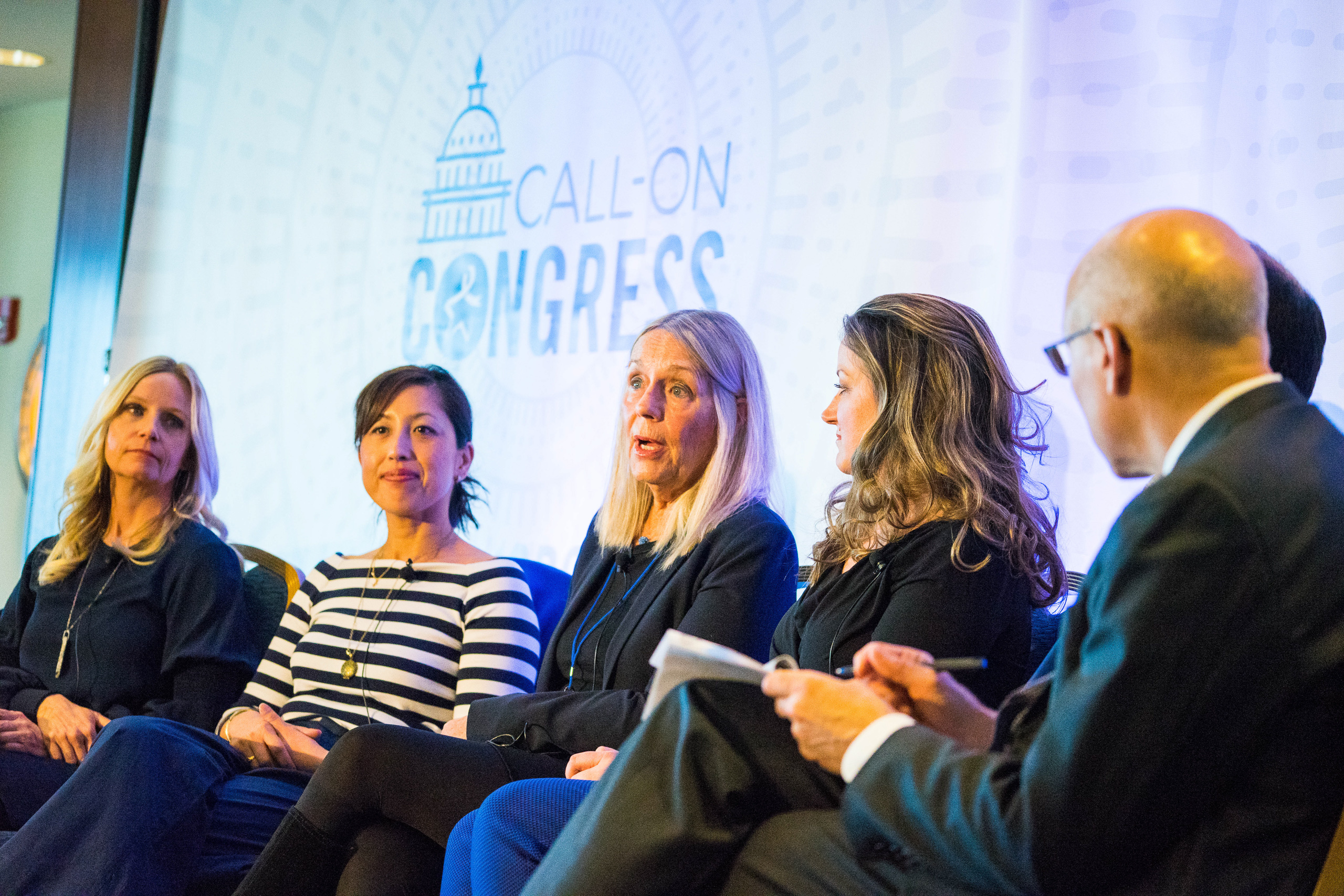
Patient advocates helped secure the largest funding increase for medical research in over a decade for NIH and NCI.
- 80% goal
- 68.8% actual in 2018
Rising rates of early-onset CRC make headlines (NYTimes). New guidelines estimate extending screening to an additional 22 million U.S. adults ages 45–49.
Advocate Chad Schrack walks across America to raise awareness for colorectal cancer and veteran suicide. 2,600 miles, 112 days, 8 pairs of shoes.
2019

Equity and Early-Onset Take Center Stage
Fight CRC advocates successfully urged their members of Congress to include language in the FY20 Appropriations Bill that directed the National Cancer Institute (NCI) to develop a plan identifying causes and risk factors for early-onset colorectal cancer patients.
NCCRT launches 80% in Every Community to keep pushing toward 80% and close screening equity gaps (NCCRT).
Equity becomes central to the national screening strategy: specifically addressing disparities in access, awareness, and follow-up care (NCCRT).
Fight CRC convenes its initial early-onset CRC working group meeting on February 1, 2019, in Denver, Colorado.
2020

Progress Faces a Pandemic
After eight years of advocating for the Removing Barriers to Colorectal Screening Act, it was signed into law, nicknamed the “Medicare Loophole” bill! (Fight CRC / Congress)
Colonoscopies and biopsies drop nearly 90% by mid-April. New CRC diagnoses drop more than 32% by mid-April during the nationwide COVID-19 pandemic (Komodo Health).
Encorafenib plus cetuximab approved for BRAF V600E mCRC (FDA) (Evidence: BEACON CRC, NEJM).
Chadwick Boseman dies from colon cancer (AP, NYT, CNN). Internet searches for terms related to CRC spike by 3500%, later named the ‘Boseman Effect’ (NIH).
2021

Screen at 45 Becomes Standard
Following advocacy from Fight CRC and many others in the colorectal cancer community, the United States Preventive Task Force (USPSTF) updated its recommendations and lowered the colorectal cancer screening age from 50 to 45 for average-risk individuals.
Congressional Colorectal Cancer Caucus launches: Bipartisan Congress members are dedicated to raising awareness among policymakers.
Path to a Cure Report for CRC launches in December. Fight CRC hosts its first Path to a Cure Think Tank in Springfield, MO. Learn More
USPSTF recommends CRC screening at age 45 due to rising incidence in younger adults (USPSTF Recommendation).
2022
Moonshot Momentum Builds
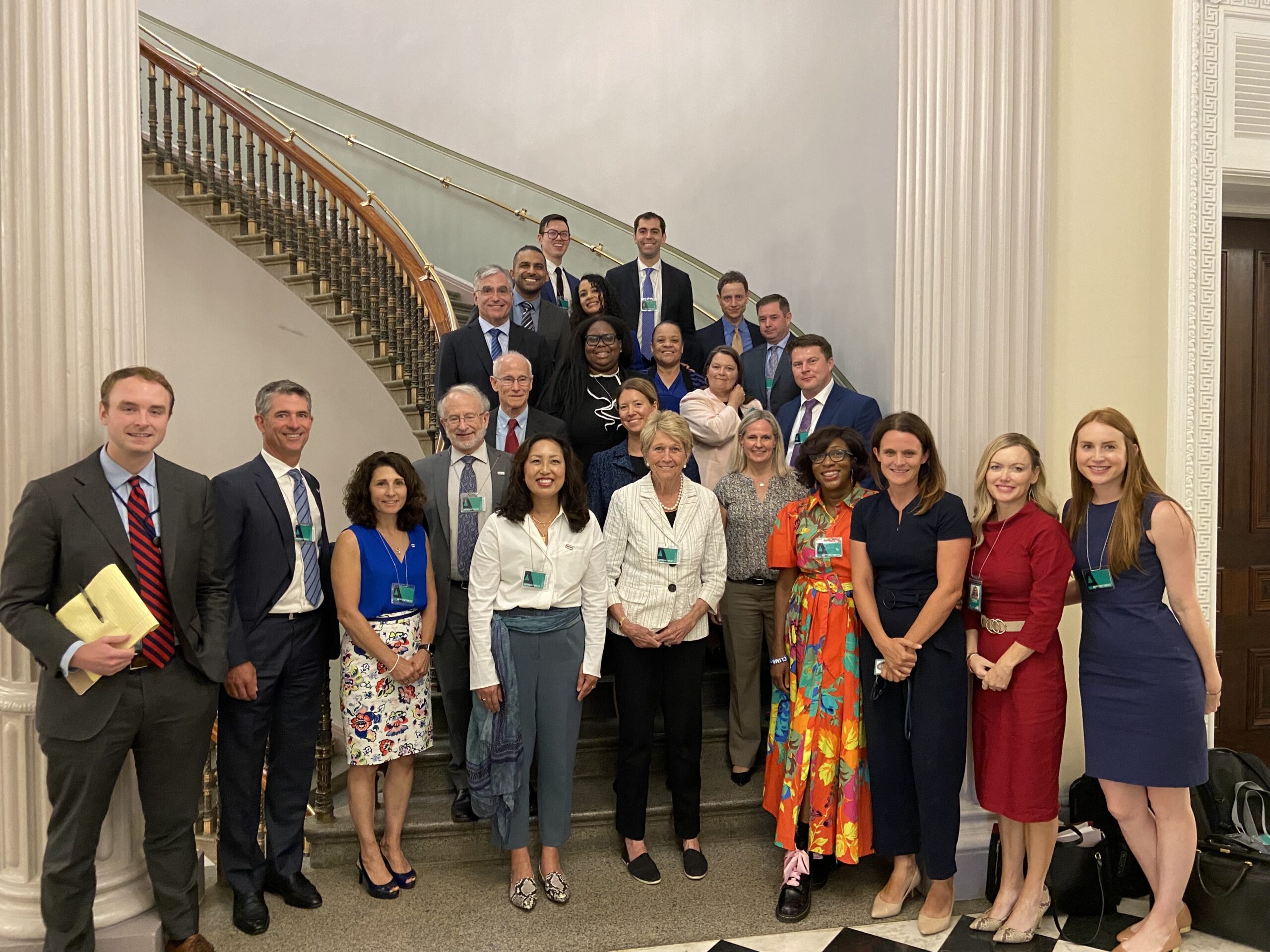
Fight CRC convened a group of colorectal cancer screening advocacy and business leaders to meet with officials from various federal health agencies and White House offices to discuss the challenges and opportunities related to colorectal cancer screening in response to President Biden’s cancer Moonshot initiative.
UNITED IN BLUE FLAG INSTALLATION DEBUTS ON THE NATIONAL MALL.
ctDNA and MRD testing expands in trials and guideline pathways (NCCN Guidelines).
CDC publishes new baseline screening estimates for ages 45 to 75 in response to the USPSTF recommendation and rising rates of EOCRC (CDC).
2023
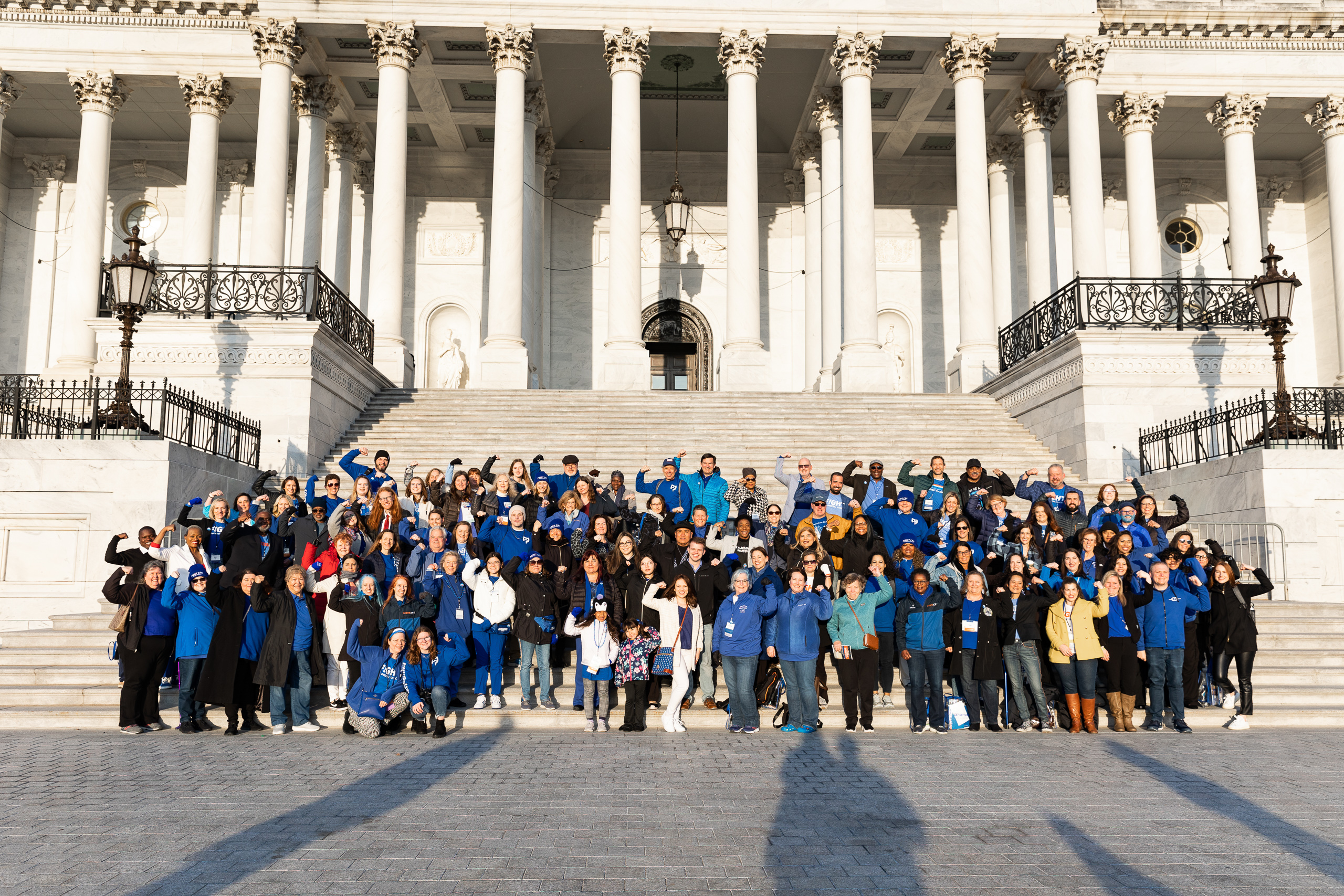
Advocates Defend Access to Care
In March 2023, UnitedHealthcare (UH) announced their plans to require prior authorization for almost all upper gastrointestinal (GI) endoscopy, colonoscopy, and capsule endoscopy procedures.
Working with community partners, Fight CRC advocates sent over 1,000 messages to UH’s CEO, they did not implement the policy as planned.
CEO Anjee Davis and advocate Simone Ledward Boseman speak at the White House Forum on CRC screening.
Watch
Fruquintinib is approved for previously-treated metastatic CRC (FDA).
Fight CRC launches its Colorectal Cancer Screening Quiz.
Learn More
In March, Fight CRC and Colon Club merge to maximize impact.
2024
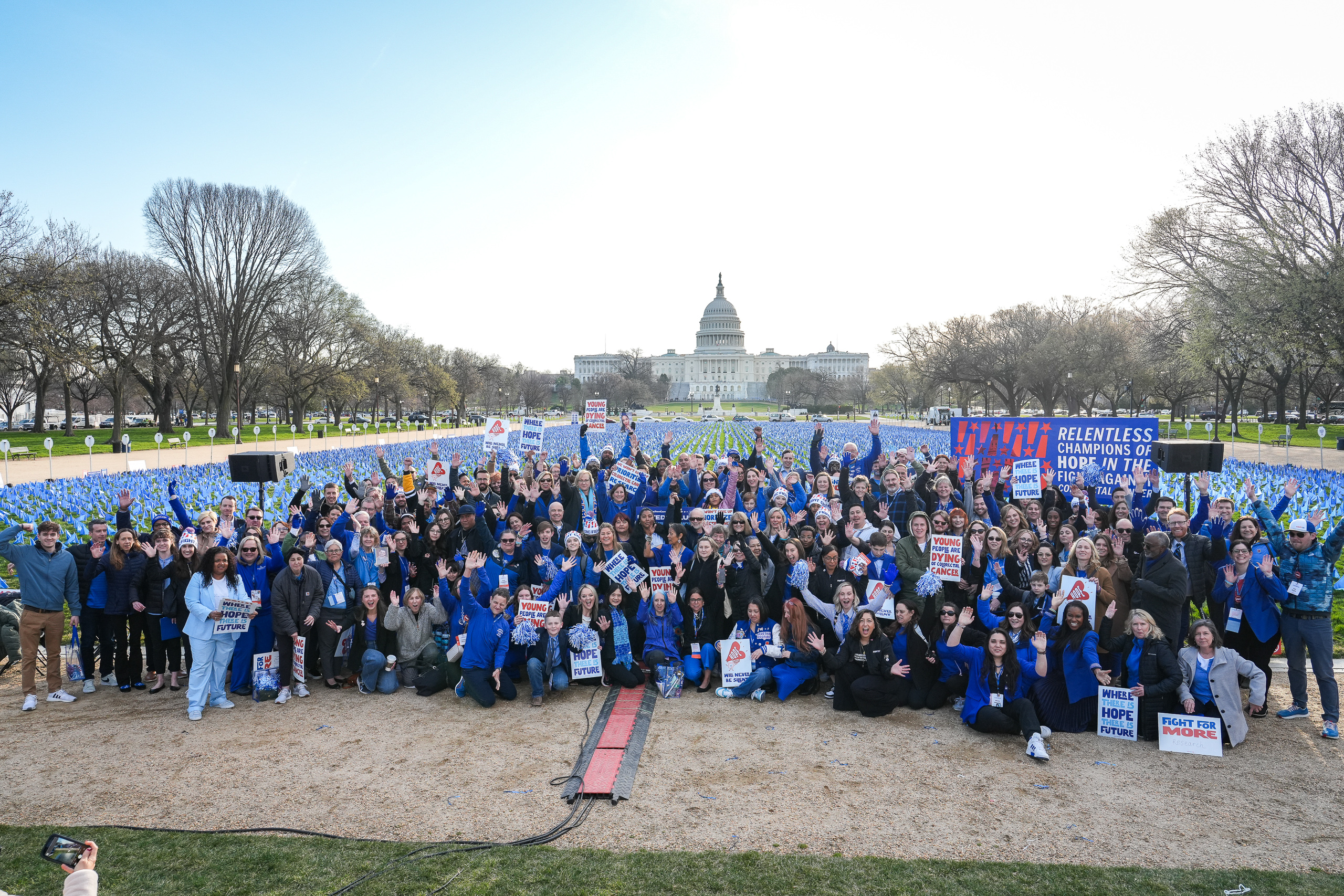
Innovation Expands Screening and Care
Fight CRC led a coalition of stakeholders to release the Colorectal Cancer Care Report: establishing clear, actionable goals for CRC screening and care. It served as a tool to help healthcare systems nationwide leverage data to measure progress, allocate resources, and improve outcomes.
Co-Chair of Congressional Colorectal Cancer Caucus Donald Payne Jr. passes away, a devoted advocate and visionary policymaker.
Screening options expand: ColoSense stool RNA test and shield blood tests approved for primary screening (FDA).
Fight CRC creates the first AI chatbot for colorectal cancer and takes over No Shave November.
Learn More
2025
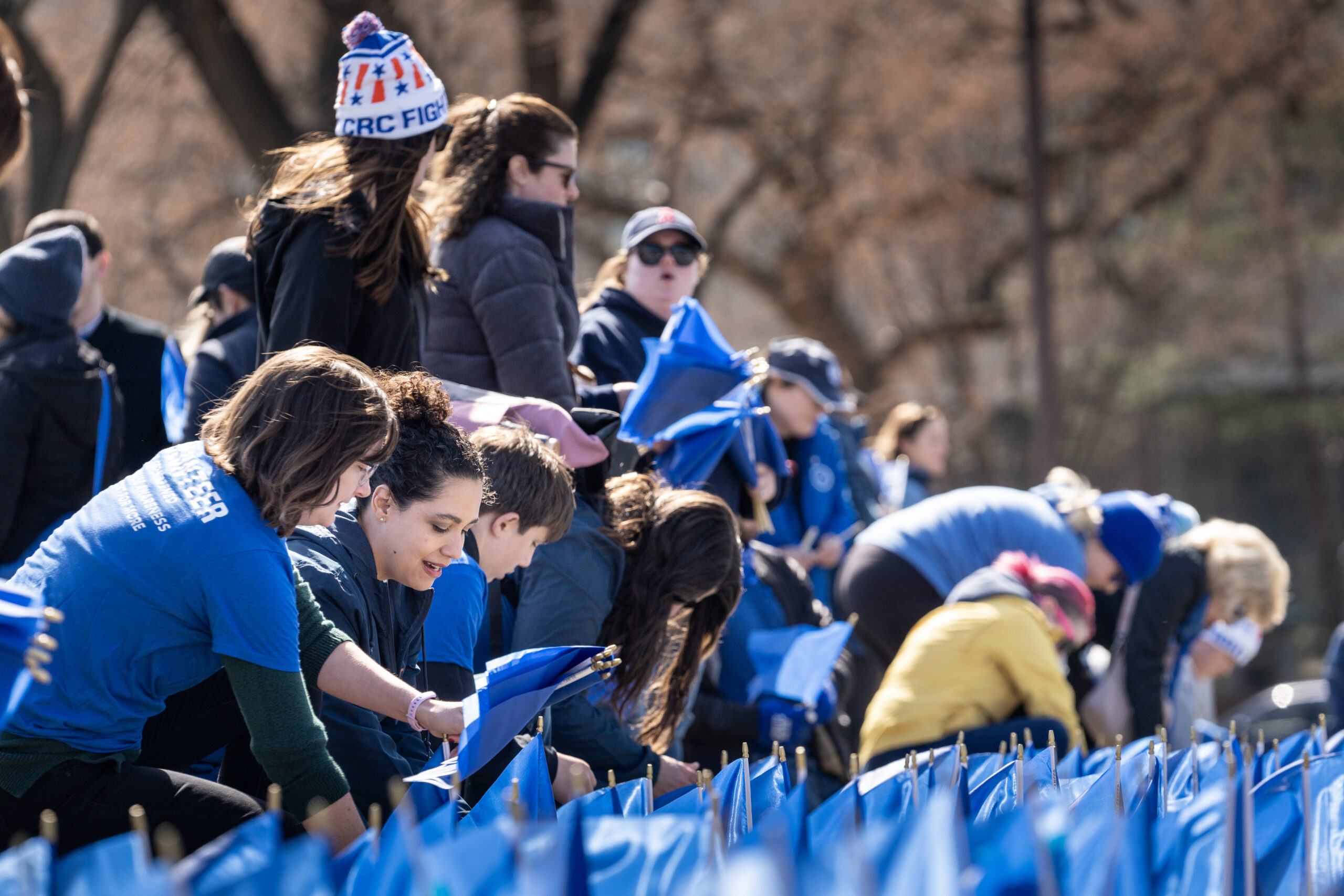
Protecting Progress, Defining the Future
Advocates successfully protected funding for the CDC’s Colorectal Cancer Control Program after it was slated to be eliminated. 38 grantees received funding to increase CRC screening across the country.
Fight CRC hosts its first-ever Global Early-Onset Colorectal Cancer Think Tank.
Nivolumab plus ipilimumab is approved for MSI-H or dMMR metastatic CRC (FDA). ColoSense is added as a first-line screening option for CRC (NCCN Guidelines).
EOCRC stays in focus in major cancer progress reporting (AACR).
Annual Impact Reports
Financial Statements
Funding Policy & Disclosure
To keep us ethical and focused, we developed the following funding policy and disclosure. All who sponsor and donate to Fight Colorectal Cancer must oblige by the following conditions:
Property of Fight CRC
All materials and programs developed by Fight Colorectal Cancer are the property of Fight Colorectal Cancer, must carry Fight Colorectal Cancer copyright, and as such, cannot be changed, modified or duplicated without prior written permission from Fight Colorectal Cancer.
Mailing Lists
Fight Colorectal Cancer does not sell or share its mailing list.
Exclusive Partnerships
Fight Colorectal Cancer does not enter into exclusive partnerships.
Third Party Involvement
Fight Colorectal Cancer reserves the right to approve the participation of third parties that may be recommended for involvement in any program, project or event.
Written Approval
Any corporate partner wishing to reference Fight Colorectal Cancer or any Fight Colorectal Cancer in any public relations, marketing or promotional materials or activities, must first seek the prior review and written approval of Fight Colorectal Cancer.
Fair Balance
Every effort will be made to ensure that information presented in materials and at programs will be presented in fair balance.
Patient Community
Fight Colorectal Cancer Research Updates will present information of interest to the patient community. Every effort will be made to ensure that information is presented accurately and completely. Updates may occasionally link to product-specific websites.
Advertising on Web
Fight Colorectal Cancer does not sell advertising on our website. However, corporate and individual donors may be thanked for their support of a program in the form of a link to their website from our website. A link to a supporter’s website from the Fight Colorectal Cancer site is not an endorsement of any product or service.
Does not Endorse
Fight Colorectal Cancer does not endorse any medical product, treatment protocol or service, or provide medical advice to patients. Fight Colorectal Cancer’s Medical Advisory Board reviews and approves content within patient resources pages to ensure accurate and full reporting of treatment risks and benefits.
Relationship with Corporate Partner
All speakers at Fight Colorectal Cancer events will be required to disclose their relationship with the corporate partner.
Disclose Funding Sources
The Fight Colorectal Cancer projects and programs will publicly disclose funding sources. Speakers representing the Fight Colorectal Cancer will clearly disclose funding sources.
Projects and Educational Programs
Funding from corporations for projects and educational programs are charitable donations or unrestricted educational grants. While we welcome input from our corporate partners, Fight Colorectal Cancer has ultimate authority over program development, content and speaker selection.