


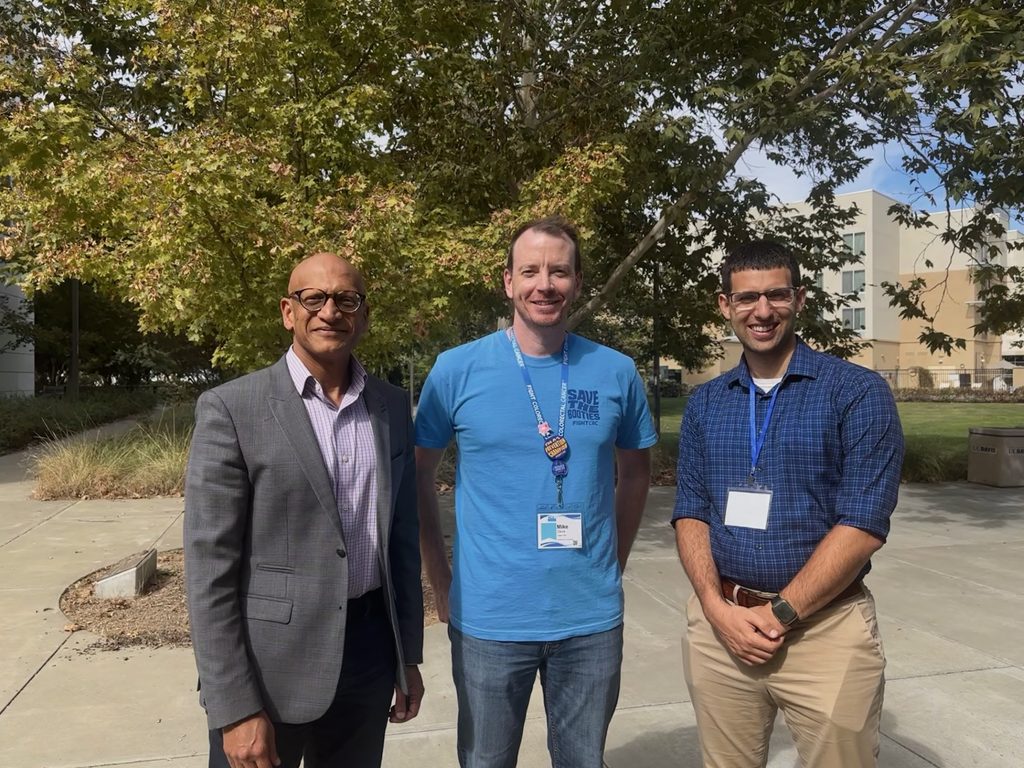
Mike Davis, Research Advocate, Fight CRC
As a survivor of early-onset colorectal cancer (EOCRC), you are used to the questions. Why did this happen to me? Could I have done something to prevent it? How could I have caught it earlier? Why did I survive, when others did not? Why aren’t there more options for my treatment? Why did no one talk to me about quality of life issues caused by treatment? And perhaps most important from the advocate perspective – what will it take to keep others from experiencing what I have experienced?
Questions like these are what compelled me to become a colorectal cancer research advocate where I had the opportunity to attend the Western Colorectal Cancer Consortium Conference (WC4) in early October. It was inspiring and reassuring to be among researchers and physicians working passionately to answer questions like these that matter to patients and caregivers. Among the many insights of the conference, a few stood out as particularly meaningful to people affected by EOCRC.
Attendees heard a call to action from Dr. Samir Gupta of UC San Diego about the need to respond to increasing EOCRC rates with “innovative, disruptive translational research.” Survivors and caregivers could interpret this as a plea to researchers for out-of-the-box, and ambitious research ideas that have a real-world ability to quickly change outcomes for early-onset patients. We should all be encouraged that this message is being delivered directly to those who have the capacity and expertise to reverse the EOCRC trends we see today.
Dr. Joshua Demb, also of UC San Diego, shared insights into ways that healthcare providers could improve detection of EOCRC. Although many physicians are concerned about rising incidence in younger people, detecting EOCRC can be like finding a needle in a haystack. Dr. Demb shared research on red flag signs and symptoms that could help clinicians “make a smaller haystack.” He also presented ways that other countries like Denmark and the U.K. have created so-called “urgent cancer pathways” for timely diagnosis of EOCRC. The U.S. lags behind its peers in quickly diagnosing EOCRC patients after high-risk symptoms are identified. However, alternative models for more rapid detection of EOCRC already exist, and advocates could focus their efforts on seeing these models applied here in the U.S.
EOCRC patients and caregivers commonly share the perspective that advancements in treatment options for colorectal cancer lag significantly behind the advances made in other cancers. However, Dr. Heinz Josef Lenz of USC presented on immunotherapy advancements in colorectal cancer that encourage us to be hopeful about the future of immunotherapy for EOCRC patients. In particular, he noted progress on immunotherapy treatments for microsatellite-stable metastatic disease, the subtype of colorectal cancer responsible for approximately 95% of all metastatic colorectal cancers, and which has been very resistant to immuno-oncology approaches so far.
Finally, Dr. Katherine Van Loon of UC San Francisco shared the blueprint and early lessons from UCSF’s newly opened Young-Onset Colorectal Cancer Clinic in San Francisco. Intended to provide tailored care for the EOCRC population, Dr. Van Loon emphasized a particular focus on exercise programming aimed at reducing cancer recurrence and specialized services for fertility planning, two topic areas of high importance to the EOCRC population.
Overall, I found lots of reasons to be hopeful about the future of colorectal cancer prevention, detection, treatment, and survivorship, and am already looking forward to representing Fight CRC at next year’s conference. However, these advancements in detection, treatment, and survival will surely not come fast enough for the EOCRC community. That’s why it’s important to continue representing the patient and caregiver experience in venues like WC4. By adding human faces and stories to the data and trials researchers and physicians are working on we hope we can lend an urgency and gravity to the stakes of early-onset colorectal cancer research.