


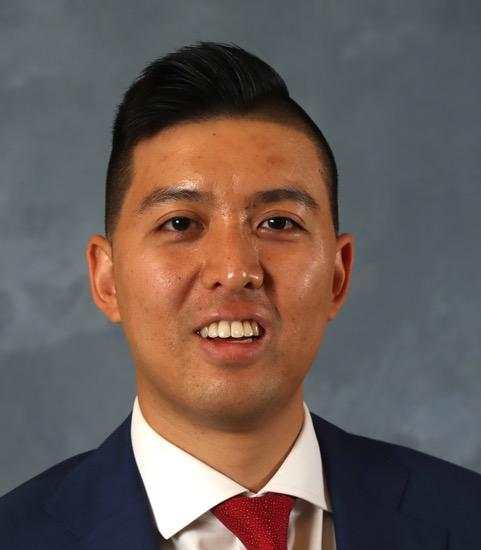
An interview with Dr. Timothy Yen, Assistant Professor of Gastroenterology and early-career investigator at the forefront of Lynch syndrome and colorectal cancer prevention.
In 2022, Fight CRC awarded Dr. Timothy Yen a research grant, just when he had stepped into his first job as an attending gastroenterologist fresh out of both a gastroenterology fellowship and an informatics fellowship. A few years later, that early investment has paid forward in a big way. Dr. Yen recently received an American Cancer Society award to study the largest cohort of Lynch syndrome patients in the United States. We sat down with him to discuss the journey from that initial grant to this milestone and to hear why he believes investing in early-career researchers is essential to the future of colorectal cancer research.
Here’s a look at our conversation with Dr. Timothy Yen.
Can you share a bit about your research focus and what drew you to colorectal cancer research?
Dr. Yen’s path into colorectal cancer research is grounded in a compelling paradox: colorectal cancer is simultaneously one of the most preventable cancers and one of the most common. That tension drives his work in the prevention of hereditary and familial digestive cancers, using clinical informatics as a tool to answer questions that matter most to patients and clinicians alike. As he put it, colorectal cancer “remains one of the most common cancers in the modern era” -and that is precisely what keeps him focused on prevention.
How did receiving the Fight CRC grant in 2022 impact your work at that stage in your career?
Timing matters enormously for early-career researchers, and his Fight CRC grant arrived at just the right moment. Coming fresh out of fellowship, the grant gave him the resources and hands-on experience to rapidly develop his informatics-based research skills – while also opening the door to more novel approaches to study design. It wasn’t just funding; it was a foundation. “This grant provided me with the resources and experience to rapidly develop my skillset in informatics-based research in the field of colorectal cancer prevention as well as more novel approaches to study design,” he said.
In what ways did that early funding help enable or accelerate the research that led to your recent American Cancer Society award?
His Fight CRC-funded project used informatics-based interventions within Epic’s electronic health record system to improve prevention of familial colorectal cancer at his institution. That work built the expertise he needed to scale up – significantly. The experience, he noted, “greatly helped me develop expertise that was necessary for the ‘big data’ research” now powering his ACS award.
Can you describe the connection between your Fight CRC-funded project and the work now being supported by the ACS?
The two projects share the same foundation but operate at very different scales. His Fight CRC work leveraged Epic’s tools at a single institution; the ACS award draws on that same infrastructure across hundreds of institutions nationwide – all focused on improving “digestive cancer prevention/risk-reduction for all Lynch syndrome patients.”
Beyond the science itself, how did this funding influence your career development as an early-career investigator?
For Dr. Yen, the impact of early-career funding goes well beyond any single research project. In a healthcare climate where clinician-investigators are increasingly asked to prioritize clinical work over research, protected time and financial support are precious. “The time that I am allowed to devote to research is precious and particularly reliant on external sources of financial support,” he shared.
What were some of the key challenges you were able to overcome because of this initial support?
With the support of his Fight CRC grant, he was able to pursue the training and accreditation necessary for “big data” research – a time-intensive process that would have been difficult to manage alongside full clinical responsibilities. With this support, he explained, he could “focus much of my non-clinical time towards the training and accreditation needed to conduct ‘big data’ research, while simultaneously being productive with multiple ongoing research projects.”
Why is it important to invest in early-career researchers in colorectal cancer specifically?
Dr. Yen is candid about the precarious state of early-career research in today’s funding landscape. Public funding has declined sharply, and those just starting out are the most vulnerable – lacking “the experience or research portfolio needed to financially sustain their careers independently.” In his view, the stakes extend far beyond any single lab or career.
What does this new funding allow you to do next that wasn’t previously possible?
The scale of his new work is remarkable. His ACS award opens the door to a level of research that simply wasn’t possible before – supporting his work in studying “the largest cohort of Lynch syndrome patients to date in the United States,” all focused on prevention of digestive cancers in Lynch syndrome.
How do you hope your research will ultimately impact patients with colorectal cancer?
At the heart of his work is a deeply patient-centered goal: to give clinicians and individuals with Lynch syndrome better tools for understanding and reducing their personal risk. He expressed that he hopes to “identify novel risk factors for colorectal cancer in Lynch syndrome and estimate each Lynch syndrome patient’s individual risk of colorectal cancer based on their personal history” – ultimately helping clinicians and patients better understand how to prevent colorectal cancer in Lynch syndrome, which often still occurs despite their best efforts.
What would you say to organizations or donors considering investing in early-stage research funding?
His message to potential funders is direct: early investment is not just helpful – it’s critical to the future of the field. The pathway for even the most talented early-career researchers has narrowed considerably, and without intentional support, the field risks losing the next generation of innovators at exactly the moment they are needed most. As he warned, “if there is no growth in the funding for early career CRC research, we may not ‘catch up’ with the current rapid rise in early onset colorectal cancer cases.”
What advice would you give to other early-career investigators applying for grants like those offered by Fight CRC?
His guidance is both practical and encouraging – and centers on thinking beyond the immediate research question. “Think about how a grant can not only answer a research question but help you develop the skillset and knowledge base needed for your desired research career. Lean on your mentor to help you through this process,” he advised.
Is there anything else you’d like the Fight CRC community to know about the importance of this kind of support?
He closed with a reflection that will resonate with many in the early-career research community. Before these awards, he admits he wasn’t sure he had what it took to build an independent research career – a feeling he describes as very common, particularly as early-career clinician-investigators are asked to take on ever-increasing clinical loads. But the recognition changed his perspective entirely. “Up until these recent research awards, I was never sure I had what it took to ‘make it’ as a clinician-investigator, and that my clinical informatics background may be too novel or ill-suited for what the field of colorectal cancer research needs. Because of these awards, however, I can now envision a practical pathway forward towards an independent research career in prevention of colorectal cancer and other digestive cancers,” he concluded.
Dr. Yen’s journey – from a grant recipient to a nationally recognized investigator – is exactly the kind of story that reminds us why early investment in research matters. Fight CRC’s commitment to funding early-career scientists isn’t just about the science happening today; it’s about building the foundation for the breakthroughs that will protect patients tomorrow.