La Jolla, Calif., Jan. 20, 2026 — Fight Colorectal Cancer announced today that Chief Executive Officer Anjee Davis will speak at the Annual Liquid Biopsy for Precision Oncology Summit, taking place Feb. 3–5, 2026, in La Jolla, Calif. The international summit convenes leaders from biopharma, diagnostics, academia, regulators, and patient advocacy to advance the integration of liquid biopsy technologies into oncology drug development and clinical care.  

Davis will participate in a session entitled, “Championing Policy and Patient Centered Care to Advance Liquid Biopsy in Practice,” emphasizing the critical role of patient-centered evidence, equitable access, and education in translating precision oncology innovations into real-world impact for people with cancer 

“Liquid biopsy is clearly clinically valuable, but too many patients still are not benefiting in a consistent way,” Davis said. “The barriers are not about the science. They are about implementation. Access to liquid biopsy looks very different in community settings compared with academic centers. I really appreciate the opportunity to be a part of this important discussion during this year’s summit.” 

The Liquid Biopsy for Precision Oncology Summit celebrates its 10th anniversary in 2026, marking a decade of progress in biomarker science, regulatory alignment, and clinical adoption. The meeting will host more than 250 experts and feature discussions on circulating tumor DNA (ctDNA), minimal residual disease (MRD), regulatory pathways, reimbursement, and the future of precision medicine across cancer types 

Daad Abighanem, a Fight CRC research advocate, will be the first patient to speak at this summit, bringing the patient’s voice to open discussions on the real-world impact of liquid biopsy technologies. 

Fight CRC’s participation underscores the organization’s continued commitment to ensuring that cutting-edge science translates into longer, better lives for all patients, with colorectal cancer patients fully represented in the precision oncology revolution. 

About Fight Colorectal Cancer

Fight Colorectal Cancer (Fight CRC) is a leading patient-empowerment and advocacy organization in the United States, providing balanced and objective information on colon and rectal cancer research, treatment, and policy. We are relentless champions of hope, focused on funding promising, high-impact research endeavors while equipping advocates to influence legislation and policy for the collective good. Learn more at FightCRC.org.

Contact

Elizabeth Jordan
Fight Colorectal Cancer
703-548-1225
elizabeth@fightcrc.org

Simone Ledward Boseman shared her story of love and loss of her beloved husband, Chadwick Boseman at the White House Colorectal Cancer Forum.

She spoke about the seemingly glamorous life they were living publicly, while privately they were navigating not only the challenges of cancer treatment, but also the fear that his health condition would become exposed and a topic of tabloid gossip. We talked to Simone following the White House meeting. She opens up about what it has been like to share her story and be a voice for the voiceless.

Curated by Fight CRC’s Medical Advisory Board & Research Advocacy Training and Support (RATS) team. 

This month’s roundup highlights promising research in MSS immunotherapy (IO), KRAS G12C-targeted therapies, ctDNA biomarkers, and third-line (3L) treatment innovations. Several clinical trials are now exploring deeper IO combinations, early-line KRAS targeting, and tumor microenvironment manipulation.

Need help understanding clinical trials or biomarker testing? See our biomarker resources here

1. mKRAS-VAX + Nivolumab/Ipilimumab in MSS CRC — KRAS Vaccine Drives IO Response

  • Phase: Early-stage (I)
  • Who it’s for: Patients with MSS mCRC and KRAS mutations (G12C/D/V/A/R)
  • What it’s studying: A peptide vaccine (mKRAS-VAX) that primes the immune system, combined with anti–PD-1 and anti–CTLA-4 antibodies
  • Why it matters: Early signals show that even MSS tumors, typically IO-resistant, may respond when T cells are primed by targeted vaccination

Patient Tip: If you’ve been told your tumor is MSS and KRAS+, ask your oncologist about vaccine combo studies.

2. IVX037 + Sintilimab for MSS CRC — TLR9 Agonist + IO in Cold Tumors

  • Phase: One
  • Who it’s for: Patients with MSS colorectal cancer
  • What it’s studying: An intratumoral DNA-based immune stimulator (TLR9 agonist) given with systemic PD-1 inhibition
  • Why it matters: MSS CRC is often immune cold. This trial aims to “turn on” local immune response and create systemic tumor rejection.

Patient Tip: Intratumoral immune agents may offer new IO paths, ask if regional studies are open nearby.

3. EVEREST-2 CAR-T Trial — Logic-Gated Tmod CAR-T for HLA-A*02– CRC

  • Phase: 1/2
  • Who it’s for: CRC patients with HLA-A*02 loss and mesothelin expression
  • What it’s studying: A novel CAR-T cell therapy (A2B694) that selectively activates in tumors with specific immune escape features
  • Why it matters: This logic-gated therapy minimizes off-tumor toxicity while targeting solid tumors, including MSS CRC

Patient Tip: Ask about HLA-type testing and whether your tumor expresses mesothelin,  it’s becoming relevant in CAR-T trial matching.

4. FOG-001: First-in-Class β-Catenin Inhibitor in MSS CRC — Targeting the Wnt Pathway

  • Phase: 1/2
  • Who it’s for: Patients with MSS tumors showing Wnt/β-catenin activation
  • What it’s studying: A novel small molecule disrupting β-catenin–mediated transcription, believed to enhance IO infiltration
  • Why it matters: Wnt pathway activation drives immune exclusion in >80% of MSS CRC,  this may reverse that mechanism

Patient Tip: Ask if your tumor has Wnt-activation or T-cell exclusion; some molecular panels report this.

5. Vilastobart + Atezolizumab — Plasma TMB Predicts IO Response

  • Phase: Active trial
  • Who it’s for: MSS patients with high pTMB and ctDNA-positive disease
  • What it’s studying: Monoclonal antibody + IO combo in 3L MSS CRC
  • Why it matters: Plasma tumor mutation burden (pTMB) tracked via ctDNA predicted responses better than imaging

Patient Tip: If you’ve had ctDNA testing, ask about your pTMB — it may open new IO options.

Takeaway:

December’s roundup showcases a maturing field of MSS-targeted IO, expanding KRAS strategies, and a growing role for ctDNA as a dynamic biomarker. Clinical trials are more refined, personalized, and frequently targeting resistance mechanisms in third-line and beyond. And for the first time, solid-tumor CAR-T therapies are making their way into MSS CRC.

Even if a trial isn’t right for you today, learning what’s out there can help you and your care team plan what’s next.

Have questions about trials or biomarker testing? Visit Chat CRC to connect with Fight CRC’s navigators and get easy-to-understand answers.

Disclaimer: This content is for informational purposes only and is not medical advice. Talk with your oncology team about testing, treatment options, clinical trial eligibility, and side-effect management.


NOVEMBER

1. BESPOKE-CRC (NCT04264702) — Personalized Care After Surgery

  • Recruitment Status: Open and enrolling (many U.S. locations)
  • Who it’s for: People with Stage I–IV colorectal cancer after surgery
  • What it’s studying: This study uses a blood test called ctDNA to check for tiny traces of cancer after surgery.
  • Why it matters:  If the test shows no sign of cancer, some patients may be able to skip extra treatment. If it does, doctors can act sooner.
  • ClinicalTrials.gov: 
  • Reference:

Patient Tip: Ask your doctor if ctDNA testing could help guide your care after surgery.

2. CodeBreaK-301 (NCT06252649) — New First Treatment for a KRAS Gene Change

  • Recruitment Status: Open and enrolling (international study)
  • Who it’s for: People with metastatic colorectal cancer who have a KRAS G12C mutation
  • What it’s studying: This trial tests a new drug combination (sotorasib + panitumumab + chemotherapy) to see if it works better as the first treatment for patients with this gene change.
  • Why it matters: It could offer a more effective, targeted treatment early in care.

Patient Tip: If your genetic test shows a KRAS G12C mutation, ask if this trial is available near you.

3. KRYSTAL-10 (NCT04793958) — Targeted Therapy After Chemotherapy

  • Recruitment Status: No longer enrolling (results coming soon)
  • Who it’s for: Patients with KRAS G12C who’ve already had one round of treatment
  • What it’s studying: This study compares a targeted drug pair (adagrasib + cetuximab) with standard chemotherapy.
  • Why it matters: It could give patients another treatment option if their cancer grows after chemotherapy.

Patient Tip: If you have a KRAS G12C mutation, ask your care team when new results from this trial will be available.

4. CodeBreaK-101 (NCT04185883) — Finding the Best Drug Combinations

  • Recruitment Status: Open and enrolling (multiple U.S. sites)
  • Who it’s for: People with advanced KRAS G12C-positive colorectal cancer
  • What it’s studying: Tests how well sotorasib works when combined with other medicines, and which pairs might work best.
  • Why it matters: Could help doctors learn how to make targeted drugs more effective and last longer.

Patient Tip: If your cancer has the KRAS G12C gene change, ask if there’s a combination trial you could join.

5. City of Hope BOT/BAL ± Regorafenib (NCT06575725) — Making Immunotherapy Work for More Patients

  • Recruitment Status: Open and enrolling (U.S. study)
  • Who it’s for: People with microsatellite stable (MSS) colorectal cancer that has spread or come back
  • What it’s studying: Combines immunotherapy drugs (botensilimab + balstilimab) with or without another drug (regorafenib) to see if it helps the immune system attack MSS tumors.
  • Why it matters: Right now, immunotherapy rarely works for MSS patients. This study could help change that.

Patient Tip: If you’ve been told you’re not a candidate for immunotherapy, ask about combination trials like this one.

6. TAPUR (NCT02693535) — Real-World Access to Targeted Treatments

  • Recruitment Status: Ongoing (many U.S. sites)
  • Who it’s for: Patients with advanced cancers (including colorectal) who have specific gene changes
  • What it’s studying: Uses already-approved drugs in new ways—matching them to a person’s tumor genetics, even if the drug isn’t officially for colorectal cancer.
  • Why it matters: Helps more patients access personalized, gene-matched treatments in real-world settings.

Patient Tip: If your tumor test shows a gene change, ask if TAPUR is available at a nearby center.

Takeaway:

Every trial listed here is helping to move cancer care forward—by creating more personalized treatments, finding new options for MSS disease, and making research more inclusive.

Even if a trial isn’t right for you today, learning what’s out there can help you and your care team plan what’s next.

Have questions about trials or biomarker testing? Visit Chat CRC to connect with Fight CRC’s navigators and get easy-to-understand answers.

Disclaimer: This content is for informational purposes only and is not medical advice. Talk with your oncology team about testing, treatment options, clinical trial eligibility, and side-effect management.


OCTOBER

1. MOUNTAINEER‑03 (NCT05253651) — Tucatinib + Trastuzumab + FOLFOX (First‑line) 

Patient Tip: Newly diagnosed with HER2+ metastatic CRC? Ask if this trial is open near you.

2. DESTINY‑CRC02 (NCT04744831) — Trastuzumab Deruxtecan (Dose Optimization)

Patient Tip: On or considering T‑DXd? Ask about reduced‑dose options and lung‑symptom monitoring. 

3. HERACLES‑B (NCT03225937) — Trastuzumab Emtansine (T‑DM1) + Pertuzumab

Patient Tip: Treated in Europe and finished prior HER2 therapy? Ask about access programs or follow‑up studies. 

4. SWOG S1613 (NCT03365882) — Trastuzumab + Pertuzumab vs. Cetuximab + Irinotecan

Patient Tip: If you’ve had ≥1 prior chemo regimen, ask whether your HER2 testing reports gene copy number.

5. MSK (NCT05672524) — Tucatinib + Trastuzumab for Locally Advanced Rectal Cancer

Patient Tip: Newly diagnosed HER2+/RAS wild‑type rectal cancer? Ask about eligibility at MSK. 

Supportive Care Spotlight — Rash Prevention

Targeted therapies that block EGFR or HER2 can cause skin rashes. Preventing rash early helps you stay on treatment and feel better during therapy. 

  • Start oral doxycycline 100 mg twice daily or minocycline 100 mg daily on Day 1. 
  • Use mild steroid cream (hydrocortisone 1%) on the face and upper torso. 
  • Apply SPF 30+ sunscreen daily; choose gentle cleansers and moisturizers. 
  • Ask for early dermatology support if rash worsens. 

Selected references (APA): 

Melosky, B., et al. (2009). Management of skin rash during EGFR‑targeted monoclonal antibody treatment for GI malignancies: Canadian recommendations. Current Oncology, 16(1), 16–26. [Link: Management of Skin Rash during egfr-Targeted Monoclonal Antibody Treatment for Gastrointestinal Mal…]

Hofheinz, R. D., et al. (2016). Recommendations for the prophylactic management of skin reactions from EGFR inhibitors. The Oncologist, 21(12), 1483–1491. [LINK: Recommendations for the Prophylactic Management of Skin Reactions Induced by Epidermal Growth Facto…]

Belum, V. R., et al. (2013). Dermatologic adverse events in lower GI cancers: Management strategies. Current Treatment Options in Oncology, 14, 389–404. [LINK: Dermatologic Adverse Events to Targeted Therapies in Lower GI Cancers: Clinical Presentation and Ma…]

Disclaimer: This content is for informational purposes only and is not medical advice. Talk with your oncology team about testing, treatment options, clinical trial eligibility, and side‑effect management.


SEPTEMBER

1. ABBV-400 Early Trials – c-Met Antibody-Drug Conjugate (Telisotuzumab Adizutecan) 

  • Recruitment Status:
    • Phase 1 (NCT05029882): Completed / no longer recruiting (7–10 dose escalation + ~85–95 expansion sites, multiple cancer types) 
    • Phase 2 (NCT06107413): Recruiting internationally (~65 global sites) 
  • What It’s Studying: ABBV-400 is a c-Met–targeted ADC delivering a TOP1 inhibitor payload. 
    • Phase 1: Established safety, dosing, and early activity across multiple cancers including CRC. 
    • Phase 2: Testing ABBV-400 with FOLFOX and bevacizumab in previously treated mCRC. 
  • ClinicalTrials.gov: NCT05029882 | NCT06107413 
  • Study Overview (ASCO): 
    • Raghav, K. et al. (2023). Dose escalation results, ASCO Annual Meeting Abstract. 
    • Early Phase 2 data: promising response rates, manageable safety. 
  • Learn More: Onclive – Dr. Raghav 

Patient Tip:  If you have c-Met–positive mCRC, ask about eligibility for ongoing Phase 2 or 3 ABBV-400 studies now open.

2. ABBV-400 Phase 3 – c-Met Antibody Drug Conjugate vs Standard Therapy 

  • Recruitment Status: Recruiting (NCT06614192) 
  • Phase / Sites: Phase 3 (51 international sites) 
  • What It’s Studying: ABBV-400 vs trifluridine/tipiracil (LONSURF) plus bevacizumab in refractory mCRC. 
  • ClinicalTrials.gov: NCT06614192 
  • Study Overview (ASCO 2025): Strickler, J. et al. Telisotuzumab adizutecan in c-Met–expressing refractory mCRC (Abstract TPS3635). 
  • Learn More: VJ Oncology – ASCO 25 Interview 

Patient Tip: If you’ve already had LONSURF + bevacizumab, ask your oncologist whether this trial’s design applies to you or whether ABBV-400 might be available through other studies. 

3. PROCEADE-CRC Trial – Antibody Drug Conjugate Expansion 

  • Recruitment Status: Early-phase research (Nature publication, Aug 2024) 
  • Phase / Sites: Early-phase clinical trial, academic centers (~10–15 estimated) 
  • What It’s Studying: Next-generation ADCs for CRC, focusing on enhanced delivery of TOP1 inhibitor payloads to tumor sites. 
  • ClinicalTrials.gov: Not registered – see below to learn more 
  • Learn More: Nature – PROCEADE-CRC  

Patient Tip: These novel ADCs are still early in development. If considering ADC trials, ask your doctor about eligibility restrictions (e.g., prior ADC exposure). 

4. BATTMAN Trial – BOT/BAL Combination Therapy 

  • Recruitment Status: Opening Nov 2025 (Canada, France, UK) – not enrolling in the US 
  • Phase / Sites: Phase 3 (30–40 international sites) 
  • What It’s Studying: Phase 3 trial testing BOT/BAL therapy in metastatic solid tumors. 
  • ClinicalTrials.gov: Pending registration 

Patient Tip: If you live outside the US, particularly in Canada, France, or the UK, ask whether this trial is opening near your region in late 2025. 

*5. Fruquintinib Combination Trials – Expanding Beyond Monotherapy 

  • Recruitment Status: Recruiting / planned (4 U.S. centers; MDA MRD trial opens Feb 2026; NCT07136077 not yet recruiting) 
  • Phase / Sites: 
    • Fruquintinib + chemo / immunotherapy / bevacizumab: Phase 2 (multi-center, ~10–20 U.S. sites) 
    • Fruquintinib + I/O in MRD: Phase 2 (MDA, single-site, Feb 2026) 
    • Fruquintinib + Tislelizumab (NCT07136077): Phase 2 (1 site, not yet recruiting) 
  • What It’s Studying: Fruquintinib is being tested in multiple combinations for colorectal cancer: 
    • Fruquintinib + chemotherapy 
    • Fruquintinib + immunotherapy (I/O) – includes Tislelizumab trial (NCT07136077) 
    • Fruquintinib + bevacizumab 
    • Fruquintinib + I/O in MRD (MDA-led trial, Feb 2026) 
  • ClinicalTrials.gov: Search Fruquintinib CRC Trials | NCT07136077 
  • Study Overview: Fruquintinib is FDA-approved as monotherapy; these trials are testing whether combinations can expand benefit, especially in MSS CRC. 
  • Learn More: Fight CRC programming with Dr. Cathy Eng 

Patient Tip: If you have MSS CRC, ask whether you may qualify for combination studies — especially Fruquintinib + immunotherapy. 

6. TP53 Hotspot Mutation Trials – Multiple Approaches 

  • Recruitment Status: Recruiting/planned 
  • Phase / Sites: Phase 1/2 (multi-country: U.S., EU, APAC; ~15–25 sites) 
  • What It’s Studying:  
    • Dr. Marwan Fakih (City of Hope): TP53-targeted trial 
    • Dr. David Hong (MDA): Pynacle trial 
    • Dr. Nicholas Klemen (NIH): Cellular therapy trial 
  • ClinicalTrials.gov: Multiple active listings – search “TP53 colorectal cancer” or check individual trials 
  • Learn More: Contact investigators directly 
    • Dr. Marwan Fakih (City of Hope): TP53-targeted trial (contact: mfakih@coh.org
    • Dr. David Hong (MDA): Pynacle trial (multi-site) 

Patient Tip: Ask if your tumor has TP53 hotspot mutations; these trials are early, but could offer a new treatment path for patients with limited standard options. 

*7. DYNAMIC Trial – ctDNA-Guided Chemotherapy in Stage II Colon Cancer 

  • Recruitment Status: Completed (Australian New Zealand Clinical Trials Registry: ACTRN12615000381583) 
  • Phase / Sites: Phase 2 randomized (22 sites in Australia) 
  • What It’s Studying: Compared ctDNA-guided chemo vs standard decisions in Stage II colon cancer. 
  • ClinicalTrials.gov: NCT03437501 
  • Study Overview: Tie, J. et al. (2022). NEJM. ctDNA guidance reduced chemo use by 28% without compromising recurrence-free survival. 
  • Learn More: Read The Full Article: NEJM – DYNAMIC Study 

Patient Tip: If you were Stage II, ask your oncologist if you’ve had ctDNA testing, which may help avoid unnecessary chemotherapy. 

*8. CIRCULATE-Japan (GALAXY, VEGA, ALTAIR) 

  • Recruitment Status: Recruiting 
  • Phase / Sites: GALAXY: observational, VEGA + ALTAIR: Phase 3 (~150 sites in Japan 1 outside Japan) 
  • What It’s Studying: 
    • GALAXY: Observational registry tracking recurrence risk via ctDNA 
    • VEGA: De-escalation trial—omitting chemo if ctDNA-negative 
    • ALTAIR: Escalation trial—adding therapy if ctDNA-positive 
  • Learn More: GALAXY Study – AACR. Publication: Nakamura, Y. et al. (2025). Clinical Cancer Research, 31(2), 328–337.

Patient Tip: If you are ctDNA-positive post-surgery, these trials are shaping the next generation of adjuvant care. 

*9. CIRCULATE–North America (NRG-GI008) 

  • Recruitment Status: Recruiting (NCT05174169) 
  • Phase / Sites: Phase 2/3 (~1,600 patients planned, multi-center across U.S. & Canada) 
  • What It’s Studying: Using ctDNA after surgery to guide chemotherapy for Stage III or high-risk Stage II colon cancer patients. 
  • ClinicalTrials.gov: NCT05174169 
  • Study Overview: U.S. arm of the global CIRCULATE platform, evaluating whether ctDNA can guide escalation/de-escalation decisions.

Patient Tip: Ask your care team if you are eligible for CIRCULATE-US, as it’s one of the largest North American ctDNA-guided adjuvant trials. 

*Featured ‘Key ctDNA Trials To Know’ for September Hot Topic Clinical Trials.


AUGUST

1. BREAKWATER Trial – Encorafenib + Cetuximab ± mFOLFOX6

  • Biomarker Focus: BRAF V600E–mutant metastatic CRC
  • Recruitment Status: Not recruiting (NCT04607421)
  • What It’s Studying: A targeted therapy and chemotherapy combination for newly diagnosed metastatic CRC with BRAF V600E
  • ClinicalTrials.gov: NCT04607421
  • Study Overview (ASCO): Kopetz, S. et al. (2025). Encorafenib, cetuximab and chemotherapy in BRAF-mutant colorectal cancer: a randomized phase 3 trial. Nature Medicine.
    Read The Full Article Here

Patient Tip: If you have the BRAF V600E mutation, ask your oncologist whether recent results from this trial might apply to your treatment options.

  • Biomarker Focus: BRAF V600E–mutant metastatic CRC
  • Recruitment Status: Not recruiting (NCT04607421)
  • What It’s Studying: A targeted therapy and chemotherapy combination for newly diagnosed metastatic CRC with BRAF V600E
  • ClinicalTrials.gov: NCT04607421
  • Study Overview (ASCO): Kopetz, S. et al. (2025). Encorafenib, cetuximab and chemotherapy in BRAF-mutant colorectal cancer: a randomized phase 3 trial. Nature Medicine.
    Read The Full Article Here

Patient Tip: If you have the BRAF V600E mutation, ask your oncologist whether recent results from this trial might apply to your treatment options.

2. Botensilimab + Balstilimab (± Regorafenib)

  • Biomarker Focus: Microsatellite Stable (MSS) metastatic CRC
  • Recruitment Status: Some studies still recruiting (Search ClinicalTrials.gov by drug names)
  • Study Overview: A novel combination of two immune checkpoint inhibitors, sometimes with chemotherapy, for patients with MSS CRC. This includes the first-line BBOPCO trial at Duke and smaller studies combining Botensilimab + Balstilimab with other treatments.
  • ClinicalTrials.gov: Search Botensilimab OR Balstilimab
  • Notable trial: BBOPCO trial (first-line, MSS CRC, at Duke). No centralized link exists—must be searched by drug/trial name.

Patient Tip: If you’ve been told you have MSS CRC and immunotherapy hasn’t been part of your care, this combination might offer a new approach. Ask if you’re eligible for one of the enrolment trials.

3. RMC‑6236

  • Biomarker Focus: KRAS or BRAF mutations (G12C excluded)
  • Recruitment Status: Recruiting (NCT06445062)
  • What It’s Studying: A multi-target drug that blocks multiple cancer-driving proteins, including KRAS and BRAF
  • ClinicalTrials.gov: NCT06445062
  • Study Overview: Jiang, J. et al. (2024). Translational and therapeutic evaluation of RAS-GTP inhibition by RMC-6236 in RAS-driven cancers. Cancer Discovery, 14(6), 994–1010.
    Read the Full Article Here

Patient Tip: If your cancer has a KRAS or BRAF mutation and you’ve already gone through standard therapies, this may be an option to explore—especially if you’re open to early-phase trials.

Advocate Note: KRAS G12D mutations are now a major research focus, with over 16 active U.S. trials as of July 31, 2025. KRAS mutations are found in ~40% of mCRC cases, and KRAS G12D accounts for ~15% of all mCRC. View trials here.

4. IK‑595

  • Biomarker Focus: BRAF Class II/III and other RAF/RAS alterations
  • Recruitment Status: Recruiting (NCT06270082)
  • What It’s Studying: A targeted therapy that acts as a “molecular glue” to disrupt abnormal signaling in tumors with non-V600E BRAF or RAS mutations
  • ClinicalTrials.gov: NCT06270082
  • Study Overview: Li, J. et al. (2024). Kinase inhibitors and kinase-targeted cancer therapies: recent advances and future perspectives. Int J Mol Sci, 25(10), 5489. Read the Full Article Here

Patient Tip: If you’ve been told your mutation is “non-V600E” BRAF or a RAS alteration, this might be one of the few trials focused specifically on your tumor type.

5. ZEN003694 + Encorafenib + Cetuximab

  • Biomarker Focus: BRAF V600E–mutant CRC
  • Recruitment Status: Recruiting (NCT06102902)
  • What It’s Studying: Combines a new epigenetic drug with a known targeted therapy pair to see if it can further improve tumor response
  • ClinicalTrials.gov: NCT06102902
  • Study Overview: Gu, R. et al. (2024). A comprehensive overview of the molecular features and therapeutic targets in BRAFV600E-mutant colorectal cancer. Clin Transl Med.
    Read the Full Article Here

Patient Tip: If you’ve already tried a targeted BRAF therapy and are looking for next steps, this trial may offer a new approach. It’s early-phase, so ask about safety and eligibility.

6. METIMMOX Trial

  • Biomarker Focus: MSS CRC, possibly BRAF mutation
  • Recruitment Status: Not recruiting (NCT03388190)
  • What It’s Studying: Combines a short chemotherapy regimen with immunotherapy to see if it improves immune response in MSS patients
  • ClinicalTrials.gov: NCT03388190
  • Study Overview: Ree, A.H. et al. (2024). First-line oxaliplatin-based chemotherapy and nivolumab for metastatic microsatellite-stable colorectal cancer—the randomized METIMMOX trial. Br J Cancer.
    Read the Full Article Here

Patient Tip: This trial has completed enrollment, but if you’re MSS and exploring immunotherapy, your oncologist might consider similar strategies based on this trial’s findings.

Disclaimer: Inclusion in this list does not imply endorsement or guaranteed benefit. Always consult your healthcare provider to determine if a clinical trial is appropriate for you.

Pfizer Webinar Blog Image Her2 300x169

Frequently Asked Questions from the Fight CRC Webinar

How planning ahead, tracking symptoms, and leaning on your care team can keep you stay strong through treatment.

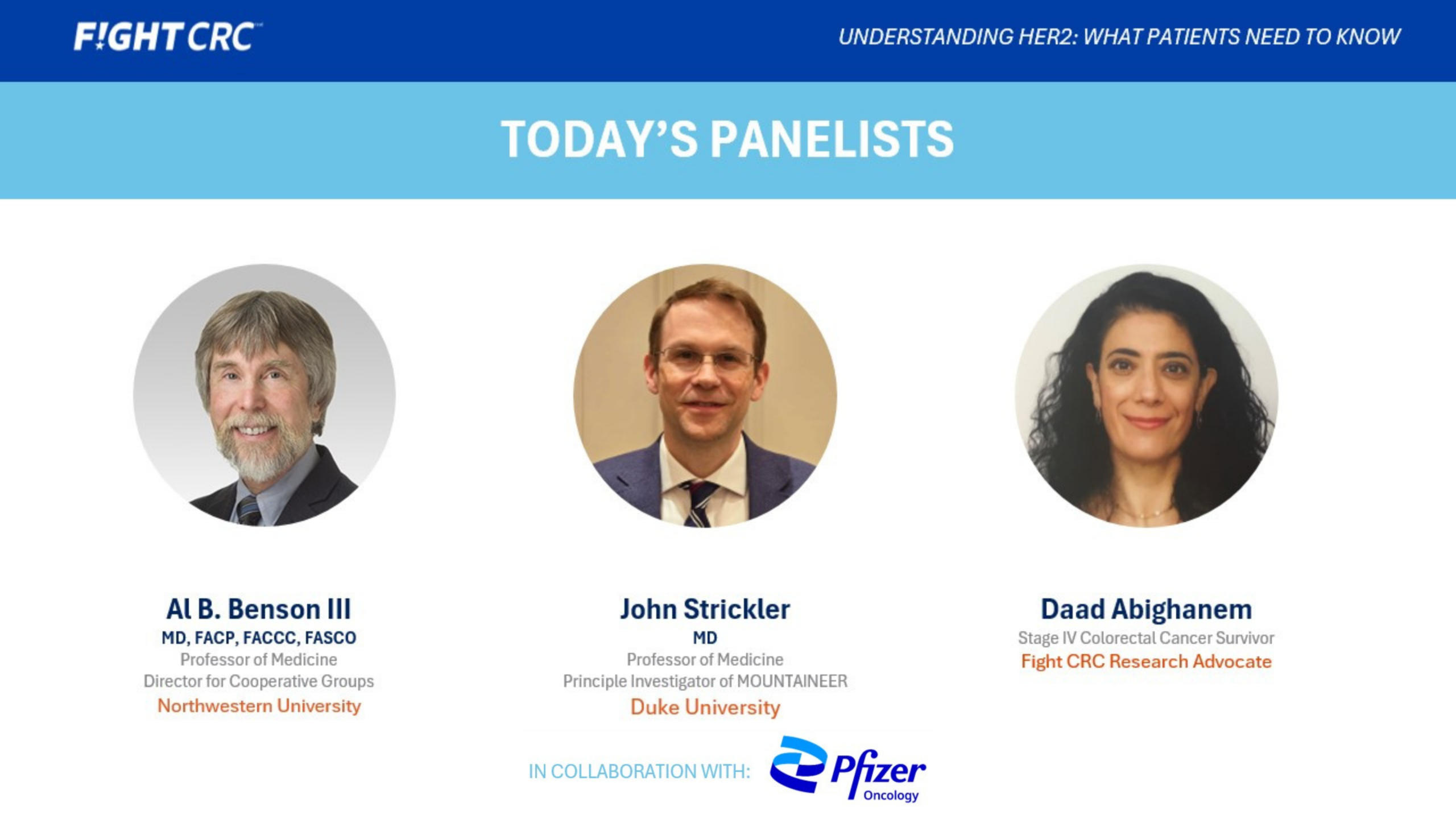
Learning you have colorectal cancer (CRC) can be overwhelming — especially when words like “biomarkers” or “HER2” start coming your way. This FAQ highlights key takeaways from Fight CRC’s webinar, “Understanding HER2: What Patients Need to Know,” with answers from experts and advocates. Whether you’re newly diagnosed or exploring treatment options, this guide can help you understand HER2 and why it matters for your care. 

Featuring: 

  • Dr. John Strickler (Duke University) 
  • Dr. Al Benson (Northwestern University) 
  • Daad Abighanem, Fight CRC Research Advocate and Stage IV Survivor 

Together, they shared insights on testing, treatment, advocacy, and how to take charge of your care if you or your loved one is affected by HER2-positive colorectal cancer. 

What is HER2 and why does it matter?

HER2 (short for Human Epidermal Growth Factor Receptor 2) is a gene that helps cells grow and divide. In some colorectal cancers, the HER2 gene makes too many copies of itself — this is called HER2 amplification. When this happens, cancer cells get constant “grow” signals, making them multiply faster.

HER2 is important because it can affect how the cancer behaves and responds to certain treatments. Around 3–5% of people with metastatic colorectal cancer (mCRC) have HER2-positive disease. Knowing your HER2 status helps your care team choose treatments that are more likely to work for you.

Bottom line: Knowing your HER2 status can change your treatment plan and possibly your outcome.

How do I get tested for HER2?

HER2 testing is part of biomarker testing, which looks for changes in your tumor’s genes or proteins. Testing is now recommended for everyone with metastatic colorectal cancer, especially those with RAS and BRAF wild-type and microsatellite stable (MSS) tumors. 

Common tests include
• IHC (Immunohistochemistry): Looks for too much HER2 protein on cancer cells.
• FISH or ISH (In Situ Hybridization): Checks if there are extra copies of the HER2 gene.
• NGS (Next Generation Sequencing): a broad genetic test that identifies HER2 and other biomarkers. 

A tumor is considered HER2-positive if it’s scored as IHC 3+, or IHC 2+ with gene amplification on ISH testing.  

Ask your doctor: “Have I had biomarker testing that includes HER2?” 

If not, visit FightCRC.org and use our Provider Finder tool to locate specialists experienced in biomarker-driven care. 

What treatments are available for HER2 positive colorectal cancer?

There are now FDA approved HER2-targeted treatments for colorectal cancer — an exciting step forward in precision medicine, giving patients more time and more options. 

Common treatments include: 

  1. Tucatinib + Trastuzumab (approved 2023 – based on the MOUNTAINEER trial): This combination has shown to shrink tumors and help patients live longer, with manageable side effects.  
  1. Trastuzumab Deruxtecan (T-DXd): A next-generation antibody-drug conjugate that delivers chemotherapy directly to HER2-positive tumor cells. 

Your eligibility will depend on your test results, treatment history, and overall health. 

Ask your oncologist whether HER2 targeted therapy could be part of your treatment plan. 

I feel overwhelmed by my biomarker results. What should I do?

You’re not alone—biomarker results can feel confusing and emotional at first. Take a breath and remember: these results are powerful tools to help your care team find the right treatment for you. 

Our experts share this advice: 

Dr. John Strickler: “It’s normal to feel overwhelmed. Ask your doctor questions and don’t stop until you understand the answers. Fight CRC’s Resource Library and patient community are great places to start.” 

Dr. Al Benson: Bring a family member or friend to appointments to take notes. Review your results together afterward, and always clarify what’s unclear.” 

Daad A.: “It’s okay to feel afraid. Understanding your biomarkers gives you back control. It helps you make decisions with confidence and become an active partner in your care.” 

How can caregivers and advocates support patients on HER2 targeted therapy?

HER2 positive colorectal cancer is relatively rare, and it can help to have extra support from your care circle. 

Dr. Strickler: “Caregivers can attend visits, take notes, and ask questions. Partner with the medical team to ensure the patient gets the most up to date care.” 

Dr. Benson: “Caregivers should know what side effects to watch for and how to manage them. Communication with the care team is essential.” 

Daad A.: “Advocates and caregivers can connect patients with others who’ve walked this path. Shared experience can bring hope, reduce fear, and build community.” 

How many HER2 targeted treatments can patients receive?

There isn’t a set limit. Your treatment plan depends on: 

  • What therapies you’ve already had 
  • How your cancer responds 
  • How your body tolerates the medicines 

Doctors may start with Tucatinib + Trastuzumab, and if the cancer grows or changes, move on to Trastuzumab Deruxtecan (T-DXd) or a clinical trial. Your care team will personalize each step to what works best for you.

What are some barriers to testing or clinical trial participation?

Despite progress, many patients still face challenges, including: 

  • Limited awareness of biomarker testing or its importance 
  • Cost or insurance coverage issues 
  • Distance from major cancer centers – testing may not be available everywhere 
  • Fast-changing science – so not all providers are up to date 
  • Logistical barriers like travel or childcare 
  • Mistrust of research or fear of “experimental” care 
  • Language and cultural barriers 

That’s why equal access to biomarker testing and clinical trials is so important. Fight CRC works to close these gaps through education, advocacy, and patient support. 

How does advocacy make a difference?

Advocacy is the heart of progress.
By raising awareness, sharing stories, and pushing for equity, advocates help shape the future of colorectal cancer care and research.  

Programs like Fight CRC’s Research Advocacy Training and Support (RATS) prepare survivors and caregivers to have a seat at the research table—influencing studies, clinical trials, and policies that change lives. 

Daad A.: “Advocacy is self-care. When you speak up for yourself, you’re also helping the next generation of patients.” 

Fight CRC Resources and Next Steps

Learn:

  • Resources: Download guides on biomarkers, clinical trials, and treatment options

Connect

Advocate

  • RATS Program (Research Advocacy Training and Support): Learn how to become a research advocate
  • Call-on Congress: Join us this March in Washington, DC to push for policies that improve access and advocate for colorectal cancer research funding

Stay Informed


Thank You to Our Sponsor
 

This webinar and FAQ were made possible through the generous support of PfizerTheir partnership helps Fight CRC continue providing trusted education and empowering patients to make informed decisions about their care.

The decision to pursue hospice care is not one made lightly. It marks a transition from treatment with the intent to cure, to treatment focused on making the patient as comfortable as possible at the end of their life. Hospice care can take many forms and may be provided in a hospital, a specialized hospice facility, or the patient’s own home.

Transitioning to hospice care is a deeply personal decision that should be made only after an in-depth discussion between the patient, their care team, and their loved ones. Jeff Insco shared his family’s experience with hospice care in this moving blog.

If you or a family member are considering hospice, take the time to read this blog to gain insight from Jeff’s suggestions and first-hand experience.


Jeff Insco • October 2025

More than 5 years have passed since I lost my wife to colon cancer after an 8-year courageous battle. Once it became obvious her journey was coming to an end, it was her wish to experience hospice care in our home. 

I had never experienced hospice and really had no idea what to expect. And to be sure, I hope I never have multiple occasions in which to compare. But I’ll share a bit about our experience in hopes it offers some help to others. 

Multiple hospice providers were referred to us. After reviewing their material and asking around, we decided to go with the one directly associated with the hospital system who provided care to my wife throughout her journey. It was an issue of trusting the organization more than anything. After almost a decade of relentless focus on treatment and solutions, and trying to remain optimistic, thinking about hospice felt like the thing we worked so hard at avoiding: giving up. So, we didn’t spend a lot of time evaluating our options. Perhaps we should have. 

Without anything to compare against, I certainly wouldn’t say what we experienced was bad or subpar. The people we dealt with were present for us, reliable, respectful, and caring. As far as I can tell, they were excellent. But after reflecting on it over the years since, I can’t help but wonder if choosing an independent provider whose core business is hospice would have offered a more high-touch experience. I’m not sure, but my hunch says yes. 

Important note: our hospice situation occurred during the summer of 2020 in the middle of the pandemic. To say the situation was unique would be a huge understatement. Our hospice team was dealing with remarkable constraints and complexity, and that should not go without consideration here.

That said, once the process began, things started happening that I didn’t feel prepared for. I did have access to someone by phone who I’m sure tried to prepare me, but I still felt a bit subject to a process I had no control over. 

Things just started happening. Visits to the house scheduled. Equipment showing up. A growing sense of urgency that things were supposed to be happening. Then bam… she’s settled in bed. “Here’s your med plan and a list of things to consider and take care of. Good luck. We’ll see you tomorrow. Call if you need anything”. 

I found myself grieving and yet running on the adrenaline needed to be a caregiver, head of household and project manager in charge of ensuring all the people that wanted to come by the house to say good-bye would get their opportunity – in a COVID-aware kind of way. 

I should have had someone close to us, but not immediate family become the conductor of the orchestra (or quarterback), if you will. This would have given back to me the opportunity to be more present for my wife and sons in her final days and attend to other close family. I was overwhelmed and now feel a bit guilty and ashamed for being so distracted, despite so many people telling me how amazingly I handled all of it. Though our communication was strong, there were things we didn’t get to talk about that I wish we had. That’s perhaps my greatest regret.  

The harder lesson came from not having a clear sense of how things would play out. I mean, I knew the eventual outcome, but I was not prepared for the more detailed reality of it all – how her body would fail, how quickly it might happen, the role I would need to personally play in offering her physical and emotional comfort. 

I provided the final dose that essentially helped her let go, and I held her while she took her last breath. No one told me that was a possibility. One of her sisters, who is a nurse, and countless therapy sessions have helped me effectively process this. And honestly looking back on it now, I’m not sure I’d want it any other way. But I was not prepared for it at the time or the emotional carnage it wrought afterwards. 

All of this is to suggest:

  1. Think ahead about the experience you want to have with Hospice and find a resource that aligns with that. Don’t be a victim to process or circumstances. 
  2. Ask someone that’s a step or two removed that you trust to be your partner and project manager of the situation if you can find one. Otherwise, ask for that from the hospice provider. 
  3. Get very clear about the process, possibilities and your role at each step.
  4. Proactively seek advice and counsel in advance from an experienced professional to help prepare you and your family for how the process plays out and ends. 
  5. Take care of yourself physically, as this will have a positive impact on how you handle everything.
  6. Be kind to yourself. Grant yourself grace in knowing that every journey is different. There isn’t a perfect right or wrong way to go through this process. 
  7. All of this will enable you to be present and talk about the things you should talk about while you can (hint: now’s a good time regardless of hospice). Hopefully you can celebrate what you had rather than being sad about what you lost.
All the best to you,

The Insco Family

A husband, wife, and their two sons stand close together in a wooded park, smiling and embracing.


NSN Email Header 300x91


Springfield, Mo., Oct. 29, 2025 (GLOBE NEWSWIRE) — No Shave November, one of the nation’s largest cancer awareness movements, returns with a refreshed look and a $250,000 goal to fight cancer.

“The month hasn’t even begun, and we’ve already received more than $265,000 in commitments,” said Michell Baker, Vice President of Philanthropy at Fight CRC. “The way the ‘No Shave’ community has embraced our mission is truly inspiring. Their enthusiasm reflects a deep commitment to raising awareness, funding research, and supporting everyone affected by cancer. When people come together around a shared purpose, real change happens.”

After Fight Colorectal Cancer (Fight CRC) acquired No Shave November last year, the organization launched a full rebrand, reigniting excitement around the campaign. Since its founding, No Shave November has evolved into a mission-driven platform that unites individuals, companies, and communities to raise funds and awareness for cancer prevention, research, and support—work that matters deeply as more than 1.85 million Americans are diagnosed with cancer each year, according to the Centers for Disease Control and Prevention.

Corporate partners, including Newrez and the U.S. Chamber of Commerce Foundation, are rallying behind the cause through fundraising events, round-up campaigns, and employee engagement initiatives. “No Shave November provides an opportunity for our organization to unite behind a meaningful cause that extends far beyond the workplace,” said Charles DiPino, Regional Manager at Newrez LLC. “It reinforces our shared commitment to community engagement and demonstrates how even small acts of participation can contribute to lasting change in the fight against cancer.”

Proceeds from No Shave November will help drive innovation in research, raise awareness about early-onset colorectal cancer, and support communities impacted by cancer. Partners Man Up To Cancer reshape how men experience cancer through peer support, and Prevent Cancer Foundation is dedicated to advancing early detection and screening. Each partner will receive 100 percent of the funds raised through their own pages, plus a portion of the total campaign.

For more information or to get involved, visit no-shave.org or follow No Shave November on Facebook, Instagram, X, and LinkedIn.

See the official Press Release Here. 
The No Shave November logo highlighting our social media accounts on LinkedIn, Facebook, and Instagram.

In 2024, No Shave November found a new home with Fight Colorectal Cancer (Fight CRC). We proudly carry forward the Hill family’s inspiring legacy, supporting all cancer communities through awareness, advocacy, and grants that fund impactful education and awareness efforts.

No Shave November began in 2009 as a grassroots Facebook campaign started by the Hill family of Illinois in memory of their father, Matthew Hill, who passed away from colon cancer in November 2007. What began as a bold and heartfelt idea to grow hair, start conversations, and fund cancer research quickly became a nationwide movement uniting people through purpose and facial hair.

Here’s how it works, what it means, and some of the “rules” of No Shave month.

What is “No Shave November™?”

No Shave is a fundraising campaign built to support cancer education and awareness. This November, we’re asking everyone to let their hair grow, raise awareness, and help fund cancer advocacy, education, and research. Pledge the dollars you’d normally spend on grooming and hair care to support the cause. Whether you grow a beard, sport a mustache, or simply skip a few grooming routines, your participation makes a difference. Together, we can build a vibrant community committed to change—one hair at a time.

What are the rules?

The rules are simple for No Shave: don’t shave. Now, some people will tell you to not shave anything. Others say to avoid shaving a certain area. Here’s what we say: Do what works for you. For men, growing facial hair is the most obvious way to participate. For women, growing leg hair is the most common way we’ve seen ladies join in.

Some groups encourage you to donate the cost of razors, shaving cream, gels, and haircuts during November. Others say to start a personal fundraising campaign.

The great thing about No Shave is that you can make it what you want it. But, if you’re doing No Shave November™ with a team, make sure you all agree on how it will work.

How do I sign up?

Sign up as an individual or create your team. Once you fill out our simple form you can start raising funds for cancer education and support programs. For step-by-step instructions on how to customize your fundraising page, check out our Partnership Toolkit!

What causes does No Shave November™ support?

When you create or donate to a fundraising page, you’re directly fueling the mission of Man Up to Cancer, Prevent Cancer Foundation, and Fight Colorectal Cancer. Proceeds from No Shave November will help drive innovation in research, raise awareness about early-onset colorectal cancer, and support communities impacted by cancer. Partners Man Up To Cancer reshape how men experience cancer through peer support, and Prevent Cancer Foundation is dedicated to advancing early detection and screening. Each partner will receive 100 percent of the funds raised through their own pages, plus a portion of the total campaign.

How can my business get involved?

No Shave November is always looking for engaged companies, organizations, groups, and individuals to help amplify our mission! We offer a variety of partnership opportunities to best fit your needs, and would love to speak with you. Please fill out this quick form, and we’ll be in touch!

Can women participate in No Shave November?

Absolutely! Women can participate by skipping hair removal, fundraising, spreading awareness, or simply supporting the hairy heroes in their lives. This movement is for everyone who wants to help fight cancer and make a difference.

If growing hair isn’t an option, participants can support the cause by donating or encouraging others to join.

How can I donate by mail?

All checks can be mailed to:
No Shave November
134 Park Central Square, 210, Springfield, MO 65806
ATTN: No Shave November Donation
EIN: 20-2622550

Please make checks payable to No Shave November and include your return address if you’d like a receipt.

Managing Side Effects Like a Pro: HER2+ Colorectal Cancer Edition 

If you’ve been told you have HER2-positive colorectal cancer (HER2+ CRC), you’re part of a smaller group — only about 3–5% of people with metastatic CRC. But there’s good news: newer targeted therapies are changing what’s possible. Treatments like tucatinib + trastuzumab and trastuzumab deruxtecan (Enhertu®) are helping many patients live better and longer.

Of course, these powerful treatments can come with side effects — those curveballs that can disrupt your daily life or your ability to stay on therapy. The good news? With good preparation, early communication, and the right care team, you can often manage these bumps and keep pressing forward.

Think of it as learning to drive a manual car — you may stall early on, but once you know how, you stay in gear.

Why Side Effects Deserve Your Attention

Side effects can feel discouraging, but knowing what to expect—and catching problems early—can make a huge difference. In many clinical trials, side effects are one of the top reasons people stop therapy early. But with close monitoring and good symptom management, many people are able to stay on treatment longer and maintain their quality of life.

For HER2+ CRC, the side effects most often reported include:

  • Diarrhea
  • Fatigue
  • Skin reactions (rash, itching)
  • Lung effects (interstitial lung disease, also called pneumonitis)
Paying attention to these symptoms isn’t just about comfort — it’s about giving these new therapies the best chance to work.

What the Data Says 

Tucatinib + Trastuzumab

Trial: MOUNTAINEER (Phase II) — ClinicalTrials.gov: [NCT03043313]

ClinicalTrials.gov+2The Lancet+2 This trial evaluated tucatinib combined with trastuzumab in patients with HER2+ metastatic colorectal cancer who had already received other treatments. ClinicalTrials.gov+3The Lancet+3ScienceDirect+3

Key side effect numbers (from trial / prescribing material):

What this means for patients:

Tucatinib + trastuzumab can be an effective next-line option for HER2+ CRC, but diarrhea and fatigue are common. Catching and treating these early can help keep treatment on track.

Regulatory status: This combination was FDA-approved in 2023 for HER2+ metastatic colorectal cancer. Cancer.gov+2The ASCO Post+2

A follow-up study, MOUNTAINEER-03, is now testing the combination with chemotherapy (mFOLFOX6) as a first-line option. ASCO Publications+1

Trastuzumab Deruxtecan (T-DXd / Enhertu) 

Trial: DESTINY-CRC02 (Phase II) — ClinicalTrials.gov: [NCT04744831] The Lancet+4ClinicalTrials.gov+4The Lancet+4 This global study compared two doses (5.4 mg/kg vs. 6.4 mg/kg) of Enhertu® for patients with HER2-overexpressing metastatic CRC. The Lancet+4ClinicalTrials.gov+4Daiichi Sankyo+4

Key side effect & efficacy numbers (as reported):

What this means for patients: Enhertu® has shown promising results in HER2+ CRC, but ILD is a rare yet serious side effect. If you notice new coughing, chest tightness, or shortness of breath — reach out to your care team right away. Early action makes all the difference.

Side Effects & Smart Strategies to Outsmart Them 

These practical tips are drawn from research and real patient experience. Always confirm with your oncologist or care team before making changes.

1. Diarrhea (common with tucatinib combination)

  • At the first sign of loose stool, start your anti-diarrheal (like loperamide) — acting early helps prevent dehydration.
  • Stay well hydrated, especially with electrolyte-rich fluids.
  • Keep a log of frequency, severity, and possible food triggers.
  • Ask your care team if “pre-emptive” loperamide (before expected diarrhea) is appropriate for you.

2. Interstitial Lung Disease (ILD) with T-DXd

  • Report any new/worsening cough, shortness of breath, or chest discomfort immediately.
  • Expect regular lung monitoring— CT scans, pulse oximetry, or check-ins.
  • If ILD is suspected, your doctor may pause treatment and start steroids.
Think of it like your car’s “check engine” light — it’s a signal to pause and get checked before something bigger develops.

3. Skin Reactions (Rash, Itching, Dryness)

Skin reactions are one of the most common side effects of HER2-targeted drugs like tucatinib and trastuzumab. They can show up early and, if unmanaged, may lead to treatment delays.

In trials like HERACLES and MOUNTAINEER, rash affected up to 35% of patients, with early onset being typical. Though often mild, it can escalate and interfere with quality of life or treatment adherence.

Why It Matters

Skin reactions are not “cosmetic.” Studies show that unmanaged rash can lead to dose delays or discontinuation. On the flip side, early intervention is proven to keep more patients on therapy.

What helps:
  • Ask for a baseline dermatology check before starting therapy.
  • Use gentle, fragrance-free moisturizers and cleansers.
  • Ask if your care team offers a “rash kit” (topical creams, soothing lotions).
  • At the first sign of redness or itching, alert your team — don’t wait.
  • Treatment may include topical steroids, antihistamines, or antibiotics like doxycycline.
Pro Tip: A 2022 study showed that patients who received early skin care support were more likely to complete their therapy successfully.

4. Fatigue

  • Schedule rest breaks throughout your day — don’t wait until exhaustion hits.
  • Incorporate light activity, like walking or stretching, can actually help energy levels.
  • Good nutrition and hydration support recovery.
  • If fatigue becomes overwhelming, ask your oncologist whether treatment adjustments or short breaks are possible.

Why Symptom Tracking Is Your Secret Weapon

When you’re juggling appointments, treatments, and life, it’s easy to forget the small details. But those small details can make a big difference.

Keeping a simple daily log helps your care team catch problems early — before they become serious.

Here’s what to track:

  • What symptoms you notice (and when they happen)
  • Which treatments or doses you received
  • What helps or worsens your symptoms
  • Missed doses or skipped activities
Studies across cancer types show that real-time symptom tracking can lead to earlier interventions, fewer hospitalizations, and even improved survival (because problems get caught before they escalate).

Questions You Can Ask Your Care Team

Asking clear questions helps you stay proactive and supported. Try:

  1. Which side effects should I watch for most urgently with my prescribed regimen?
  2. If I get diarrhea or shortness of breath, what’s step one?
  3. How often will my lungs be checked (CT, oximetry, or other tests)?
  4. Can I get referrals to skin, nutrition, or palliative care specialists?
  5. If I need a treatment pause, what does that look like in practice?
  6. Are there resources or support groups for people on HER2-targeted therapies?

Staying in the Fight (with Support & Strategy)

Research in HER2+ colorectal cancer is moving fast — and these therapies are giving patients new options and new hope. But the key to success isn’t just the drug itself; it’s how well side effects are managed so treatment can continue safely and effectively.

By tracking your symptoms, speaking up early, and working closely with your care team, you can stay in the fight—and protect your quality of life.

At Fight CRC, we’re here for you — with resources, support, and community every step of the way. You don’t have to face this alone.

Recently Fight Colorectal Cancer has joined a coalition of cancer leaders representing the millions of patients impacted by breast, colorectal, lung, pancreatic, and prostate cancers, joining with AACI (Association of American Cancer Institutes) to underscore the critical importance of sustaining cancer research funding.

Their work futher highlights No Shave November’s mission of raising awareness and supporting cancer advocacy, education, and research by growing out our hair and dedicating dollars normally spent on grooming to support the cause.

Together, we’re urging Congress not to cut cancer research funding and dismantle our progress. Thank you to Courtney Bugler of Zero Prostate Cancer, Andrea Ferris of LUNGevity, Julie Fleshman of PanCAN, Jennifer W. Pegher of AACI, and Victoria Wolodzko Smart of Susan G. Komen for standing beside us in our efforts—we have work to do!

Read the co-authored AACI Commentary here.

AACI Commentary | SPECIAL EDITION
Some email communications may be filtered to your Spam or Junk folder, even if you have subscribed to them. Please mark aaciupdate@aaci-cancer.ccsend.com as a Safe Sender to ensure that AACI emails are delivered to your inbox. 

September 4, 2025 | SPECIAL EDITION

Cancer Research Isn't a Budget Line Item

This special edition of AACI Commentary is co-authored by the leaders of national organizations representing patients impacted by the five major cancers responsible for the highest number of cancer-related deaths in the U.S.—breast, colorectal, lung, pancreatic, and prostate—and our nation’s cancer centers, including the 73 centers designated by the National Cancer Institute.

Courtney Bugler

President & CEO 

ZERO Prostate Cancer

Anjee Davis, MPPA

CEO

Fight Colorectal Cancer (Fight CRC)

Andrea Ferris

President and CEO

LUNGevity Foundation

Julie Fleshman, JD, MBA

President and CEO

Pancreatic Cancer Action Network (PanCAN)

Jennifer W. Pegher, MA, MBA

Executive Director

Association of American Cancer Institutes (AACI)

Victoria Wolodzko Smart 

Senior Vice President, Mission

Susan G. Komen

For more than five decades, federal investments in cancer research have helped transform what was once a terminal diagnosis into a survivable disease for millions of Americans. Today, more than 18 million people in the United States are cancer survivors – nearly six times as many as when the National Cancer Act was signed in 1971.

This extraordinary progress is a testament to what is possible when research is prioritized, and patients are at the center of innovation. However, our work is not done. Millions of Americans are still being diagnosed with and dying from cancer each year.

The investments that drive progress are now at grave risk.

As the leaders of national organizations representing patients impacted by the five major cancers responsible for the highest number of cancer-related deaths in the U.S.—breast, colorectal, lung, pancreatic, and prostate—and our nation’s cancer centers, we know that sustained, robust federal support is crucial to saving lives.

Cancer research isn’t a budget line item. It’s a lifeline.

The administration’s proposed 2026 budget includes a 40 percent reduction in funding for the National Institutes of Health (NIH) and the National Cancer Institute (NCI). Cuts of this magnitude would delay lifesaving treatments, stall clinical trials, and upend the momentum we’ve spent decades building. Over the coming months, the House will consider the Labor, Health and Human Services, Education, and Related Agencies Subcommittee appropriations bill that determines the budgets for the NIH and NCI. We urge lawmakers to reject these devastating cuts and protect the federal funding that fuels lifesaving discoveries, innovation, and hope.

More than 2 million Americans will hear the words “you have cancer” this year alone. While survival rates have improved overall, cancer incidence continues to rise, particularly among younger adults.

Recent research shows that since 1975, the rate of cancer in people under 50 has increased by roughly 25 percent, outpacing incidence rates in older adults. Young people are seeing rising rates of colorectal, breast, pancreatic, and lung cancers, among others – a trend observed not only in the U.S., but globally. We are only beginning to understand the causes of this surge in cancer cases, but one thing is clear: research is the only path to the answers we seek.

Thanks to NIH-funded breakthroughs, once-deadly cancers are now being treated more effectively. Immunotherapies are harnessing the body’s own defenses to fight cancer. Advances in precision medicine are matching patients with treatments tailored to their tumors. Early detection tools, including liquid biopsies, are helping to diagnose cancer when it’s most treatable. Remarkable new discoveries are made each day and many more are on the horizon.

This is not the moment to step back.

When funding is slashed, or even threatened, research slows. Clinical trials are halted. Promising science is shelved. And patients—real people with real families, friends, and communities—face more barriers to accessing the treatments that could save or extend their lives.

We know this because we hear from patients every day. They are looking for answers. For access. For time. They don’t need political games. They need progress.

We urge Congress to reject these dangerous cuts and reaffirm America’s commitment to conquering cancer. For the millions of Americans living with, at risk for, or newly diagnosed with cancer, we must keep moving forward. Lives depend on it.

AACI stacked 2-color logo
Fight CRC logo
LUNGevity logo
PanCAN
Fight CRC logo
ZERO Prostate Cancer

Copyright 2025 | Association of American Cancer Institutes

Facebook  X  LinkedIn  Instagram  YouTube
X Share This Email
LinkedIn Share This Email

Published by Fight Colorectal Cancer (Fight CRC)

When you hear “clinical trial,” you might picture endless paperwork or doctors tracking tumor scans. But here’s what you might not know: patients—people just like you—are also in the room where decisions get made.

Through Fight CRC’s Research Advocacy Training & Support (RATS) program, survivors and caregivers are helping shape how studies are designed, who gets to join, and what outcomes really matter.

This is your behind-the-scenes look at how patient advocates are changing research—and why it matters for every colorectal cancer (CRC) patient.

Why This Matters if You’re a Patient

If you’re newly diagnosed, clinical trials might feel overwhelming. But here’s why patient advocacy makes a difference:

  • More Options. Advocates fight to make eligibility rules fairer, so more patients qualify.
  • Better Questions. Advocates push researchers to measure what matters—like fatigue, pain, and daily life—not just tumor shrinkage.
  • Fewer Barriers. Advocates flag real-world challenges like travel costs, early appointments, or financial stress.
Bottom line: trials designed with patients in mind are more realistic, humane, and doable.

What Advocacy Looks Like Behind the Scences

Fight CRC-trained advocates serve in places you might not expect:

  • IRBs (Institutional Review Boards): reviewing protocols to protect patients.
  • Federal panels: advising groups like FDA, PCORI, DoD PRCRP, and NCI.
  • Professional societies: influencing research priorities at ASCO and SWOG.
And they ask the questions you might ask yourself:
  • “Can families afford this?”
  • “Does this schedule actually work for patients?”
  • “Are we measuring both living longer and living better?”

Real Change in Action

So what does all this mean in real life? Thanks to patient advocates, trials are starting to look different, and better, for people with colorectal cancer:

  • More chances to participate. In the past, strict rules kept many patients out of trials. Advocates have pushed for broader criteria, so more people actually qualify.
  • Measuring what life feels like. Trials used to focus only on tumor size or survival. Now, many also track side effects like fatigue, pain, or how well you can do everyday activities—because those things matter too.
  • Support for the hidden costs. Trials are beginning to recognize that travel, hotel stays, and missed work add up. Advocates are raising these issues so more studies build in help, like financial counseling or travel assistance.
In other words: research isn’t just about the science anymore, it’s about making trials more doable, more humane, and more focused on what patients really need.

Research backs this up:

A Patient-Led Movement

As Fight CRC advocate Matthew DeAngelis shared:

“One thing I am excited to learn as a research advocate is how patient-advocates can influence the design of cutting-edge, practical, patient-centered clinical trials.”

Patients are no longer just trial participants. They’re leaders, partners, and innovators.

How You Can Get Involved

  • Learn about RATS. See how Fight CRC trains advocates to make an impact.
  • Ask your care team. Try: “Does this cancer center include patients on its research boards?”
  • Raise your voice. Every question you ask shapes research for the better.
At Fight CRC, we believe patients aren’t just part of the story, they’re helping write it.
Donate Now