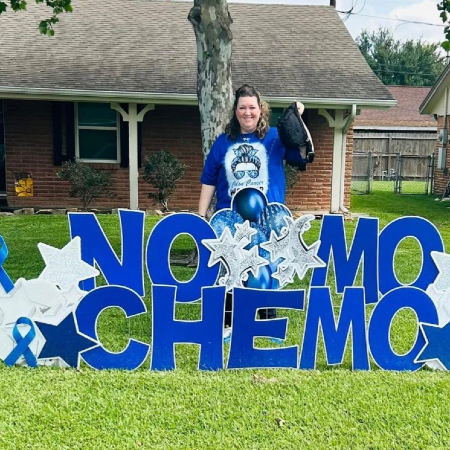


Amber Madden
Patient/Survivor
Colon
Age at Diagnosis: 42
"Stay positive! Positive mindset is everything!!!"
In late July 2024, I began experiencing persistent stomach pain. Initially, I believed the discomfort was due to constipation and attempted to manage it with over-the-counter medications, but these provided no relief. As the pain continued, I went to the emergency room. A CT scan was performed, and the emergency physician explained that the findings were concerning and could be associated with cancer. I was advised to undergo a colonoscopy as soon as possible.
On August 3, 2024, a colonoscopy was attempted but could not be completed due to an obstructing mass in the descending colon. It was determined that the mass required surgical removal. On August 14, 2024, I underwent a colectomy of the descending colon. Pathology revealed a 4.5 cm tumor, and I was diagnosed with Stage III colon cancer. In September 2024, I sought a second opinion at MD Anderson and consulted with an oncologist there. Additional testing and imaging were ordered. A new CT scan revealed metastasis to the liver, which upstaged my diagnosis to Stage IV colon cancer. Given my family history, genetic testing was conducted. Although my great-grandmother and mother had histories of colon and rectal cancer, comprehensive genetic testing for hereditary cancer syndromes returned negative results.
In October 2024, a PICC line was placed, and I began chemotherapy. After completing one round of chemotherapy, the PICC line was removed and replaced with a port for continued treatment. I then completed three additional rounds of chemotherapy. In December 2024, I underwent liver surgery to address the metastatic disease. From January 2025 through May 2025, I completed eight more rounds of chemotherapy. During treatment, I developed neuropathy symptoms related to oxaliplatin, and this medication was discontinued after the seventh round to prevent further nerve damage. Follow-up CT scans performed in May, August, and November 2025 showed no evidence of active cancer, indicating no detectable disease at those times.