
Ed and Darla Stratton, married for more than 35 years with two daughters, faced an incredible blow with Ed’s April 2019, colon cancer diagnosis. Recently, Darla and Ed hosted “Swing Fore the Cause” to raise awareness and funds for Fight CRC. The Strattons raised almost $40,000 through their TopGolf, Chesterfield, Missouri, event.

Colon Cancer Diagnosis [Despite Doing All the Right Things]

Ed Stratton, a stage IV colon cancer survivor and advocate, is proof that anyone can get colon cancer, despite doing all the right things.

After his first colonoscopy at age 50, Ed’s doctor told him everything looked fine and that Ed didn’t need to followup for 10 years.

Fast forward nine years later, out of the blue, Ed started passing large amounts of blood.

With no previous issues, or signs or symptoms of colorectal cancer, Ed and Darla were concerned enough to take Ed to the ER.

After undergoing tests, scans, and biopsies, about two weeks later, doctors told Ed he had a spot on his liver, which was traced back to Ed’s colon.

Colon Cancer Found on His Liver

Ed said his diagnosis was a little tricky because after performing a colonoscopy, the doctors did not find colon cancer nor did they see any tumors.

Looking back, Darla believes there may have been too much blood in Ed’s colon for the doctors to see clearly and that his colonoscopy wasn’t “clean” but “inconclusive.”

Meanwhile, scans at that time revealed a tumor on Ed’s liver, and an oncologist was brought in for a biopsy.

On April 1, 2019, Ed was diagnosed with stage IV colon cancer. The results of the biopsy showed that Ed had colon cancer, which metastasized to his liver.

Darla’s No. 1 Tip When a Loved One Is Diagnosed

Darla believes whole-heartedly that when a loved one is diagnosed, people should get a second opinion. It is vital that everyone knows their options and choices.

Ed credits Darla for her research, being proactive, and advocating on his behalf for getting him to where he is today.

As Darla explained, she and Ed were devastated by his diagnosis, and his original oncologist explained Ed’s proposed treatment plan without any real options. Meanwhile, their minds were reeling.

Struggling from originally being told that Ed didn’t have colon cancer to dealing with his diagnosis, Darla felt frustrated and reached out to friends in the medical field.

Thanks to Darla, Ed was treated by one of the best oncologists, Dr. Benjamin Tan, at one of the best cancer treatment centers in the country, The Alvin J. Siteman Cancer Center at Barnes-Jewish Hospital and Washington University School of Medicine (Siteman).

Ed’s Treatment Team

Ed’s treatment strategy at Siteman was similar to his original oncologist’s proposed plan. Both oncology teams recommended chemotherapy and surgery.

However, there was a nuance as to how the treatment would be administered. While Ed’s previous oncologist recommended 12 chemotherapy treatments followed by surgery, Siteman presented a treatment plan for six chemotherapy infusions, followed by surgery, with an additional six chemotherapy infusions after Ed’s surgery.

These treatment plans were “sort of the same. But not,” said Darla.

Both Ed and Darla felt an ease and relief after speaking with the Siteman treatment team because the oncologist, Dr. Tan, spent well over an hour with them explaining the details of the treatment plan.

Dr. Tan told Ed and Darla, “We are going for a cure.” While he didn’t promise any timeline or that treatment would be simple, Dr. Tan did believe that a cure was possible for Ed.

For the first time since Ed’s diagnosis, the Strattons felt hope.

Being confident and comfortable with Ed’s treatment team was crucial for Ed and Darla. In the worst of circumstances, after first and second opinions, the Strattons knew that the Siteman treatment team would be integral to Ed’s treatment success and outcome.

The Alvin J. Siteman Cancer Center is a National Cancer Institute (NCI) Comprehensive Cancer Center. Siteman has an exceptional rating, which is the highest NCI rating, and also ranks among the best cancer centers in the nation according to U.S. New & World Report.

Darla felt fortunate that Siteman was “practically in our backyard.” She stresses the importance and power of a second opinion.

The Treatment Plan

Ed’s initial treatment plan consisted of six chemotherapy infusions. His first surgery was August 2019, followed by six more infusions.

When Ed’s scans came back with no evidence of disease, the Strattons were excited.

In retrospect, Ed said they were naive.

Their excitement was short lived when a month later, follow-up scans showed Ed’s cancer had returned with additional spots on his liver.

He had a second liver surgery in March 2020. However, one of the spots on Ed’s liver was too close to his bile duct, so they were unable to remove it. As a result, Ed had targeted radiation, which they believed helped.

Until a spot returned.

Another Liver Surgery

With the relief that Ed’s colon cancer has not returned, the Strattons and their treatment team were frustrated that spots on his liver kept reappearing.

Finally, in March 2022, Ed’s doctors recommended resecting half of his liver, and the Strattons were fully on board.

“Swing Fore the Cause” to Give Back
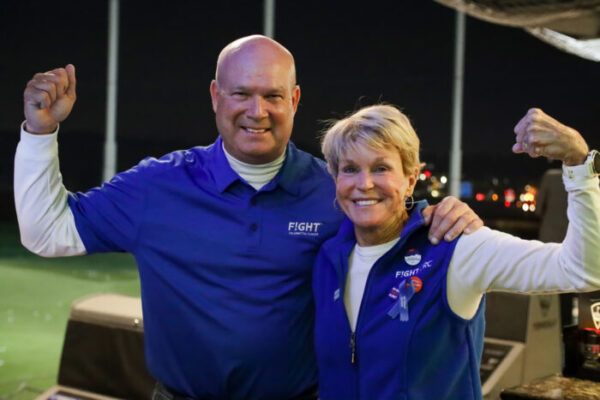
Following Ed’s March surgery, clean scans, and while maintenance chemo was winding down, the Strattons felt relieved and confident about their future.

“Swing Fore the Cause” was an opportunity for the Strattons to both give back and pay forward to the colorectal cancer community and Fight CRC.

Strategic in their planning, the Strattons decided to schedule their event for a few hours on a Tuesday night rather than dedicate an entire day to a golf tournament. Their plan worked.

More than 170 people attended “Swing Fore the Cause” to raise awareness and more than $40,000 for Fight CRC and fight against colorectal cancer.

Ed said TopGolf provided the perfect setting, and it was a fundraiser that appealed to everyone. Formed teams were available for those who wanted to golf, but there was also an alternative for people who wanted to support the event and be social, but who didn’t want to golf.

Fight CRC Connection

Ed and Darla became connected to Fight CRC when a mutual friend introduced them to Teri Griege, a Fight CRC Board Member. Ed and Teri had a lot in common: They share an oncologist, colon surgeon, and liver surgeon.

Quickly enveloped within the Fight CRC family, Ed became a Fight CRC Ambassador in 2020. While COVID made the year challenging and may have dampened his Ambassador year, Ed’s efforts were not diminished.

“Fight CRC is a great organization that does so much great work. I’m honored to be an Ambassador for them,” said Ed.

For Darla, appreciation for Fight CRC comes in many forms, such as their advocacy work for policy change. However, she noted it’s important that Fight CRC also addresses individual needs with patient education resources and materials that are extensive and available for both patients and caregivers.

Research is also a priority, and Darla spoke about Fight CRC’s involvement with that as well. Ultimately, Darla says, “Fight CRC covers all the bases.”

“Swing Fore the Cause” combined the Stratton’s enjoyment of golf with raising awareness and funds.

Ed’s No. 1 Tip for People Diagnosed with Colorectal Cancer

After Ed was diagnosed, he said it was important to keep normalcy in his life. He recommends doing what you’ve done before being diagnosed and not to assume you can’t do things once you’ve been diagnosed.

Ed kept golfing through diagnosis, treatments, and surgeries. So, it’s no surprise that golf factored into his awareness and fundraising efforts.

Raising Awareness

Another important aspect of “Swing Fore the Cause” was raising awareness. Ed pointed out that for as much information that exists, there is a lot of misinformation about colorectal cancer as well.

With the statistic that by 2030, colorectal cancer is projected to be the leading cause of cancer deaths in people ages 20-49, Ed felt it was important to draw attention to colorectal cancer.

The Stratton’s two daughters fall within the 2030 age range statistic.

One of the benefits of their daughters falling within the age range was having them and their friends attend the TopGolf event.

Ed and Darla have met so many people who fall within that age range who are fighting colorectal cancer, and they can’t bear to see family go through the devastation they’ve gone through.

Signs and Symptoms

The symptoms are things that people don’t want to talk about.

Darla Stratton

Colorectal cancer is no longer an older person’s disease. Younger people are being misdiagnosed or diagnosed at a late stage.

Attendees of the TopGolf event left informed and knowledgeable about signs and symptoms of colorectal cancer, as well the need for screening.

The Guest List

To have a colon surgeon with his expertise saying that 20%-30% percent of his patients are under age 45 highlights the need for funding and research for colorectal cancer.

Ed Stratton

Best Part of “Swing Fore the Cause”

I introduced my oldest daughter to Dr. Tan. And she got emotional. Then he got emotional. And then I got emotional. These doctors – they don’t treat patients. They treat families. So to have her meet him knowing all he’s done for me. So to have her meet him was really a special part of the event.

Ed Stratton

My favorite part of the program was when Teri spoke, and then we played a video, which Elizabeth Jordan from Fight CRC put together and which was very eye-opening. You could look around the room and see people were in awe watching the videos of what Fight CRC does, and how it affects families. To see the room full of people, which was mostly people we know, was very heartwarming to know that we had that much support.

Darla Stratton

“Swing Fore the Cause” Event Was a Success!

While Darla said the concept of hosting such a large event could have been scary, partnering with Fight CRC was helpful.

Elizabeth was instrumental in helping the Strattons’ event come to life with her creativity from setup, to helping with signs and balloons, to what would appear on the TV screens in the rooms.

Teri assisted with encouraging such an amazing turnout.

Ed was quick to add that Darla was pivotal to the success of their “Swing Fore the Cause” event.

This event couldn’t have happened without Darla’s great work. She is organized and handled all of the paperwork. We’ve never done anything like this before, so we went into it thinking, we would just do the best we could.

Ed Stratton

If you’re interested in hosting a coloretal cancer awareness event, we would love to help you learn more!
Today President Biden approved historic legislation that provides federal protections for same-sex and interracial marriages. Fight Colorectal Cancer (Fight CRC) supports The Respect Marriage Act, which requires the federal government to recognize the validity of a marriage between two individual, regardless of the couple’s sex, race, ethnicity, or national origins, if the marriage was valid in the state where it was performed. The Respect for Marriage Act (H.R. 8404/S. 4556) will help ensure that for all couples, marriage-related employment benefits, such as health insurance, are federally recognized. Being able to access affordable health care through a spouse can help reduce barriers to care – including cancer care. This act also helps combat health disparities and stigma, which have limited access to vital health care for the community Fight CRC represents.

“The White House moonshot goal to ‘end cancer as we know it’ will not be possible until we ensure that all Americans have equal access to health care,” said Anjee Davis, Fight CRC President. “We applaud the passing of the Respect for Marriage Act and will continue to fight for equity for all those impacted by colorectal cancer.”

When diagnosed with cancer, LGBTQ+ patients have reported more fear and stigma than other patients as a result of past negative experiences within the healthcare system and/or fear of discrimination from a provider. When medical teams provide inclusive services and cancer care for the LGBTQ+ community, they are able to better meet their patients’ needs. While there is still much work to be done, the Respect for Marriage Act represents an important step forward by ensuring that who you chose to marry does not impact your access to employment benefits – including health insurance.

“On this day, Jill and I are thinking of the courageous couples and fiercely committed advocates who have fought for decades to secure nationwide marriage equality at the Supreme Court and in Congress,” said President Biden in his statement.

Join us in Washington, D.C., at Call-on Congress, March 12–14, 2022, as we fight for more. Call-on Congress is an opportunity for advocates from across the country to share your stories and educate members of Congress on issues impacting you and the colorectal cancer community.

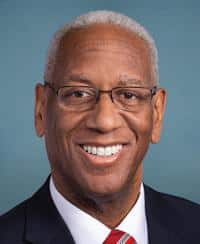
The Fight Colorectal Cancer community is saddened to hear about the loss of U.S. Rep. Donald McEachin. Rep. McEachin was a champion for increasing access to screening, and he was a strong advocate for increasing federal funding for colorectal cancer research.

House Representative, the late Donald McEachin

Rep. McEachin was known as an advocate for social and environmental justice amongst his House colleagues, and he was a strong advocate for colorectal cancer. In the years following his diagnosis in 2013, our advocacy team worked closely with his office, and he helped lead our efforts to urge Congress to increase funding for the CDC Colorectal Cancer Control Program and to create a Colorectal Cancer Research Program within the Department of Defense. He was also a strong supporter of the Removing Barriers to Colorectal Cancer Screening Act which was signed into law in 2020.

“Rep. McEachin was an incredible champion for the colorectal cancer community in Congress and beyond,” said Molly McDonnell, Fight CRC Director of Advocacy. “Not only did he bravely share his story to encourage others to get screened, but he also rallied his colleagues to increase federal funding for colorectal cancer screening and research. Fight CRC will continue to fight for more in his honor.”

In a statement on social media, Tara Rountree, the chief of staff for Rep. McEachin, said, “Valiantly, for years now, we have watched him fight and triumph over the secondary effects of his colorectal cancer from 2013. Tonight, he lost that battle.”

While the statement says he lost the battle, we in the cancer community know nobody truly loses the battle with cancer, but that the cancer fight takes a new form when someone passes away.

Although Rep. McEachin is no longer with us, we will continue his fight in Congress by advocating for screening programs and policies that fund colorectal cancer research. We send our love and strength to his family, friends, community and staff. Fight CRC also challenges Congress to come together to honor his life by funding actions that would prevent similar deaths.

We will continue to advance our mission in his honor and so many others we have lost.

Scanxiety is the term we use to describe “scan anxiety.” It’s used to describe the anxious feeling you get about upcoming cancer scans.

The scanxiety definition originates from a Time Magazine article of the same name. “Scanxiety,” by Bruce Feiler appeared in the June 2, 2011, issue of Time Magazine.” Feiler defined scanxiety as,“the anxiety and/or distress associated with an imaging test in postcancer follow-up, both ahead of the actual examination and up to the announcement of the test results.”

CT scans, blood tests, and other diagnostic and follow-up tests are all a part of fighting colorectal cancer. But they can cause immense worry, stress, and anxiety. So, what do you do? Because you can’t skip your scans. Here are a few tips.

Plan ahead

Talk to your doctor before the tests and scans take place. Be sure to ask:

  • What is the scan or test?
  • What may the scan results mean?
  • When will you hear back with the scan or test results? How will you receive the results?
  • How long it will take to get your results and why?

Keep Your Schedule

Sticking to your routine can distract and prevent you from pacing around the house, dwelling on the scan results. Go to work, or take your morning walk. Continue to carry out life and live as normally as you can. This may help keep your mind off the upcoming tests, and it can stop you from endlessly refreshing your online patient portal for the results, or waiting for the phone call.

Move

Get some fresh air. Go outside. Get some activity. Not only can exercise take your mind off the potential test or scan results (hello, distraction!) but it’s also really good for you, and it helps fight any fatigue. Exercise releases endorphins, which can also help naturally lower stress levels.

Try Something New

This may be a great time to try something new where you are able to be mindful and stay in the moment. Are you interested in a paint and sip class? How about giving a new recipe a shot? Maybe think about learning a few phrases in a new language. Or you could try yoga or meditation. Doing something new is a great way to focus on the present, which may keep your mind off the upcoming scans for a bit.

Talk It Out

Talk to someone you know and trust. Find someone who won’t minimize your feelings and your fears, and someone who won’t offer unsolicited advice. Talking about what you’re going through and even your fears of your approaching tests or scans can help a lot. While friends and loved ones can be great for this, so can your counselor or therapist.

Survivor Advice for Facing Scanxiety

We asked survivors in our community for their tips on coping with scanxiety.

“Scanxiety is very real for me. MRIs include a heavy dose of Valium. I have scans every three months. My scanxiety flares up every time I see the appointment on my calendar.

My sleeplessness starts the week before the scan. MRI and PET scans are the worst for me because I am claustrophobic. I take two Valium before the scan, and I have a driver! I also keep my eyes closed the entire time in the tube.

For the MRI, I prep by playing MRI sounds on YouTube and lay under my covers with a weighted pad on my pelvis to try and simulate the experience.

I then try to not look at the report until I meet with my oncologist. However, this is usually a big fail on my part since I sometimes do not meet with my oncologist for a couple of days. The report is usually available within an hour.” – Meredith Huetter, stage III rectal cancer survivor“Being 10 years out has not made my scanxiety any less agonizing. I’m scanned every six months, and I still get weak in my stomach. My white blood count never returned to normal after chemo. So, I’m always wondering ‘What if?’” – Pam Allen, stage III colon cancer survivor

“I’m 2.5 years with no evidence of disease (NED). I am getting scans and labs every six months. I’ve told my oncologist that I have anxiety about recurrence, and I asked him for Ativan. However, my anxiety starts up about a week before scans. It’s worse the few nights before the scans. It’s hard to sleep, and I can’t turn my brain off. Therapy is good and helps because we are able to talk about ‘What if the cancer comes back?’ And how it would be handled. Exercise has kept me sane through cancer and COVID.” – Lara Lambert, stage III rectal cancer survivor

“I just try really hard to stay in the present moment with work and kids. I saw a yoga therapist for a few months, not necessarily for anxiety but for overall wellness. She helped me learn to meditate and breathe. We’d talk about all the things happening in life. She helped me learn to focus when things were scattered.

But there are other times when I feel anxious and instead of focusing I just get lost in a TV show I’ve watched 1,000 times, to detach from real life and put my head in the sand.

So, I get CT scans every six months, and my last one was in August. When I left the imaging center and got into my car, I learned a friend, who had colon cancer, had passed three days prior. So, in addition to the anxiety of waiting for results, I was so sad, and just felt incredibly guilty for being happy when I got the ‘you are still NED’ call.

I get anxious several days before my scans. The night before is the worst. I usually don’t sleep.” – Leticia Alvarenga, stage III rectal cancer survivor

You are not alone if you’re struggling with anxiety while awaiting scans for colorectal cancer. If you’re looking for a community who gets it, join our Community of Champions community. We’re here for you.

On November 4, 2022 Fight Colorectal Cancer (Fight CRC) will host the second annual A Night With the Stars event at The Savoy Ballroom in Springfield, Mo. to raise awareness and funds for colorectal cancer (CRC) research and patient education.

Missouri is the 18th deadliest state for CRC in the U.S. and only 63% of Missourians ages 50-64 are up to date on CRC screening. Springfield based nonprofit Fight CRC is working to change the statistics for Missouri alongside the community.

During the A Night with the Stars event CRC survivors, caregivers, and loved ones, and medical professionals will be celebrated throughout the night and commended for sharing their stories as relentless champions.

A Night with the Stars is an annual event hosted by Fight CRC at their headquarters in Springfield, Mo.

Thank you to “A Night with the Stars” Sponsors: 417 Magazine, Taiho Oncology, Manoli Jewelers, Albin and Erin Quiko, English Promotions, Bayer, Guardant, Reynolds Family, Rob & Stacy Realtors, Rise Accounting & Consulting, & KPM

National nonprofit organizations Fight Colorectal Cancer (Fight CRC), American Cancer Society Cancer Action Network (ACS CAN), and the American Gastroenterological Association (AGA), alongside colorectal cancer (CRC) advocates, celebrate as Medicare beneficiaries will no longer face out-of-pocket costs for a necessary colonoscopy after a positive noninvasive screening test. The Centers for Medicare and Medicaid Services (CMS) finalized the proposed rule earlier this week. Additionally, the rule will lower the minimum age of colorectal cancer screening to 45, consistent with the 2018 American Cancer Society screening guidelines and the 2021 United States Preventive Services Task Force colorectal cancer screening recommendations.

Colorectal cancer is the second-most common cause of cancer deaths in the U.S. among men and women combined, and it is one of the few cancers that can be prevented through screening. The final CMS rule is an important step toward reaching the goals laid out in the President’s Cancer Moonshot initiative by reducing the screening barriers for Medicare beneficiaries.

Noninvasive screening tests, such as FIT or Cologuard®, are great options for average-risk patients to complete CRC screenings. But for those who receive a positive result, screening is not complete until they undergo a colonoscopy. Ensuring that cost is not a barrier will help increase access to CRC screening and ultimately save lives.

We are grateful that CMS took this important step to help increase access to colorectal cancer screening and align with guidance released earlier this year by the Departments of Health and Human Services, Treasury and Labor,” said Anjee Davis, Fight CRC President. “For years Fight CRC – along with ACS CAN, AGA, and countless other colorectal cancer advocates – have advocated for this necessary policy change. This is an important win for patients.

Anjee Davis

For more information or to find the nearest screening options visit the American Cancer Society at cancer.org/colon, or AGA at gastro.org.

“The Chocolate Sisters” a new up-and-coming networking organization for women of color in Lehigh Valley, Pa., have teamed up with national nonprofit organization Fight Colorectal Cancer (Fight CRC) to raise awareness for colorectal cancer (CRC) at a screening event for the new “Wakanda Forever” movie in memory of Chadwick Boseman. The event will be hosted at Movie Tavern in Allentown, Pa., on November 11 at 6:30 pm with the Mu Pi Sigma chapter of Sigma Gamma Rho Inc. and The Greater Shiloh Church of Easton joining as co-sponsors. Fight CRC advocate Denise Johnson will be there to share resources and her personal story.

Like Boseman, Johnson’s daughter, Lauren Tatum, was diagnosed with early age onset colorectal cancer (EAO CRC). Many young adults are being overlooked because screening does not typically begin until age 45. Tatum was diagnosed with stage IV CRC when she was just 25 years old, which came after years of complaining about stomach aches. She was ignored by her medical professionals until it was too late. She passed away in 2021.

“It is amazing that The Chocolate Sisters are taking this time to highlight the growing need for colon cancer awareness,” said Johnson. “I am looking forward to sharing my daughter’s story!”

By 2030, colorectal cancer is projected to be the leading cause of cancer deaths among those ages 20-49. Black Americans are about 20% more likely to get CRC and about 40% more likely to die from it than most other groups. The Chocolate Sisters and Fight CRC hope to raise awareness locally and educate young people on the importance of understanding the symptoms of CRC so that in the future, lives like Boseman’s and Lauren’s, can be saved.

“Each of the participating organizations is a community for the community,” said Lindsay Blair, The Chocolate Sisters Marketing Coordinator. “This event is not only to celebrate Chadwick Boseman but to bring awareness to a disease that has taken so many of our community members. Awareness is the key to prevention, and we hope this event shines a light on how we can fight back.”

Fight Colorectal Cancer (Fight CRC) and Collaborative Group of the Americas on Inherited Gastrointestinal Cancer (CGA-IGC) award Early Career Award to advance the care of patients and families with hereditary cancers syndromes. The research grant will be awarded to advance science, clinical care, and advocacy for patients with inherited colorectal cancer syndromes, familial colorectal cancer or early age onset colorectal cancer.

This year’s CGA-IGC and Fight CRC Early Career Award is granted to Timothy Yen, Assistant Professor of Medicine in the Division of Gastroenterology & Hepatology at Loma Linda University Faculty Medical Group. Yen’s research is focused on quality improvement and informatics in the context of colorectal cancer and hereditary gastrointestinal cancers. The research he will be focused on for this grant will be, “integrated electronic health record intervention to improve provider-patient communication of familial colorectal cancer risk in those with advanced colorectal polyps.”

As much as 25% of all colorectal cancer (CRC) is due to high familial risk. A family history of advanced colorectal polyps increases familial risk of CRC similar to a family history of CRC. The impact of Yen’s research is meant to improve the care of patients with advanced colorectal polyps who have an increased familial risk of CRC. Future directions include expansion to multiple centers as well as other high risk CRC diagnoses.

“We are thrilled to announce our collaboration with CGA-IGC on the Early Career Award. By awarding this grant we hope to have a better understanding of care for those that have a family history of colorectal cancer, which we know is 1 in 3 people.” – Anjee Davis, FightCRC CEO“Our partnership with Fight Colorectal Cancer promotes CGA-IGC’s dedication to centering the voice of patients and families affected by hereditary, familial, and early age onset colorectal cancer. Fight CRC’s support of Dr. Timothy Yen’s research, aimed at improving colorectal cancer screening in family members of those with advanced precancerous colorectal polyps, has the potential to significantly improve screening in high-risk patients and is an amazing investment in a future leader of our field. We look forward to strengthening our partnership with Fight CRC to advance the care of patients and mold the future of our field.” – Swati G. Patel, CGA-IGC President & Chair of the Meeting Planning Committee

In partnership CGA-IGC and Fight CRC will host an event to announce the award on Friday, November 11 from 7-10pm CT, on the rooftop of Ole Red in the heart of Music City. It is their joint mission to advance the care of patients and family members by ensuring that cutting-edge research and clinical care paradigms inform patient support tools and policy change in an equitable and inclusive manner.

The New England Journal of Medicine recently published a study that suggests the benefits of colonoscopies for cancer screening may be overestimated, leaving many to wonder, “Do colonoscopies save lives?” Media reports around this new study may be misleading. National nonprofits Fight Colorectal Cancer (Fight CRC) and Colon Cancer Coalition are united in ensuring that the colorectal cancer (CRC) community and those who are eligible for screening understand that getting screened for CRC does save lives.

The Northern-European Initiative on Colorectal Cancer (NordICC) Study, funded by The Research Council of Norway, performed a randomized trial involving healthy men and women 55 to 64 years of age in Poland, Norway, Sweden, and the Netherlands between 2009 and 2014. Study participants were randomly assigned to either receive an invitation to undergo a single screen colonoscopy or receive no screening. Following the release of the study, Bloomberg reported, “Colonoscopy screening exams that are recommended for older U.S. adults failed to reduce the risk of death from colon cancer in a 10-year study that questions the benefits of the common procedure.” The population from this trial is a sample of patients from Poland, Norway, Sweden, and the Netherlands, but is by no means an exhaustive sample. Not all populations who are being screened are being looked at in any one single trial.

A colonoscopy has traditionally been considered the “gold standard” for colon screening because it can both identify polyps and remove them during the same procedure. Do colonoscopies save lives? Yes. Colonoscopies are a visual screening option that allows a physician to see inside the colon and rectum, and during this examination a gastroenterologist can remove precancerous polyps. Gastrointestinal risks of colonoscopy are well-understood. Patients need to consider what is best for them and their individual risk factors. Colonoscopy is one of several screening options patients can choose from including many low-cost, non-invasive options that can be done at home.

“Surprised and disappointed by the findings of modest reduction in CRC incidence and no reduction in CRC mortality.” Dr. Aasma Shaukat, NYU Grossman School of Medicine Director GI Outcomes Research and fellow for the American College of Gastroenterology (ACG) shares her initial reaction to the study.Dr. Shaukat says it is key that people understand that, “adherence to colonoscopy was low, only 42%. The quality of the endoscopist was also low, with nearly 30% having adenoma detection rate (ADR) below 25%, which is what we consider the benchmark for high quality colonoscopists. Note that in the U.S., the average ADR for screening colonoscopy is 39%.”It is important to read past the headline. “The message around this study should be: The best screening test is the one that’s completed, and individuals that choose to undergo colonoscopy can reduce their risk of developing and dying from colorectal cancer,” says Dr. Shaukat. “Screening is highly effective at preventing colorectal cancer and death from colorectal cancer. While we await more studies, these will inform us how different modalities stack up against each other. It still underscores the importance of getting screened.”“There are more than 44 million people who are 45 years old or older in the United States that need to be screened for colorectal cancer,” said Anjee Davis, Fight CRC CEO. “Numerous studies have underscored that when patients are given a choice they are more compliant and willing to be screened. There isn’t a silver bullet screening test. But if a patient completes a screening test that they choose, screening for colorectal cancer will save lives: That’s the message that needs to be heard.”“The bottom line remains: We can confidently say that on-time screening for colorectal cancer, including colonoscopy, saves lives, and that educating patients about the benefits, risks, and screening options empowers them to make appropriate decisions for their health,” says Chris Evans, Colon Cancer Coalition President. “Unfortunately, this misleading headline and claim creates unneeded uncertainty within the minds of patients. At minimum, the study affirmed a 50% reduction in death for those that followed through and got their colonoscopy. We strongly encourage patients to continue to schedule and complete their colorectal cancer screenings.”Do colonoscopies save lives? According to the Centers for Disease Control and Prevention (CDC), 68% of colorectal cancer deaths could be prevented with increased screening, and one of the most effective ways to get screened is a colonoscopy. Advocacy organizations have worked hard to ensure that colorectal cancer screening starting at age 45 is covered by insurers.

CDC RECOMMENDATIONS FOR SCREENING

Regular screening, beginning at age 45, is the key to preventing colorectal cancer and finding it early. The U.S. Preventive Services Task Force (USPSTF) recommends that adults ages 45 to 75 be screened for colorectal cancer. The USPSTF recommends that adults ages 76 to 85 talk to their doctor about screening.

The USPSTF recommends several CRC screening strategies, including stool tests, flexible sigmoidoscopy, colonoscopy, and CT colonography (virtual colonoscopy).

However, you may need to be tested earlier than 45, or more often than other people, if you have any of the following:

Inflammatory bowel disease, such as Crohn’s disease or ulcerative colitisA personal or family history of colorectal cancer or colorectal polypsA genetic syndrome such as familial adenomatous polyposis (FAP)A hereditary non-polyposis colorectal cancer (Lynch syndrome)

Colorectal cancer doesn’t discriminate: It impacts people of all races, genders, and ages. Fight CRC and Colon Cancer Coalition provide free resources on CRC screening.

read fact check on newswise

The recent Supreme Court decision Dobbs v. Jackson not only threatens the ability for pregnant women to receive life-saving cancer treatment, it may limit access to reproductive care like fertility preservation.

The American Cancer Society shared research titled “Dobbs v. Jackson and access to fertility care among newly diagnosed adolescents and young adults with cancer in the USA.”

According to the article, “the US Supreme Court’s decision on Dobbs v. Jackson reverses Roe v. Wade and returns decisions about abortion services to each individual US state. This decision will potentially interfere with fertility preservation for adolescents and young adults with cancer—an essential component of cancer care—by placing controls on genetic testing, storage, and disposal of embryos, including those created in vitro.”

“We are deeply concerned about the impact of the Supreme Court decision in Dobbs v. Jackson on all cancer patients nationwide. Fight CRC believes all treatments and medical procedures should be examined and discussed with the patient in consultation with their healthcare provider. We believe that laws and policies that restrict or otherwise interfere with the patient-physician relationship can put a patient at risk by limited access to quality, evidence-based care.”

–Anjee Davis, Fight CRC President

How Dobbs v. Jackson Impacts Colorectal Cancer Survivors

By 2030, colorectal cancer is projected to be the No. 1 cancer killer for people 20–49. With the rise of early-age onset colorectal cancer, treatment is an absolute priority, but so is quality of life.

For many early-age onset patients, fertility preservation is an important part of their treatment journey. Unfortunately, patients aren’t always made aware of their options.

The Dobbs v. Jackson decision further complicates this critical conversation and puts an essential component of quality of life in jeopardy. Young patients are urged to discuss fertility preservation options with their doctors.

Donate Now