

A clinical trial is one way to advance colorectal cancer treatment options. But patients –and their doctors also – may think that clinical trials are a last-ditch effort in treatment, and that you need to be stage IV to be eligible. Maia Walker, the lead curator of the Fight CRC Clinical Trial Finder, addresses the top myths about clinical trials.

Myth: A clinical trial is a last-ditch effort in treatment.

This is one of the worst myths in the house: “Clinical trials are the last resource.” Start researching clinical trials as early as possible, at the time of a cancer diagnosis. There are clinical trials for those just diagnosed; for those about to start the first line of treatment; for those that are in the third line of treatment; from stage I through stage IV. Also, there are clinical trials that don’t provide active treatment for the disease, but that might ease side effects from treatments, or help family members to check if they are at increased risk. Those are incredibly important!

Be proactive: Research clinical trials even when you think they are not needed!

Clinical trials might be the chance to receive a treatment that is just about to be approved. For patients with the most common type of colorectal cancer (MSS), clinical trials allow them to receive new treatments from the emerging field of immunotherapy for colorectal cancer. Immunotherapy holds the potential to induce durable responses, even if only a minority of patients currently respond.

A good time to search for trials is when chemotherapy is working, when treatment is stable and tumors are shrinking, and you have figured out how to deal with the side effects.

The NCCN lays out the different standard of care options for your stage and type of cancer. This will help you determine potential treatments that you have available. As you understand what is available to you, then you may consider clinical trials for “What treatment should I consider down the line?” or even “What clinical trials might help enhance my quality of life as a survivor?”

Research shows that a healthy lifestyle can lower the risk of getting colorectal cancer, decrease the risk of colorectal cancer coming back (recurrence), and even help prepare you for colorectal cancer surgery. In this regard, there are clinical trials that continue studying how exercise can contribute to prevent colorectal cancer, ease side effects from treatments, positively impact the immune system in NED (no evidence of disease) patients, etc.

Clinical trials not only exist to treat the disease itself, but also to enhance the quality of life for survivors. For example, some research studies enroll patients to help them manage side effects that can substantially alter both their sex life and fertility. All these trials are hardly “last-ditch effort” interventions!

Myth: Clinical trials include a group that receives a placebo, which can cause their cancer and symptoms to worsen.

When a clinical trial involves placebos (a treatment that is not real, whether a pill or a shot), it is imperative to note that the participants in the clinical trial continue to receive the standard of care treatment. In other words, at the minimum, participants receive all treatments they would receive if not in a clinical trial. Placebos are not used in clinical trials where volunteers will be harmed if they do not receive a real medical treatment for their condition.

The point of the clinical trials is to evaluate the safety and effectiveness of treatments or devices; they aim to improve the health and quality of life of those participating and observe the ethical obligation to do no harm.

Myth: Clinical trials are biased.

Sometimes there are concerns or fears that people of color may get placebos, while a white person would get the “real” clinical trial medication, please be assured that is not how clinical trials work.

Because people may experience the same disease differently, it is extremely important to include people with a variety of lived experiences and living conditions, as well as characteristics like race and ethnicity, and age, so that all communities benefit from scientific advances in clinical trials.

Diversity, equity, and inclusion also relates to encompassing people of perceived “healthy” or “unhealthy” behaviors, environmental conditions, genetic variation or geographic ancestry, or underlying medical issues.

From the institution of the review boards to assure protocols are followed and organizations remain ethical and compliant through a 1993 law to include women and people from racial and ethnical minority populations in clinical research, strides have been made to ensure the entire population has access to clinical trials.

An extensive group and range of participants will augment clinical trials by providing real-world results.

Myth: Many participants die in clinical trials.

First, it’s essential to understand that while there are risks involved with clinical trials, there are also benefits. For example, suppose a patient is not responding to current treatments, but potential clinical trial treatment side effects are scary and frightening. In this case, the same patient may decide the risks of trying a clinical trial outweigh the risks of waiting for another viable colorectal cancer treatment option to become a reality.

Unfortunately, clinical trials do not always lead to lifesaving findings. However, people participate in clinical trials also for the greater good. Perhaps their lives were not extended or saved due to participation in a clinical trial, but every clinical trial yields findings, which contributes to and informs research. People participate to do their share in helping other people with colorectal cancer.

Myth: It’s impossible to get into a clinical trial.

While it’s not impossible to get into a clinical trial, it may be difficult, especially because most of us aren’t researchers by trade. Until a colorectal cancer diagnosis, most people don’t need to know anything about clinical trials.

Fight Colorectal Cancer’s Clinical Trial Finder makes exploring clinical trials easier and more patient friendly.

Keep in mind, while it is not impossible to find clinical trials, it can be challenging because clinical trials often have a limited window of opportunity. This means people need to be persistent and continually search clinical trial options.

There are clinical trials that patients can enter before a stage IV diagnosis or even once a patient has reached “no evidence of disease.” Many of these clinical trials are to investigate ways to enhance quality of life for colorectal cancer survivors.

Myth: Once enrolled in a clinical trial, you cannot quit.

Clinical trial enrollment is completely voluntary. Before joining, you will sign an informed consent – a detailed document with all of the trial information. You can withdraw from the trial at any time, if you choose to do so.

The goal of clinical trials is to make cancer treatment better so people can live longer. Researchers and doctors follow strict guidelines to protect trial participants, while collecting information to assess medical protocols, treatments, and medical devices. They do this to learn if these novel interventions work and if they are safe.
President Anjee Davis to participate in White House’s Cancer Moonshot Goals Forum in Washington, D.C. this Wednesday, May 11, 2022. The meeting will focus on catalyzing action and developing solutions that will bring the U.S. closer to “ending cancer as we know it.” Fight Colorectal Cancer (Fight CRC) will specifically be discussing plans related to reducing cost barriers to colorectal cancer screening as well as increasing equitable access to screening as outlined in their Path to a Cure report.

The Cancer Moonshot has set bold goals to reduce the death rate from cancer by at least 50% over the next 25 years, and improve the experience of people and their families living with and surviving cancer. It will take leaders from across the country including patients, private sector, foundations, academic institutions, healthcare providers, and all Americans to achieve the mission.

At this all-day convening, senior White House officials and members of the Cancer Cabinet will share updates on the Biden-Harris Administration’s whole-of-government approach to the Cancer Moonshot. During a series of conversations, Davis will have the opportunity to share ideas on how the Administration can improve colorectal cancer screening rates, detect cancer early, reach underserved and hard-to-reach communities, and how data can help in achieving these goals.

“In February 2022, President Biden announced a call to action on cancer screening after millions of appointments were missed due to COVID-19 – screenings for colorectal cancer fell by as much as 90% during the pandemic,” said Davis. “Being a part of this effort to provide equitable access to cancer prevention, detection, and diagnosis is such a meaningful opportunity. Fight CRC believes wholeheartedly in the President’s Cancer Moonshot efforts.”

Last February, Davis took part in the President’s Cancer Panel alongside Fight CRC Health Equity Committee member and board member Dr. Fola May. The Panel released a report on closing the gaps in CRC screening. Davis is looking forward to continuing the work focused on connecting people, communities, and systems to improve equity and access to CRC screening.

CRC is the second-leading cause of cancer deaths among men and women combined, yet one in three people are not up-to-date with screening. In just eight years, CRC is projected to be the leading cause of cancer deaths in those under age 50. In order to bring attention to this staggering statistic, last March, Fight CRC planted over 27,000 blue flags on the National Mall to represent the lives that will be impacted if change does not happen and the group hosted an event where Danielle Carnival, Ph.D., White House Cancer Moonshot Coordinator, presented the Administration’s commitment to reducing cancer diagnoses and deaths.

Fight CRC hopes to continue the momentum this week at the Cancer Moonshot Goals Forum.

“We are incredibly proud to be at the table collaborating on innovations to provide access for the more than 40 million Americans who need to be screened for colorectal cancer,” said Davis. “We’re honored to be representing the colorectal cancer community and we’re going to keep pushing until we all reach our collective goals.”

Fight Colorectal Cancer (Fight CRC) is fighting to decrease health disparities through an organizational partnership with Blue Hat Foundation, whose mission is to educate, raise awareness, and provide resources to free screenings for minority and medically underserved communities.

Founded by Candace Henley, a stage IIB colorectal cancer (CRC) survivor diagnosed at 35 years old who is currently facing a recurrence, Blue Hat Foundation saw a gap in the CRC community: It was not serving black and underserved communities.

“It is challenging to go into communities of color and talk about CRC screening rates when they may not even understand what you’re talking about,” said Henley. “We know that there are language and health literacy barriers. And I’ll admit that before I was diagnosed with colon cancer, I didn’t know what colon cancer was. Well-intended actions can result in consequences if you are not researching the community you’re considering involvement in.”

In January 2022, Fight CRC partnered with Henley to analyze the organization’s advocacy efforts through a health equity lens to ensure the work is reaching and helping diverse communities. Today, Henley is supporting health equity efforts in Fight CRC’s Catalyst State-by-State Program which works to accelerate progress toward turning aspirational CRC screening goals into reality by increasing access and reducing barriers through policy change.

“The Catalyst Program has had great success in supporting state policy efforts to increase access to colorectal screening,” said Fight CRC Director of Advocacy Molly McDonnell. “It is critical that we ensure that those efforts and that success is benefiting all communities, not just some. Candace is an invaluable resource to Fight CRC and our grantees as we work to increase access to colorectal cancer screening. The way you build trust is by building relationships with the community.”

CRC is the second-leading cause of cancer deaths between men and women combined in the United States. However, CRC incidence and mortality rates are not uniform across race and ethnicity. CRC death rates for Black Americans are about 40% higher than White Americans, according to the American Cancer Society (ACS).

Fight CRC is committed to ensuring that everyone has access to quality healthcare. These efforts require addressing the disparities and gaps that occur for underserved populations.

“It is our goal to educate the community and bring inequities into a sharp focus,” said Fight CRC President Anjee Davis. “Together alongside Candace and the Blue Hat Foundation community, we hope to reduce health disparities one state at a time.”

Cancer treatments, including chemotherapy and radiation, can impact fertility for women and men. As more people get diagnosed with colorectal cancer at younger ages, treating cancer while preserving fertility has become a growing concern. Marisa Maddox shares what young adults should know about CRC and fertility.

Not enough people understand their options for preserving fertility before treatment, says Marisa Maddox. Maddox received her diagnosis of stage III rectal cancer at just 30 years old after the birth of her son. On the advice of her radiation oncologist, Maddox underwent ovarian transposition surgery — which raises the ovaries out of the range of radiation — prior to chemotherapy and radiation. While the surgery successfully protected one ovary against radiation and prevented Maddox from going into early menopause, scar tissue complicated her efforts to conceive.

Maddox now hopes to use her experiences to build awareness for others about fertility preservation and colorectal cancer.

Q: What do you want people who are newly diagnosed to know about the potential effects that colorectal cancer can have on fertility?

When you hear you have cancer, you think, ‘OK, let’s go’ – you’re thrown into it. You don’t always take a moment to realize, ‘OK, what does this really mean, especially as a young woman?’ You don’t think about what surgery or what radiation or what chemo will do to your body when it comes to the time when you want to have kids.

Q. If someone has colorectal cancer, when should they discuss fertility options with their doctors?

A: I think that discussing fertility should be the first thing that they talk about. If you talk about it too late, you’re not going to have time.

If you’re in late stage IV and the doctor tells you that you need treatment right now, then you might not have options. But if you are at an early stage, or stage III, like I was, there may be a little bit of time, and you absolutely need to think about this. You need to think, ‘Can I go in right now and get my eggs while they’re still viable and healthy?’…And the same with men: If they can preserve their semen before they go through surgery, radiation, or chemo, then they should look into that as well.

Knowing your options has to do with a lot of what your doctors know as well. Some smaller hospitals might not know about these types of procedures. I went to a bigger hospital, and the first thing my radiation oncologist asked me was if I wanted to have more kids. When I answered ‘Yes,’ then I went to a specialist [for the ovarian transposition surgery].

Q: How can friends and family members of people with colorectal cancer support them through this time?

A: My mom is amazing. She helped with all of my treatment options and plans. Some people like to do their own research, but a lot of us hear our diagnosis and just completely shut down like I did. So you need those people in your corner — your parents, your friends, your family, whoever you rely on — to do the research for you when you can’t, so that you can know your options and advocate for yourself. Talk to your doctor, but don’t just go with the first option that they give you. If I went with the first option that my surgeon gave me, I would have had surgery [without preserving my ovaries first], and it would have been a lot different.

Q: What advice do you have for people with colorectal cancer who are concerned about fertility?

A: When I was diagnosed, I went to work every day and didn’t tell any of my colleagues that I even had cancer. I wanted to live a normal life. So, I know that everyone deals with this differently. I would just say that if you’re newly diagnosed or whatever aspect of this that you’re going through, reach out. You need that support system. You can’t go through this alone.

Research shows that a healthy lifestyle can lower your risk of getting colorectal cancer, decrease the risk of it coming back (recurrence), and even help prepare you for surgery. Even though we know the benefits of exercise, one thing that’s not talked about enough is exercise research – and how the community can contribute to improving our understanding of exercise, and prevention and disease management.

Highlights:

  • There are several clinical trials investigating the benefits of physical activity.
  • Amico study is looking at the effects of exercise on clinical outcome, the optimal exercise prescription, and the mechanisms that can help explain how exercise may boost benefit from chemotherapy treatment.
  • The Effect on Exercise on Cancer trial is exploring how aerobic exercise can reduce the level of ctDNA found in the blood.
  • ABCSG C08 is looking at the efficacy of endurance exercise following adjuvant chemotherapy.
  • POSTEx is looking at anaerobic threshold change and completion of the exercise program, changes in quality of life, inflammatory markers, and changes in muscle composition.
  • In the Tools to be Fit trials, exercise is one of the four interventions proposed to prevent recurrence in stage II, stage III, and stage IV CRC patients who don’t present evidence of disease after definitive treatment but present detectable circulating tumor DNA (ctDNA) mutation that matches mutations found in tumor tissue.

Resources

Clinical trials are critical to finding a cure for colorectal cancer. As an advocacy organization dedicated to supporting and empowering a community of patients, caregivers and families, Fight CRC has partnered with COLONTOWN to deliver a monthly blog series highlighting everything patients need to know about clinical trials and the best treatment options available.

More Fight CRC Resources

AMICO

Aerobic Fitness or Muscle Mass Training to Improve Colorectal Cancer Outcome (AMICO)

NCT04754672

Radboud University Medical Center/Netherlands Cancer Institute

The investigators hypothesize that exercise prevents chemotherapy dose modifications by reducing toxicity and enhancing psychological strength. This study is a three-armed trial for 228 participants comparing resistance exercise, aerobic interval exercise, and usual care in patients with metastatic CRC to select the optimal exercise prescription for preventing chemotherapy dose modifications. This study hopes to collect evidence for the effects of exercise on i) clinical outcome, ii) the optimal exercise prescription, and iii) the mechanisms that can help explain how exercise may boost benefit from chemotherapy treatment.

Effect of Exercise

Researching the Effect of Exercise on Cancer

NCT04589468

MSK several locations

The purpose of this study for 70 participants is to explore how aerobic exercise (exercise that stimulates and strengthens the heart and lungs, and improves the body’s use of oxygen) can reduce the level of ctDNA found in the blood. During the study, the highest level of exercise that is practical, is safe, and has positive effects on the body that may prevent the return of cancer (including a decrease in ctDNA levels) will be found.

Each level of exercise tested will be a certain number of minutes each week. Once the best level of exercise is found, it will be tested further in a new group of participants. All participants in this study have been previously treated for breast, prostate, or CRC.

ABCSG C08

ABCSG C08-Exercise II: Trial of Endurance Exercise Following Adjuvant Chemotherapy for Colorectal Cancer (ABCSG C08)

NCT03822572

Austrian Breast and Colorectal Cancer Study Group

ABCSG C08 is a randomized, two-arm, multicenter trial of 788 participants to investigate the efficacy of endurance exercise following adjuvant chemotherapy in patients with CRC in participants with locally advanced CRC after adjuvant chemotherapy. The primary endpoint is disease-free survival. Secondary endpoints include relapse-free survival, overall survival, various physical activity endpoints, patient-reported outcome endpoints, etc.

POSTEx

Supervised Exercise for Post-surgery Colorectal Cancer Patients (POSTEx)

NCT05090215

UK

Participants (n=34) will undergo baseline screening before surgery and will be randomized to either normal postoperative care or a 12-week supervised exercise program composed of both an aerobic and resistance component. They will be assessed prior to surgery, which will include cardiopulmonary exercise testing to check aerobic exercise response. The assessment days will also include: muscle ultrasound (vastus lateralis) to ascertain muscle structure, blood tests, functional composite scores, and quality-of-life (qol) questionnaires. The primary outcome is anaerobic threshold change and secondary outcomes look at completion of the exercise program, changes in qol, inflammatory markers, and changes in muscle composition.

Tools To Be Fit

Improving Nutrition and Physical Activity for Colorectal Cancer Survivors (Tools To Be Fit) (TTBF)

NCT05056077

This trial is for patients who had stage I, stage II, or stage III colon or rectal cancer and have completed their treatments, and for one support person who will participate in the study, along with the patients.

Here, physical activity is just one of the areas of intervention. The other one is nutrition.

Studies indicate that people with CRC whose nutrition and physical activity habits are consistent with the American Cancer Society’s Nutrition and Physical Activity Guidelines may have longer disease-free survival. All patients receive a personal report about their current nutrition and physical activity; after that, they are assigned to diverse combinations of four different intervention components, during one year, to help them adopt recommended health behaviors:

  1. Patients receive text messages
  2. Patients use digital health tool kit
  3. Patients receive health coaching sessions
  4. Support persons receive four coaching sessions

DAILY: Vitamin D, Aspirin, ExercIse, Low Saturated Fat Foods StudY in Colorectal Cancer Patients With Minimal Residual Disease

In this clinical trial at M.D. Anderson, exercise is one of the four interventions proposed to prevent recurrence in stage II, stage III, and stage IV CRC patients who don’t present evidence of disease after definitive treatment but present detectable circulating tumor DNA (ctDNA) mutation that matches mutations found in tumor tissue.

The trial combines aspirin, vitamin D, and counseling to follow a plant-based diet (low saturated fat foods), and to increase recreational physical activity, during three months. After that, researchers will evaluate the status of the ctDNA, to determine if the interventions have affected the likelihood of advanced CRC coming back (recurring).

Stay Tuned

Once a month, Maia Walker and Manju George spend time unpacking important research trials, tips, and advice for our community. Be sure to subscribe to sign up with Fight CRC and join COLONTOWN’s online community to continue receiving the most relevant updates in the CRC world!

You can also follow Maia (@sassycell) and Manju (@manjuggm) to stay updated on research and trials and visit ClinicalTrials.gov for more information on trials.

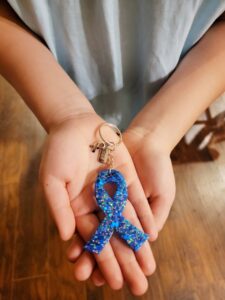
Kambria-Keychain-scaledKambria, 11 years old, of Billings, Montana, is proof that you’re never too young to advocate. She’s become a passionate champion of colorectal cancer awareness, and what started as a spark – the idea to create and sell colorectal cancer keychains – turned into a crafty labor of love and a generous donation to Fight Colorectal Cancer.

“I wanted to create awareness,” said Kambria. “Awareness is key,” became Kambria’s clever marketing strategy. She knows how important it is to promote awareness and screening because five years ago, her Papa and best friend Dan Becker was diagnosed with stage III colorectal cancer, which within two years transitioned to stage IV. He has been fighting colorectal cancer for almost five years since having a colonoscopy at age 59. He went for a colonoscopy after developing signs and symptoms and an overall feeling that something wasn’t right.

This year as March drew near, Kambria, with the help of her mom, Korry Thompson, submitted a proclamation to Montana Gov. Greg Gianforte to declare March as Colorectal Cancer Awareness Month. Kambria was thrilled to receive a signed, sealed copy of the state proclamation in the mail.

Excited by creating awareness at the state level, Kambria then submitted proclamation requests to Billings, where she and her mom live, as well as Colstrip, where Dan had worked for years and still lives.

After securing three proclamations, Kambria mulled over “what more” she could do to raise awareness. That’s when “awareness is key” gave her the lightbulb moment to create keychains.

With her mom’s help, Kambria obtained all the materials necessary to make keychains. She makes them from epoxy, mixes in blue mica powder, and sparkles: That’s the easy part! Then she pours the epoxy into molds where they remain to harden for 24 hours. Kambria adds a silver keyring and special inspirational tags because she loves “jazzing up” each keychain she sells.

Within her first day of selling her colorectal cancer awareness keychains, Kambria and her mom realized they needed more than 24 molds to keep up with demand. Korry set up a Facebook page for Kambria’s keychains, and on day one, Kambria had 50 keychain sales!

“It was pretty satisfying to see the keychain orders on the first day. I’m Facebook famous for something positive,” said Kambria. She is passionate because her Papa has colorectal cancer, and she wants to create awareness and make a difference in the world.

As of March 30, 2022, Kambria sold 248 keychains. Kambria’s initial goal was $500. Almost immediately, she smashed that goal, and set her next goal of $1,000. Two weeks later, she elevated her goal to $2,500. To date, Kambria has raised more than $6,000 for Fight Colorectal Cancer. She raised $2,700 through keychain sales, and more than $3,500 through donations from Chase Hawks Memorial Association and St. Vincent’s Foundation to support her work.

Kambria’s mom has been involved with Fight CRC, and both Kambria and her mom appreciate the work and mission of Fight CRC, which was why Kambria decided to donate her proceeds to Fight CRC.

Kambria’s message to kids is, “You can become an advocate at any age, and you are never too young to make a difference!” Her message to adults is, “Get screened. Screening is key.”So far, Kambria’s keychains have made it to 25 of the 50 states, and Washington, D.C. Initially, her sales were all over the country rather than locally. People saw Kambria’s “Fight CRC” Mission page and sent direct messages to order keychains.

Didn’t have a chance to get your Colorectal Cancer Awareness keychain from Kambria? It’s not too late!

Will she do this again next year? “Definitely! I definitely plan to do this next year!”

Fight CRC is grateful for Kambria and Korry’s support, and we can’t wait to see what Kambria does next.

A core part of Fight CRC’s advocacy mission is working to reduce barriers to colorectal cancer screening. Through our Catalyst State-by-State Advocacy Program, Fight CRC was able to support the California Colorectal Cancer Coalition (C4) in their efforts to add colorectal cancer as a quality measure for the Centers for Medicare and Medicaid Services (CMS) Adult Core Set.

We interviewed C4 President Daniel S. Anderson, MD, and Vice President, Margaret Hitchcock, PhD, to learn more.

Q. What are the CMS Medicaid Adult Core Set Quality Measures?

A. CMS is required by the Affordable Care Act to designate a core set of quality measures to help evaluate the quality of care received by individuals insured by Medicaid. (Note: Medicaid is a program funded by both states and the federal government and provides health coverage to low-income adults, children, and people with disabilities).

All states are required to have quality measures that are reported annually by the Medicaid insurance carriers in each state. The states are not required to use the Medicaid Adult Core Set Quality Measures, but many use a portion or all of them.

In 2019, California adopted the CMS Medicaid Adult Core Set Quality Measures for reporting in California, but at the time, breast cancer and cervical cancer screenings were the only cancer screening measures included.

Q. Why is getting colorectal cancer screening added as a quality measure important? What impact will it have?

A. Having colorectal cancer screening as a quality measure that has to be tracked and reported is one way to help increase screening rates. As the saying goes, “What gets measured gets improved” (NCQA).

Only a handful of states measure Medicaid colorectal cancer screening rates, but those who do found that measuring colorectal cancer screening rates has helped to increase screening rates.

Medicare and Medicaid, combined, insured 18% of the United States population in 2019. In California, 33% of all Californians are on Medicaid due to the Medicaid expansion under the Affordable Care Act. Recent data has shown the COVID-19 pandemic has increased the United States Medicaid-insured population due to income loss and job loss.

Having a colorectal cancer screening quality measure for this population will help ensure that more eligible individuals have access to this potentially lifesaving screening.

Q. What was the process for getting colorectal cancer screening added as a quality measure for Medicaid?

A. The CMS Medicaid Quality Measures are reviewed each year by 27 Core Set Review Voting Members who include experts representing diverse organizations from medical and dental societies, to public health, academic institutions, and insurance representatives. This group annually introduces, discusses, and votes on measures to be added or removed from the Medicaid Adult Core Set Quality Measures.

In fall 2020, C4 and our collaborators (Fight CRC, National Association of Chronic Disease Directors, and Leavitt Partners) were able to contact and enlist two of the Core Set Review Voting Members and persuade them to introduce colorectal cancer screening as a new measure to be added.

C4 helped write the proposal and rationale for including CRC screening as a quality measure, and in May 2021, the proposal was introduced to the voting members and discussed during a session open to the public.

The 27 voting members voted unanimously to recommend adopting colorectal cancer screening for the 2022 CMS Medicaid Adult Core Set Quality Measures and in December 2021, CMS officially accepted their recommendation!

Q. How will this change help address health disparities?

A. Unfortunately, only approximately 54% of Medicaid-insured adults are up to date on colorectal cancer screening compared to 80% of patients with Medicare and commercial insurance combined (NHIS data, 2018). Medicaid enrollees are also 50% more likely to present with late-stage colon cancer and die from it than those with commercial or Medicare insurance. There are many reasons for these disparities, but ensuring that Medicaid plans are measuring colorectal cancer screening is one way to help incentivize providers to get their patients screened and ultimately decrease adverse outcomes from late-stage disease.

Q. How can I make sure that this change is implemented in my state?

A. The first step is to contact your state’s Department of Health. Find out which agency administers your state’s Medicaid program, and contact the Chief of the Quality Division to inquire if they are using the CMS Medicaid Adult Core Set of Quality Measures. If they are, then your job is done! If they are not, ask for a list of the quality measures they are tracking to see if colorectal cancer screening is on the list.

If your state is not tracking colorectal cancer screening, the Medicaid Quality Division in your state has a process to add and remove quality measures for your state’s Medicaid program. Find out what their process is to add new measures, and what you need to do to propose adding colorectal cancer screening. Since C4 successfully did this with CMS, we are happy to serve as a resource to help make this change in your state!

Colonoscopy prep is one of the most laughed about, complained about, and stressed about steps of the colonoscopy process. While it’s nobody’s favorite step, prep is necessary to clear the rectum and colon before the procedure. An incomplete bowel prep could mean missed polyps, while a successful prep allows for better visibility during the colonoscopy. This leads to a higher chance of doctors seeing polyps, tumors, and inflammation in your colon.

Your doctor’s prep instructions may slightly differ from another doctor’s instructions, and it’s important to follow the instructions you’ve been given. However if you’re hoping to set yourself up for a clear colonoscopy, here are several foods to avoid at least three days before your procedure.

1. Strawberry Smoothies


For three days before a colonoscopy, it is recommended that you follow a low-fiber diet and avoid anything containing nuts and seeds, including seeds inside treats, smoothies, fresh fruits and veggies. Nuts and seeds contain insoluble fiber, which provides bulk in your stool. Avoiding them will help you more easily clear out your bowel. You don’t need to cancel a procedure if you eat nuts a few days before your scope, but it’s recommended that you avoid them to get a more complete prep.

2. Veggie Trays


Avoid fruits and vegetables with seeds or indigestible fiber since they are difficult to digest and may interfere with your doctor’s ability to examine your colon. This applies to both raw and steamed fruits and vegetables, as well as fruit and veggies in smoothies.

A good rule of thumb: If you cannot see through it, if it has pulp, or contains anything that you need to chew in order to swallow, then do not drink it a few days before a colonoscopy.

3. Alcohol


Do not drink alcohol during the prep process. Although many spirits are technically clear, alcohol is dehydrating, and you will already be losing a lot of fluids due to the colonoscopy prep. You can avoid dehydration by drinking GatoradeⓇ (not red, purple, or blue), and other drinks with plenty of electrolytes.

Alcohol may interact with the sedatives used during the procedure. Avoid all alcoholic beverages regardless if they are clear or not until after your procedure.

4. Foods with red, purple, or blue dyes


Many doctors ask patients to avoid drinks that contain red, purple, or blue coloring can stain the walls of your colon. During your colonoscopy, these stains can interfere with the test and look like blood or other abnormalities. To ensure you get accurate results, avoid drinks with certain coloring during your colonoscopy prep if your doctor’s instructions say to avoid.

5. Milkshakes

Milk products are permitted up until the day before a colonoscopy, when you need to drink only clear liquids. Similar to how certain dyes can affect your colonoscopy, traces of milk can hide a possible polyp in the walls of the colon. Avoid milk, milkshakes, coffee creamer, and other dairy products the day before your colonoscopy.

6. Whole Grains


Granola, oats, multi-grain breads, quinoa, and other grains are full of fiber. It’s recommended to avoid these foods around three days prior to a colonoscopy so you have a more effective colonoscopy prep process. They are typically safe (and encouraged) to resume following your procedure.

7. Steak

Avoid tough meats like steak and pork a few days before your colonoscopy, as they take longer to break down in the colon. For your protein, stick with foods like eggs, ground meat, and fish, or well-cooked proteins, until your colonoscopy is complete.

It is important to properly prepare for a colonoscopy so your doctor can get a good look inside your colon and accurately screen for colorectal cancer. Although a strawberry smoothie or a chocolate bar with nuts may sound great the days leading up to your colonoscopy, avoid them until you’ve been given the all clear.

If you have specific questions about diets and prep instructions, be sure to call your doctor’s office.

For colorectal cancer survivors and their caregivers, sex is rarely addressed before, during, or after treatment – and oftentimes, survivors are left alone to manage side effects that can completely alter both their sex life and fertility. Fortunately, the spotlight has shifted, and these conversations are becoming more and more common. Patients and their loved ones are speaking out and sharing their stories, advocating for better survivorship care to ensure that they can manage their health and make the most informed decisions. Not only are we talking about sex and cancer more, but there is research to better understand how to manage side effects, preserve fertility, and increase the quality of life for younger and older CRC survivors.

Highlights:

  • Sex is rarely addressed before, during, or after treatment.
  • There is research looking at how to manage side effects, preserve fertility, and increase the quality of life for younger and older survivors.
  • The OPERa study is looking at post-treatment Quality of Life (QoL) in North American rectal cancer patients after rectal surgery
  • Memorial Sloan Kettering Cancer Center is running an observational trial on early onset survivors to learn more about how cancer treatments affect reproductive and sexual health, including the ability to have children (fertility).

Resources

Clinical trials are critical to finding a cure for colorectal cancer. As an advocacy organization dedicated to supporting and empowering a community of patients, caregivers and families, Fight CRC has partnered with COLONTOWN to deliver a monthly blog series highlighting everything patients need to know about clinical trials and the best treatment options available.

The COLONTOWN University Lecture Hall has a #DocTalk video focused on sexual health after treatment. In this talk, Dr. Sharon Bober talks about sexual health after treatment.

The Lecture Hall has a section on rectal cancer with videos on radiation therapy and proton therapy, and these talks also address some of the sexual health concerns around treatment.

Introduction

Sexual health is an important concern for patients, especially as rectal cancer rates in younger patients are climbing. Treatment modalities like radiation therapy have sexual side effects, which can interfere with quality of life for many patients. There is a lot of inconsistency of care around sexual health-related aspects in the U.S.: Some clinicians and hospitals do a great job of informing the patients what to expect and how they can manage side effects, while others don’t talk about the subject at all.

For example, some centers promote and encourage the use of vaginal dilators in the body while the female patient is exposed to pelvic radiation – this is supposed to reduce radiation exposure to vagina, while other centers fail to even mention the use of dilators at home to prevent or reduce vaginal stenosis.

Sexual dysfunction following surgery is another aspect that is not discussed very well. The prevalence of sexual dysfunction following colon or rectal cancer resection seems to vary quite a bit, and I have heard this is more a problem in men than women.

Here is research being conducted that could help patients manage their sexual health.

The OPERa Study: Evaluating QoL After Rectal Cancer Surgery

The OPERa Study

NCT04893876

The main aim of the trial is to collect information on the impact of Low Anterior Resection Syndrome (LARS), Sexual and Urinary Dysfunction (SUD), emotional/financial distress, and patient activation on long-term post-treatment Quality of Life (QoL) in North American rectal cancer patients after rectal surgery.

LARS can be a bothersome and life-altering side effect of restorative rectal surgery to remove the cancer, and LARS includes increased stool frequency, incontinence, and difficult pooping. The reason this study is underway is because information on actual rates of these side effects, the risk factors, and prognosis are lacking in this patient population.

This 20-site North American, observational, prospective, 1,200 patient cohort study uses validated patient reported outcome measures (PROMs) at diagnosis, during, and post-treatment. Patients will be recruited over two years and followed for three years.

The research questions looked at include:

  • How do North American rectal cancer patients who underwent rectal surgery experience changes in function (bowel, sexual and urinary), distress (emotional and financial) and QoL after surgery from baseline through early and late timepoints following treatment
  • How do patient-, disease-, treatment-, functional- and distress-related factors predict QoL at baseline and at early and late timepoints post-treatment?
  • The primary endpoint is QoL as measured by questionnaires given to patients at early (12-18 months) and late (2-3 years) time points. The study involves a multidisciplinary team who will provide expertise in research methodology, nursing, oncology and surgery.

The main advances expected from this study are:

  • Collection of baseline data for important rectal cancer PROMs for clinical and research use
  • Figure out how functional outcomes and QoL post-treatment changes to help counsel patients peri-operatively and throughout survivorship
  • To provide the basis for future tailored programs to support rectal cancer survivors. Rectal cancer patients who can have curative intent treatment are eligible, people with metastatic disease or those planned to have abdominoperineal resection (APR) or pelvic exenteration surgery are not eligible.

Early Onset Observational Study

Changes in Reproductive and Sexual Health in People With Early Onset Colorectal Cancer (EOCRC)

NCT04812912

This is a type of very important clinical trial that often goes unnoticed: an observational clinical trial.

While interventional trials are specifically designed to evaluate the direct impacts of treatment or preventive measures on disease, observational clinical trials aim to get more information about populations, diseases, beliefs or behaviors, without any intervention.

This observational study ongoing at the Memorial Sloan Kettering Cancer Center (NY) includes women ages 18 to 40 diagnosed with colorectal cancer, and men ages 18 to 50 diagnosed with colorectal cancer, who are going to begin chemotherapy and/or radiation therapy for their cancer. That is, people with early onset colorectal cancer who are about to start treatment.

The researchers will observe and track changes in hormone levels and in sexual and reproductive health in the study participants. This information will help them learn more about how cancer treatments affect reproductive and sexual health, including the ability to have children (fertility).

By participating in an observational clinical trial, which in this case is as simple as a single blood draw and filling out a questionnaire, some patients choose to play an active role in the research that leads to better treatments.

Why is this important that we continue to discuss sexual health and put resources to improving the quality of life of patients?

Increasing numbers of survivors face long-term side effects of treatment, including sexual side effects. Most of these are quite manageable if patients are aware of what to expect, and how to treat or manage side effects.

Lack of awareness of sexual side effects can lead to isolation, where people are unaware of how widespread the issues are or that they can be managed.

Since sexual health and intimacy are not easy topics to discuss, patients and caregivers may suffer in silence. Because intimacy and sex are important and fulfilling aspects of the life – for those in a relationship, for those who are single, too.

Sexual quality of life and body image are compromised during or after having colon or rectal cancer, and tend to remain impaired if unaddressed.

Stay Tuned

Once a month, Maia Walker and Manju George spend time unpacking important research trials, tips, and advice for our community. Be sure to subscribe to sign up with Fight CRC and join COLONTOWN’s online community to continue receiving the most relevant updates in the CRC world!

You can also follow Maia (@sassycell) and Manju (@manjuggm) to stay updated on research and trials and visit ClinicalTrials.gov  for more information on trials.

When you think of colorectal cancer, you most likely imagine a patient who is older, as the average diagnosis age is 68 for men and 72 for women. Currently, the recommended age to begin screening for average risk individuals is 45. However, the reality is that people under the age of 45 can develop colorectal cancer as well.

There is a lesser-known risk factor for colorectal cancer – toxic exposure – that may contribute to cases of colorectal cancer.

For most of the past century, industrial workers and military members regularly came into contact with carcinogenic agents, or agents that are known to cause cancer, such as asbestos, polyfluoroalkyl substance (PFAS), benzene, Agent Orange, dioxins, lead, burn pits, and polychlorinated biphenyl (PCBs).

If you were exposed to one of these toxic agents, having a colonoscopy or other screening method is the only way to prevent or timely diagnose colorectal cancer.

Colorectal Cancers Among Veterans Due To Toxic Environments

During the past century, members of the military frequently were exposed to carcinogenic agents. Over the course of the Vietnam War, military members on active duty were exposed to Agent Orange, a dangerous herbicide mixture containing dangerous chemicals known as dioxins that was sprayed over forests and foliage. Another important toxic agent is PFAS, which is a group of chemicals that have been released into the environment of military bases since 1966 due to firefighters and trainees using the fire suppressant known as Aqueous Film Forming Foams. PFAS are extremely toxic and currently contaminate over 700 military bases in the country.

Numerous veterans who spent time on duty in Afghanistan developed colorectal cancer, which in part may be due to frequently inhaling the acrid fumes released by burn pits. Electronics, food wrappers, metals, and soiled uniforms were just some of the items that were set on fire using jet fuel. Abundantly present in the military, asbestos was another toxic agent endangering the health of military members. It could be found nearly anywhere in the military, from ships to barracks. There were over 300 asbestos products aboard every U.S. Navy ship. Everyone who was aboard U.S. Navy ships unavoidably inhaled and ingested toxic fibers.

Occupational Exposure in Colorectal Cancer

By virtue of the many convenient properties asbestos has, it should come as no surprise that asbestos was also present in industrial settings. Since the early 1920s, major companies that used asbestos had been striving to hide the negative health consequences of exposure from workers, conspiring to keep employing asbestos, oftentimes putting financial profit over the health of employees. As a result, millions of employees from over 70 occupational groups were exposed to asbestos to a certain extent. The workers who were regularly exposed to high airborne concentrations of asbestos include construction workers, shipyard workers, and textile mill workers.

Besides asbestos, there were many other toxic agents people working in industrial settings were exposed to, such as PCBs. Until 1976, when they were banned, PCBs had been manufactured in the U.S. on a large scale and used as insulation, coolants, and lubricants in transformers, electrical appliances, capacitors, and old fluorescent lighting fixtures. People who were responsible for manufacturing these products were inevitably exposed, which increased their risk of developing colorectal cancer.

Medical Errors Can Delay the Diagnosis of Colorectal Cancer

Because a significant number of veterans and former industrial workers develop colorectal cancer before reaching the recommended screening age of 45, medical specialists are inclined to overlook the possibility that these patients could, in fact, suffer from this disease. For instance, a veteran with colorectal cancer may initially be misdiagnosed with irritable bowel syndrome, as their symptoms, including blood in the stool and abdominal pain, are consistent and common with both health problems.

What is unsettling is that for years the patient could go about their life without knowing that they actually have cancer. Usually, in people who are considered too young to have colorectal cancer by the medical community, the disease is found accidentally, such as during a CT or MRI scan. In addition to irritable bowel syndrome, the most common misdiagnoses for colorectal cancer include diverticulitis, ulcerative colitis, and hemorrhoids. The most frequent medical errors leading to misdiagnoses in patients with colorectal cancer are the following:

failure to order a blood stool test

failure to offer a routine colorectal cancer screening

failing to identify and remove a polyp at colonoscopy

failing to visualize the entire colon during a colonoscopyfailure to adequately follow up on the results of a colonoscopy

failure to recommend a colonoscopy to a patient with symptoms


In most cases, colorectal cancer grows slowly over a period of several years, usually beginning as small benign growths, medically known as polyps. Removing a polyp early, before it becomes malignant, prevents it from developing into cancer. This is the reason why colonoscopy helps prevent the development of colorectal cancer.

Additionally, colonoscopy can lead to diagnosing colorectal cancer in the early stages before it has spread to other tissues and organs. The difference in prognosis when cancer is detected early versus when it is found in advanced stages is tremendous – the five-year survival rate is 90% in the former case, whereas in late stage colorectal cancer survival rate is lower than 14%.

It is also important to support additional colorectal cancer research to develop improved screening techniques and better treatment options. The Department of Defense conducts medical research through its Congressionally Directed Medical Research Program. Fight Colorectal Cancer is working with champions in Congress to create a Colorectal Cancer Research Program.

For over 25 years, Environmental Litigation Group, P.C., has been assisting people whose health was affected by toxic exposure with recovering compensation from the responsible companies. The law firm has recently launched the Heroes and Sacrifices campaign, through which you can request a gift basket if you are a former industrial worker or a veteran.

Donate Now